Blue Eyed Dragon Breath – Yu-Gi-Oh! Legacy of the Duelist: Link Evolution

Yu-Gi-Oh! Spikey hair, cards, Blue-Eyes White Dragon, The Heart of the Cards, ridiculous plots involving pharaohs? Really?! Like Stargate? Not like Stargate? Ok then.

It’s Yu-Gi-Oh everyone.

I’ll be honest, I’ve not played much Yu-Gi-Oh. My fiancée used to play the collectible card game years ago, and we’ve played a few games in the past, but I don’t really get it and I’m not super keen. It may be that the closest I got to a CCG was collecting Magic: The Gathering cards, but never playing because I didn’t have any friends as a kid.

As I got older I did eventually get to play with various partners, but I started to think it might be cursed. This was due to the fact that all it took was a couple of games of MTG and a week or so later and our relationships were over. As such, I’d become a little weary of it. That was all unfounded and now I play MTG, Pokémon, and occasionally Yu-Gi-Oh with my fiancée whenever we have a free weekend.

Now, we mostly play with fairly old cards, and we’re well aware that there are a lot of new rules in the modern game. The thing is, neither of us is willing to get sucked back into buying hundreds of cards until we can’t afford to eat.

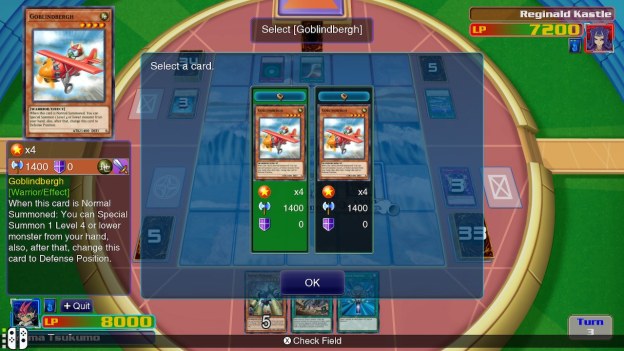
Yu-Gi-Oh! Legacy of the Duelist: Link Evolution is here to for people like us, who want to try more of the game, but aren’t willing to throw an entire paycheck at Konami for the privilege. You want more cards? Just play the campaign game and gain points and cards, along with unlocking booster packs which you can purchase with in-game currency, from the shop.

No microtransactions, no DLC, just play more to get more. Simple.

The main part of the game is the campaign mode. Here you can play through each of the TV series, reliving great moments from the show. The stories are told through a series of vignettes like an anime powerpoint presentation. You’ll watch (or after the first few, skip) through the plot before being thrown into a duel as you would have seen it on screen.

Here comes my major gripe with the game. the decks being played are all about those moments in the show. They’re not super balanced, there isn’t a huge amount of synergy, and you don’t even get a chance to see what’s in your character’s deck until you draw the cards. I feel like if you’re supposed to be playing the characters, they’d know what you’re playing with. Perhaps I should just trust in the Heart of the Cards *rolls eyes*.

Too often I found that victory or crushing defeat was simply a matter of luck. If my first hand was good, I could be finished if a few minutes. If not I could either waste my time trying to block and hope I’d draw something to help with a come back (that would never come). More often than not, I’d look at my first hand, maybe my next 1-2 cards and surrender if it was already precarious, because the game beat the idea that recovery was even the vaguest speculation of a possibility. The only exception was playing the reverse match (play as an antagonist against one of the good characters in a duel you’ve already won from the other side) as Wendle, with an insect deck. This was the first time I saw a deck that even vaguely turned a game around.

As you play through, the game does a really good job of explaining each new mechanic in a fairly simple manner. This has definitely given me a much better understanding of how to play the decks we have at home along with the newer rules for things like pendulum or XYZ summons. The way you’re taught is very much just “here’s the instructions, do the thing”. It’s up to you to take a moment and read each of the cards in your own time. Thankfully, the tutorial doesn’t stop that. If you want to learn Yu-Gi-Oh, you could do a lot worse than play through the campaign tutorials in this.

Once you win a duel, you’ll be awarded a couple of signature cards for your opponent, some points (which you can use as currency in the in-game shop), the reverse match I mentioned earlier, and a blueprint for recreating the deck you played with.

After you’ve had enough of the campaign (and heck me there’s a lot to play through) you can try other modes. Play online in various modes (including local wireless, online, sealed play, draft play, and ranked matches), and build your own decks with the cards you’ve unlocked or purchased in-game.

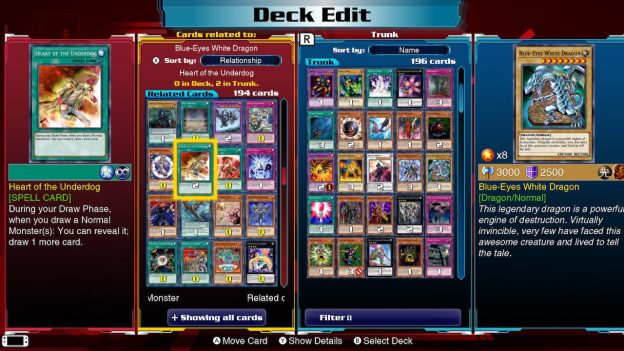
This is where I feel the game really shines. Suddenly, you have the chance to put together some really good decks and try them out. The deck builder even has an option to select a card you like and then have the game suggest cards that will work well with it. This feature works really well and you can put together some really devastating decks on the advise of these suggestions.

The online mode seems well populated and and runs just fine. Which is really all you need to know.

Overall, Yu-Gi-Oh! Legacy of the Duelist: Link Evolution is as good a digital version of a collectable card game as I’ve seen for any of them. The graphics are nice during duels (though the animations of high level creatures being summoned looks a little bit early 00s era CG if I’m honest), the sound design is good enough, the selection of cards to use is great, the deck builder is really user friendly, the tutorials are very good, and the controls are simple. If you want an affordable way to play, or a way to play online because you can’t get anyone more local into Yu-Gi-Oh, this is the perfect way to do it.

Pros:

  • Lots of cards to win/unlock with no additional cash outlay once you’ve bought the game.
  • Good tutorials.
  • Excellent deck builder.

Cons:

  • Summoning high level creatures will play some ropey looking 00s era CG animations.
  • The vignettes make each series of the show look dull as heck.
  • Pre-built decks are poorly designed.

Final Score: 6.5/10

Spooky Action At A Distance – Man Of Medan

I used to watch a lot of horror films, not sure what happened, perhaps I just caught a lot of really bad ones in a row. Regardless, I’ve not had time for horror much of late. Gore doesn’t really do it for me. I’m not averse to it, I just don’t think that it makes a movie better. I like a creeping sense of dread. The idea that this horrifying thing is becoming more than 90 minutes in the dark with popcorn. Something that gets into your mind and gives you a moment’s pause in the dark, when you’re alone.

Some time early this year I finally got a chance to play Until Dawn with my fiancée. We shared time on the controller and made any decisions, that didn’t require split second timing, between us. It was a nice couple of evenings sharing moments of panic through quick time events, moments of surprise, and the all important moments of quiet in between, to build the tension. This was good horror.

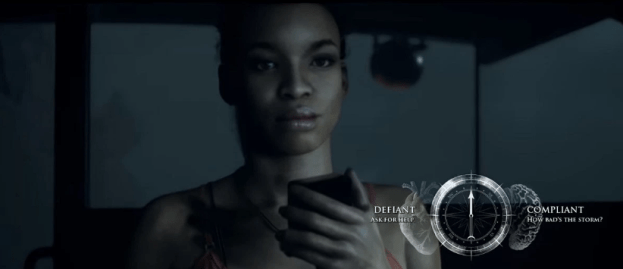
Around the same time, The Dark Pictures Anthology: Man Of Medan was announced from the same studio as Until Dawn. The plan was to take all the photorealistic character styling, decision making, quick time events, and exploration of the original game and create an anthology series of slightly shorter stories that can be played solo or with others in a number of different ways.

First up, there’s standard solo play. See all the things, from your currently controlled character’s perspective, explore, decide, try to keep everyone alive while you unravel the mystery of the decaying military vessel where most of the game takes place.

Next there’s couch co-op. Choose your number of players, and which characters each person will play as. As you move through the story you’ll get messages between scenes telling you who should be on the controller for the next section. Where as in Until Dawn, we made pretty much all decisions relating to the protagonists together, here we played our own characters, to our own tastes. Something very much encouraged by having the characters divided among us.

Lastly, there’s online co-op, and here’s where things change in a really interesting way.

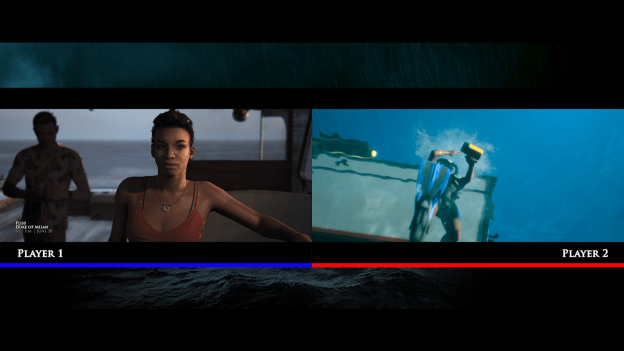
There are sections of the game which happen simultaneously. As such, one player can be talking to another character in one area, while another person is exploring another section of the ship. Consequently you can have a moment very near the beginning of the game where two groups of characters are having entirely different stories told.

Those below the waves are finding interesting artifacts and trying to understand how a plane came down. Meanwhile above, a group of pirates are harassing those on the boat, eventually leading to an explosion, which the others see from underwater. This, in turn leading to WTF moments from the divers, which the characters can decide to discuss, or not. It’s up to the players to decide if they’ll share that information with each other or keep all explanation within the game itself. There’s a few other moments where this is used really well, but I won’t spoil you on it. Suffice to say that playing solo or in movie night (couch co-op) mode, the game takes around 5 hours to complete. Whereas online co-op is closer to 3 because of the overlapping sections.

The basic plot of the game sees two brothers, Alex (kind of a jock) and Bradley (an adorable, shy, nerdy type) preparing to take Julia (whom Alex is dating and seems like the type to ask to speak to your manager), and her brother Conrad (goofy alcoholic rich boy who seems like a total liability) out for some diving around a crashed plane they have located. This is a previously unexplored wreck and there’s excitement about what they’ll find, and in what condition. The last member of our merry band is Fliss, the boat captain (absolute badass, if a little shady) who’ll be taking them out on the ocean.

Things start off pretty gently through a flashback featuring a couple of naval soldiers on shore leave. The game uses this time to gently introduce the controls and game mechanics in a no-stakes environment. Flash forward then, to the present and we see our main cast loading their boat up for the proposed dive. Before long though, it’s all diving to the crashed plane, hearing rumors of lost gold, the aforementioned pirates showing up and dragging everyone off to and older and decaying, but still familiar ship. All aboard is very quiet and our protagonists are in over their heads. And that… is all I’m saying. You’ll have to play it for yourself if you want plot. Suffice to say, I enjoyed it a lot, on multiple playthroughs.

Just like Until Dawn, characters can die and this will very much change how the remaining characters interact and what options they have going forward. This gives the game a lot of replayability. Do you want a horror film with a lone survivor of the group? Do you want to try and save everyone? Maybe “accidently” fail a few quick time events to off that one character you don’t like? The options are all there.

The sound design and music is spot on. With great effects and cues that are well used, to enrich the experience. Graphically, the game is on par with Until Dawn. Which is to say, beautifully rendered and animated character with really uncanny teeth (why do all of these games do that?). The lighting is great and the locations are wonderfully grimey in just the right way. That said, I did experience some minor slow down in a few areas and a couple of momentary glitches, though this may be patched by the time of release.

One thing I was really happy to see was the number of accessibility options. I have a number of sensory processing issues which can make a game like this frustratingly difficult at best and unplayable at worst. First up, you have the ability to remove time limits from QTE button prompts. As long as you hit the correct button, you won’t fail. Additionally, there’s the option to replace button mashing sections with just holding the button down. Next up, there’s options to change how subtitles appear. Do you want the subtitles on a background rather than just overlayed straight onto the action? Do you want to change the colours for a more manageable contrast? Those options are here for you. Lastly, there’s the sidebar, which will put text from the various documents you find lying around into a more legible format, in a pop-up sidebar. These are all great considerations that I hope to see making their way to other games of this type in future.

The Dark Pictures Anthology has the potential to be to the interactive horror genre, what Telltale Games were to, well, all the many many genres things they worked on (though hopefully, it won’t end up collapsing like an incorrectly assembled deck chair as TTG did).

Pros:

  • Stunning graphics and sound design
  • Lots of replayability
  • Great story to unravel

Cons:

  • Some minor slow down in a couple of places
  • Pirates are mean
  • I’m struggling to come up with my usual 3 of these.

Final Score: 9/10

Hammer Time – Dragon Quest Builders 2

Well, it happened again. I sat down with a Dragon Quest Builders game and lost a month or so. In many ways, that’s probably a pretty glowing review on it’s own, but why don’t I gush on for a few paragraphs anyway.

Dragon Quest Builders 2 takes the third-person, action RPG, with voxel-based building fun of the original game, and tweaks it in just the right ways to make it vastly superior. You start the game as a trainee builder – one of the few people who can make anything in the world. You’re abducted and set to work on a ship of monsters. Just when it looks like your fate is sealed, the ship springs a leak and you’re washed overboard. Your time on the ship is a nice little introduction to the basic mechanics of the game (block placement, combat, camera controls, conversations, etc).

Next thing you know, you’re washing up on the Isle of Awakening. This will be your hub world for DQB2, replacing the old freeplay island where you could build whatever you wanted, outside of the story. Initially, there’s not a lot to do, apart from find shelter for Lulu, Malroth and yourself. In a case of dramatic irony, you’re made aware that the Lord of Destruction is also called Malroth in early cinematics. As such, the ever boiling temper and desire to break things by your black-haired, broody companion isn’t so strange to you, the player. As such, you’re left wondering just when things will come to a head in that department.

Soon after arriving on the Isle of Awakening, you’re sent off on your first mission, to learn all about farming. Heading to the dock, you’ll meet Brownbeard the pir-sailor (definitely just a sailor) who offers to take you around the local islands on their boat.

Your first excursion takes you to Furrowfield, an island of farmers who’ve lost the skills needed to ply their trade or feed themselves. The islanders are initially unhappy that a builder has arrived, because they follow the teachings of the Children of Hargon, who say that building is blasphemous and wrong. However, once they see your skills for building fields, bedrooms, kitchens, diners, and most importantly: a toilet, they soon come around to the ways of building.

One problem that I often found in the first game, was that when enemies randomly attacked your town, that they’d ruin chunks of it. While random attacks are still an issue, the monsters mostly go for your crops, and do no more than dig up the seeds. While the second island did see some enemies who could smash an adobe wall down, for the most part I didn’t have to worry about rebuilding half of my town.

In addition, when facing larger enemy attacks (triggered by talking to a townsperson who has a crossed swords icon above their head) it was nice to see that once the dust of battle had settled, the townsfolk announced they would put things back as they were before. A quick fade to black and everything was pristine again. The damage to my carefully made towns was one of my biggest complaints with the previous game. As such, this made a very welcome change.

On the subject of quality of life improvements, my biggest gripe was having to find everything I needed to make a large storage chest. Every. Single. New. Area. (*hours of screaming noises*). Luckily, this has also been fixed. Early on you get a big bag that gives you seven pages of storage space that you always have on you for the rest of the game (even if some of the contents gets stored away before you head to a new mission area). This is brilliant and stops a lot of unnecessary frustration for finding space to store all your carefully collected crap.

Most of the way through the first main island, you’re given a giant project to construct something. While your character is the one who designs each of its three huge sections, the townspeople are keen to do most of the building themselves. First off you have to collect a few items, and lay them out according to the blueprint. Once you’ve got that down, the villagers will get on with most of the rest themselves – just as long as there’s a chest nearby which has the items they need, many of which they will gather themselves. While I was initially a little unhappy to have this huge project taken out of my hands, some of the more fiddly bits seemed best done by my new helpers. Also, there’s always the option to just take their chest full of bits and do all the building yourself.
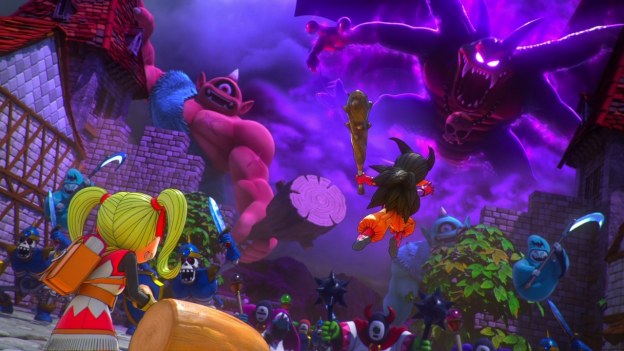
With Furrowfield restored to full glory, you return briefly to the Isle of Awakening, along with a number of the islanders. Here you can catch up with a strange glowing creature called the Hairy Hermit, who shows you the first stone tablet and teaches you how you can complete tasks to earn medals – which in turn unlock new tools: the trowel (for replacing one type of block with another from your inventory), the pencil (for creating blueprints from any scenery you find and want to replicate), and the chisel (for carving blocks down into other shapes, great for fancying up your grander builds); as well as new cosmetic items.

Initially, you’re charged with restoring a river and waterfall, and restoring the fields and woods, using tools, equipment, and assistants you gained in Furrowfield. While there’s some argument between a number of the island’s residents over what the place should be called or who’s in charge, none of it gets too heated and soon enough you’re being pointed back to the docks to explore elsewhere.

At this point you have access to a few other islands. The first two Explorers Isles can be unlocked for a few gratitude points (earned by building and farming on IoA) and the next major story island, Khumbul Dun.
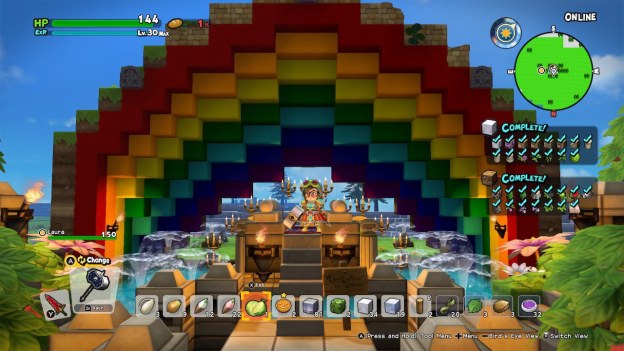
The Explorers Isles are interesting little scavenger hunt areas where you can check various blocks, farm animals, rocks, and plants off of a list to earn an infinite supply of certain resources. Each island has two scavenger hunts and completing each of the major story areas will unlock two more of these islands. The ability to gain infinite amounts of some of the most basic resources is such a time saver in the long run, and the fact that carries over to the main story islands was a lovely surprise.

Additionally, you can often find new seeds for various crops on these islands. Just the thing for filling your farms on IoA and keeping everyone well fed and happy.

Up to this point, I’d been enjoying the story, even if I wasn’t keen on all the characters. However, heading into the second major island, I was somewhat squicked by the way a lot of the men in the village talked about the only woman living there. Entitled fuckboys. Entitled fuckboys everywhere. Each of them feeling entitled to her in some way. All of them trying to get her to become a dancing girl at the bar, and dress like a bunny girl. It wasn’t until a little later, when she revealed that, actually, she really wanted to dance, that that feeling eased any. Not that the men-folk got any less letchy in general.

Following this excursion to a mining town, you’re briefly back to the Isle of Awakening. At this point I was all ready to start using all my new recipes and start work on expanding my own island (I medically required a train system around my island). However, you’re quickly whisked off to a whole new chapter, set in a prison, that doesn’t really add much to the game as a whole (apart from making me really want the recipe for guillotines, so I can warn any would be capitalists off of my home island).
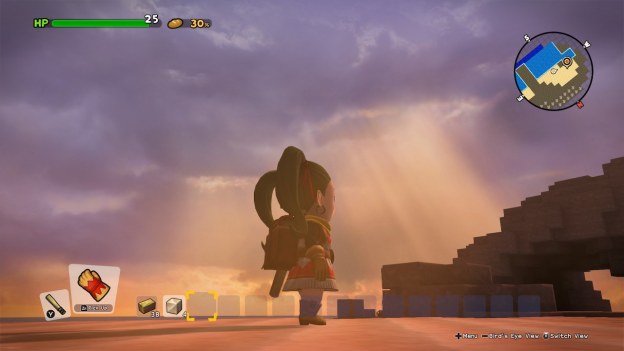
You are eventually allowed back home after about 90 minutes of side story, but at this point I’d kind of lost heart for getting on with bringing the desert mining town home and just wanted to press on with the story a bit.

The final big story island mostly takes place in a constantly warring castle town. The Children of Hargon have managed to convince the humans that to build is forbidden, to win the war is forbidden, and to be completely defeated is forbidden. As such, you’re shown to the last few crumbling walls of the once great castle and left to get on with it while people bicker about whether they should be doing much at all. There’s also a plot involving a traitor in your midst, which leads to one of the most irritating moments in the game.

Your character is a silent protagonist, meaning that you are unable to just have a simple conversation that could have avoided all or at least most of the distress another character was feeling. I get that the plot needed to eventually work round to a couple of specific things, but it really took a lot of agency away from the player at this point.

There’s no way to go into a certain area via walking in there, you can’t dig through into that area either because of sudden invisible barrier syndrome. The game just says “nope, we need them to be pissed at you so we’re going to block any attempts to make amends so our flimsy plot works. I knew there and then that while I’d left each other island intact when I left this castle – only taking a few volunteers with me to the IoA – this time I was taking everything that wasn’t nailed down. Every chest was emptied, every trap, weapon, and special item was coming with me. To heck with this hole!

There’s a final, mostly plot-based area after this which leads to the final boss, but it’s a shorter area than most of the main plot islands. After which, you’re treated to the credits and given the opportunity to head back to IoA to try out all your newly unlocked recipes and rooms on your home base, now with an added vehicle for getting around at high speed. Woo!

You may have spotted that DQB2 also has a season pass available (currently £18.89 GBP) on the eshop. This contains 3 pieces of DLC (which can also be purchased for £8.99 each for the Aquarium & Modernist packs, and £5.39 for the Hotto Stuff pack). I’ve had a look through what’s available and to be honest, it’s not super impressive. Each pack contains a number of new recipes and an island you can head to to gather pack specific items.

The available packs are the Hotto Stuff pack (retro Japan), which features more than 40 new recipes design and decorate buildings in the style of the Hotto Steppe region (Traditional Japanese/Dragon Quest XI); the Aquarium pack (wet and fishy), which gives you a new fishing island, a fishing rod tool, more than 40 fish to catch, a short story section, and a number of new character customisation items; and the Modernist pack (IKEA catalogue), which includes more than 70 recipes to make modern structures, and a bunch more character customisation items.

Outside of the paid packs, there’s also the Knickknack pack, which adds 3 new items to celebrate New Year in a traditional Japanese-stylee. The pack contains a paddle, soup, and an ornate decorations.

Finally, if you do own the original DQB (and still have a save file on your system) you can access a recipe for stackable slime decorations and a chance to wear the hero’s outfit from the first game.

You may have heard that this game features a multiplayer aspect, and that’s kind of true, but not at all what I was hoping for. Once you get to the Isle of Awakening, you find a cave with a teleportal in it. This will allow you to access the MP mode. First off, decide if you’re playing online or over local wireless. Then invite friends or go visit someone else.

For receiving visitors, you can change settings which will stop any potential trolling. Additionally, once you’re in multiplayer mode, a large chest appears by the telportal containing medical herbs, some basic armour, and a cheap weapon. However, as it’s not great armour or weaponry, I’ve put a small chest of guest equipment of my own down.

Once you’ve got everyone together in MP you’ve a few options. Obviously you can show off your builds, but beyond that you can also head out and do the Explorer Islands together. This makes the scavenger hunts a lot less work, and the boss monsters on those islands a lot more manageable.

I had hoped that you could just go through the story missions with another person, but this just isn’t an option. A real shame, since that’s what I really wanted from the sequel. Maybe next time.

Despite a few issues with the plot, some of the characters, and the minimal multiplayer, I really enjoyed DQB2. I’d say if you’re looking for Minecraft with a story, this is probably the one for you. It doesn’t require that you’ve played the first game and the quality of life improvements have made the original basically obsolete.

Pros:

  • Fun gameplay
  • Guillotines to build (and threaten anyone who tries to claim leadership of my glob damn island)
  • Lots of quality of life improvements over the first game

Cons:

  • Disappointing Multiplayer
  • Annoying plot decisions on the third island
  • Expensive expansions that don’t add enough value.

Final Score: 9/10

Scythe Had Enough – Staxel

I don’t quite know how it happened, why I let it happen, or if it could happen again, but fuck me, I got rinsed.

The other day a shiny trailer popped up somewhere or other, licked a finger and started stimulating the Lisa Frank receptors in my brain with bright colours and cute characters. That was the launch trailer for Staxel, a voxel-based farming game with crafting and building mechanics. There’s full controller support, it announced. There’s cat people, I discovered. It looks like a unicorn puked on it, I noticed. So, I checked the reviews and found them to be mostly positive. Not everyone’s cup of tea, but then neither am I, so I can relate. I had the cash spare so I grabbed it.

Here now are my findings after too long to request a refund for Staxel.

You begin your journey by designing a character using a fairly basic set of prefab parts. You can be all sorts of adorable and have most of the important styles of anime hair. You can be a cat person, which naturally, I chose.

Having fashioned a green-haired, purple-clothed, cat girl with a side fringe, I headed out into the world.

I found myself in a run-down house, with an awesome, nerdy looking person called Farm Fan, ready to show me the ropes. While I usually prefer to be the one using the ropes on others, I was taken enough with her style that I was willing to hang out and talk shop *ahem*.

For the next bit it was all pretty standard farming sim stuff. Learn to prepare the earth, plant seeds, water them. At this point, it’s basically a first-person 3D Stardew Valley or Harvest Moon, very familiar and easy to manage, but explained well enough that someone new to the genre could find their way in.

After a while, you’re escorted off to town, to meet some of the residents and learn how crafting works. And this, for me, is where cool idea, became frustrating annoyance.

You’re charged with building a barn, so that you can adopt some cows. First off you’re given a sign post, which states what the building is and what it’s requirements are. The only real requirement for a barn is that it mostly fits inside some sparkling 3D guides (toggled from the signpost), and that it contains some specific items (a roof and some troughs for animal feed). You can confirm that a building project is complete by checking the sign, which will tick off items as you add them.

Well that sounds simple. Oh bless you, my sweet summer child.

The fundamental thing about Minecraft is that you build stuff out of blocks. Largely, these blocks are easy to make. Or at least the most basic ones are. Staxel chucks all that in the bin, sets fire to the bin and then laughs in a terrifying fashion. Too loud, and too long. Is that a tear in Staxel’s eye as it laughs and laughs while smashing its genitals into a Lisa Frank binder with a rainbow cat on it? Hard to say, and I don’t want to get too much closer.

Rather than clicking on a crafting object, entering a simple GUI and throwing things from your inventory in set shapes to fashion the things you need, Staxel wants you to put things on the crafting tables by hand. Need wood? head out, find a tree, cut it down (at least cutting the bottom will make rest collapse, rather than defying gravity like in Minecraft). Take your raw wood (*snigger*) off to the building centre in town and use their saw table by putting wood from your hand, onto the table and then activate the saw. From here it will keep going until it runs out of wood or you stop it and grab your freshly hewn lumber. Because the saw table is good and the others – which make you craft one unit at a time – are awful and should learn by saw table’s excellent example.

Now we need some blocks of wood, to do this we’ll need 2 x glue, 1 x nails, and 4x lumber we made and pop it on the tiling table (not the assembly table, that’s different). You’ll need to buy the glue and nails from the building centre (so luckily you’re already there). Once they’re in place, just click the table and it will fashion you 10 blocks of wood for building. It’s not exactly punch tree, wood into crafting slot, pop out some lumber to use for building.

During this process, it becomes apparent just how clumsy and unhelpful this method of putting things from your hand onto the tables is. First off, if something’s in your main inventory, rather than your hot bar, you’ll have to move it there first, so you can put it on the table. This makes the whole process unnecessarily laborious, in a game that is already plodding along.

Tutorial’s over, fuck off.

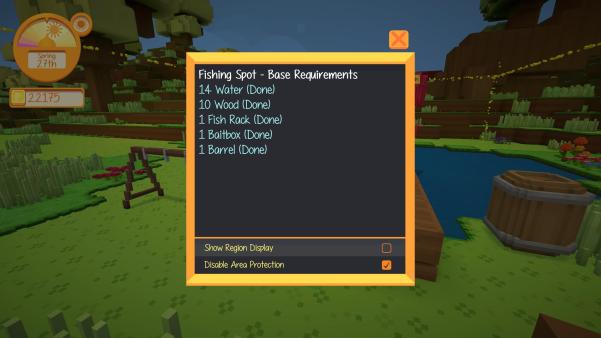
With the barn built, I was awarded two cows and a tool for milking them. From this point, the explanation is over and it’s up to you to work out what you do (or not). Sure, fellow cat person asked me about building a fishing spot, and the mayor wanted me to build a house so someone new could move into the town. Given how I was already hating the crafting, I was hoping I could enjoy the farming for a while instead.

The problem here was that I didn’t have much money, I didn’t really understand what how to sell things for cash, and at some point my hoe just went missing, and I have literally no clue where it went.

Back to the shop, back to buy another hoe. Hopefully I can keep my cat and cows fed while my crops grow, or else find some way to sell the one thing I do have lots of (wood/lumber).

The problem is that in a farming game, selling your crops should be super easy. It’s been easy from the dawn of farming sims. There’s a bin on your farm, that you throw stuff in and someone grabs them in the evening and gives you cash. Not so here. Staxel wants you to get your saleable goods in your hand, put them down on a ‘sell’ bin in the market, in town, and then move down slightly and click on the bin to sell the item. Here again, this becomes a pain, when you have lots to sell. It’s got to come out of your inventory, onto your hot bar and then into the bin and then click sell. I guess it will stop you accidently selling too many things, but still, it’s annoying as hell and only bringing me closer to giving up.

One thing I’ve always struggled with in these games, from a stress perspective, is not having time to get everything done before the sunsets and stamina runs out. Luckily, Staxel doesn’t do short days (they’re almost twice the length of Stardew Valley’s), or a stamina meter, or mobs. All this should lead to a more calm and cheerful experience, but it’s not. Staxel is just frustrating in so many little ways that make me want to give up in despair.

(I know I’ve mentioned Stardew Valley a lot in this review, but it’s the gold standard of modern farming games so it’s going to have to come up some more. Soz not soz.)

SV starts you off with the humble parsnip. You clear some space, turn the earth, plant seeds, and water them. Four days later, you have something to sell.

Staxel starts you off with a beetroot, just one. In the tutorial, you’re told to find a clear space, hoe the ground, plant the seed, and water it. However, the tutorial then says that for the sake of understanding the process, they’re going to give you a magic jar of stuff to make it grow instantly, so you can learn to harvest. While I get the need to show the whole process early on and shortening it can be a good idea, what’s not clear until you start farming for yourself, is that these things take 8 days to grow normally(about 2.5 hrs of game time). That means that – while you should always give these things a decent amount of time before saying, “this isn’t for me” – by the time you’ve finished your first harvest, you’re already outside the refund window for the game on Steam. Furthermore, that’s 8 days of trying to make money to do something else while your crops grow so that you have to find something fun to do.

Until you get your first couple of harvests out of the way, you’re going to have to spent a lot of time pottering about the farm, then running to town to sell, talk, buy essentials to make things, or use the crafting tables in the building centre to process items. While town isn’t far away, it’s just such a constant need that it becomes a massive pain in the bum. Especially if you forget something at home.

Speaking of leaving things at home, I’d best mention storage. Chests are a common choice to both MC and SV. However, Staxel favours shelves and tables. Luckily there’s a starter shelf at home for you to dump things on, but once again, it’s a case of needing things on the hot bar to put them on the shelves in the first place *wails like an injured penguin*.

Something that I didn’t notice anyone in town explaining, was that there are special events. Not only did they not mention them before they happened, they weren’t always clear what they were about when they happened. My first encounter was seeing a bunch of what looked like partially built houses suddenly appearing in the weird field of storage bits (it looks like an abandoned market that’s fallen into disrepair) on the way to town. The first day, I assumed they were maybe going to be finished building’s later. However, further inspection revealed that they were actually portals to other worlds/areas.

I’ve been through each of these portals and while the change of scenery is nice, I’m a little wary of touching too much, as it’s been made clear by the villagers that if you take things from them that don’t belong to you, they’ll stop using the spaces/buildings. So, do I start taking the cool looking scenery for my home? Do I enjoy it as a weird new place to explore? Does anything happen in here or is it just there for the sake of being a different place? I have no idea, and as you can probably tell, I’m reeeeeeeally struggling to care at this point.

Staxel has just left early access and I’m not sure what it looked like before, but as it stands, it feels like a very pretty, but ultimately empty experience. Maybe if the crops were a little quicker to grow, if the days were a little shorter (or you could go to bed early to skip some time early on), if the crafting was less of a chore, if I had some idea where to look for fetch quest items, of if the quests could provide more info about where to find critical recipe ingredients (“you need two of these beetles, they hang out up trees and look like this” or something so you’re not just wandering round grabbing every innocent insect in the hope this is the one), I’d be writing a more glowing review, as it stands, it feels like unfinished, unintuitive, technicoloured unicorn shit.

I tried, but I’m done.

Maybe they have a roadmap for their future and a year from now it will be good, but right now it’s annoying shit that doesn’t even have a proper wiki to explain itself.

No, I don’t know where your blue socks are. If that’s your whole life ruined, fellow townsperson, you have bigger problems than cold feet.

Pros:

  • Colourful.
  • Cat people.
  • Mod and steam workshop support.

Cons:

  • Lacking substance.
  • Took so long to fully show its colours, I missed the refund window.
  • Needlessly obtuse at times.

Final Score: 4/10

No Sign Of A Towel – Clank! In! Space!

I’ve played a lot of Clank! in the last year. I originally picked up the base game as a Unicorn Dance Party gift to myself. This year the festive unicorn has whinnied happily at me again, because a special someone (not me this year) bought me Clank! In! Space! (which I say in the classic Lost In Space way, every time).

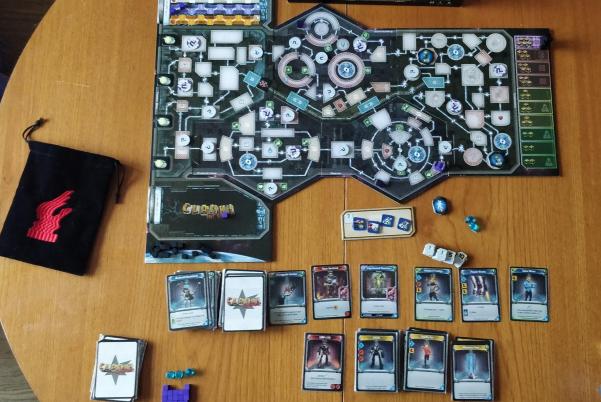
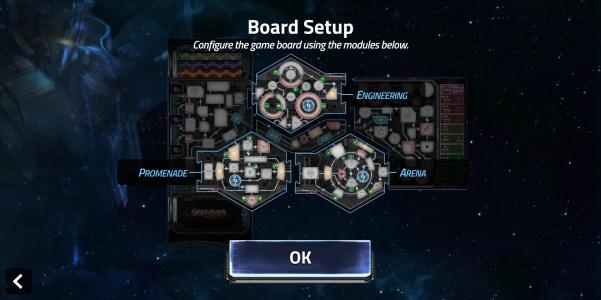
Clank! and CIS are deck-building board games, for 2-4 players (or single player with the app. More on that later) by Renegade Game Studios. While the former is high fantasy, the latter is some sweet sci-fi goodness. Whereas Clank! features a double sided board for different difficulties, CIS is made up of seven parts: the cargo bay (where you start, escape, and monitor player health), the clank area (for keeping generated clank before it goes in the bag), the command section (what would be the deep in the original), the corridor (which the hyperlift runs through), and 3 double-sided modules. The 3 modules can be placed in any order on either side and will make a big difference how you move through the ship.

Let’s go through the similarities to Clank! The crystal caves of the original are replaced with security checkpoints, the shops are represented by yellow spaces and marked with an ‘M’, there’s still an adventure row of 6 random card drawn from the deck, you still have a starting set of 10 cards (which are perfect reskin of the ones in the original), large and small secret tokens scattered around the board, a goblin to fight for cash (it’s now a robot though), and 3 basic cards to buy with action points (mercenary is now FAZR (which looks kinda like the gen 1 Transformer, Soundwave), explore is now boldly go, sacred tome is now a memory core (again, all reskinned from the original), cards generate the three main resources – skill (to buy cards), boots (to move), and swords (to do murders with). There are also some cards/actions which will generate clank (noise that will alert the big bad to your presence). Generate too much clank and it’s all the more likely you’ll end up dead on the floor, your treasures now worthless.

There are plenty of changes though. The shop now contains four items and you can’t buy more than one of each; the key is now a master key card, worth five victory points; medipack gains you two health and is also worth five VP; the teleporter pass allows you to blink around the ship and worth, oh yes, five VP; contraband is worth ten VP and unlocks certain card abilities. Also, there’s no backpack, so it’s one artifact each (you hear that folx who bought two backpacks in Clank! and then grabbed an unbeatable number of artifacts?! Do you hear me now? Fuck you and the magic carpet you flew in on *screams while crying tears of blood*);. The biggest change though, is factions.

There are three factions, each identified by a symbol on the top left of their card. If you’ve used a faction card during your turn, it will allow you to activate abilities on other faction cards. Getting lots of cards of the same faction will help you get a good engine going and more quickly do all you need to without getting caught.

Within the adventure deck there is a single card representing Lord Eradikus (who’s ship you’re pillaging). Once you’ve defeated them, you’ll be awarded a bunch of money and you’ll flip the G0B-L1N. card over. This makes it stronger, but also worth more cash for defeating it.

Last up there’s power crystals. They’re nice little blue and are plastic pieces that I was immediately curious about on opening the box (because apparently I’m part magpie. “Look, look at the shiny that I has found. No, you cannot have them. The shinies are mine!). There’s only 5 available and you can grab them either through card abilities or entering rooms with their matching icon. Enter room *boop* you got a shiny. Success and happiness are yours.

The artwork is great, from the vector art of the program cards, to the parodies of Star Wars, Star Trek, Dune, Aliens, etc characters (Cranky Doctor, Dark Jidu, Hubba the Yurtt, etc.), to the board and box art. Renegade have done a really good job once again.

Your first mission is to hack two consoles in different modules to earn a command code. To hack a console, find yourself a room with a green tab attached and pop one of your transparent cubes in there. Each one can only be hacked once, so if someone else if following you around the board, they’ll have to go elsewhere to get their hacks. Each console hack will offer different rewards, some gain you health/cash, others will generate clank.

Once you’ve got your code, head to the command section and grab yourself one of those sweet artifacts, before making your way back towards the cargo bay. Here you have to locate one of the four escape pods and blast off to freedom with your ill-gotten loot.

The game ramps up in difficulty due to the rage track on the right side of the board. A player gaining a command code, finding an archive, or collecting an artifact. The further up the track the marker moves, the more cubes are pulled out of the bag when certain new cards are revealed on the adventure row. In addition, the top four spots on the rage track will release bounty hunters into the bag, and block off a section of the hyper lift (making escape a little more difficult). When a bounty hunter is pulled from the bag, they damage every player at once and go straight back in the bag. Ready to mess you up again at any time. With only ten health points, it’s easy to take a lot of damage late game thanks to these bloody minded assassins, even if you’ve been careful not to generate much clank yourself.

I’d avoided getting CIS because all that I could see from the marketing made it look like a basic reskin of the original (for which I own all four expansions). However, there really is enough in this to make the game different enough from the original that it’s definitely worth it. There’s also the added bonus that anyone who’s played that will be able to pick this up super quickly.

As with Clank!, CIS has a section on Renegade’s companion app (available for Android and iOS). I’ve used this in the past to add a twist to multiplayer games or to play solo. For CIS though the app includes a board generator – to help you pick which modules to use – and a whole campaign mode for single players. This is in addition to the normal mode, to shake up group games.

Played over multiple games, the campaign guides you through setting up the board (a different configuration for each mission), how much clank to put in the bag to start, which artifacts are available, it tells you what will be worth bonus points (be they cards of a certain faction/credits/memory cores/certain major or minor secrets) and off you go. When you finish a move, the app tells you to remove cards from the adventure row (simulating the crushing pain of missing out on a good card to another player). As you move to different sections, you update your position on the app and that may activate missions, or trigger a change in how many clank cubes are drawn per attack.

At the end of the game, you enter your bonuses and total score to receive your rank. Then you can setup for the next mission or put it away until you’re ready to go again. As you progress, the number and value of artifacts will increase, and you may be assigned a secondary mission (e.g. visit a market place to meet a contact). Some of the secondary missions will allow you to search the deck and discard pile for a particular card and add it to your deck. This makes finding some really useful cards super easy. Just the thing for the more difficult missions.

Some of the secondary quests will trigger further side missions (e.g. visit a particular spot and spend 6 action points for a bonus). The more you complete, the more chance for random bonuses/assistance and the higher your overall ranking at the end.

I’d say that the companion app makes CIS worth the money for single player games alone. Even with static missions, there’s still the randomness of the decks to change things up, so there’s tons of replayability here.

Pros:

  • Different enough from Clank! to make it worth it.
  • Plenty of variety in ways to lay out the board.
  • Fantastic single player campaign mode with the app.

Cons:

  • The board pieces are a bit too snug meaning the don’t quite go together properly in some configurations.

Final Score: 10/10

Roll Model

Some years ago I read an article about the greatest PlayStation 2 games that nobody bought. I had most of the games on that list and figured that it would be worth seeing what else might work for me that hadn’t worked for most. The first one I picked up was an odd little title called We ♥ Katamari. It was bright and colourful, it had a very strange intro with a really catchy theme, and I was absolutely in love. I do, in fact, ♥ Katamari.

Over the years I’ve managed to miss every other Katamari game, either because they’re hard to get hold of, on systems I couldn’t afford for only one game, or just sounded like really bad versions (I’m looking at you, mobile ports). As such, it was with a certain degree of squeeing, flapping and excitedly running around that I learned that the original, Katamari Damacy, was coming to my beloved Switch, as a glorious remaster. Since I first got my Switch, I’ve been saying we need to put a Katamari game on there. I was right, It’s a great fit and I’m so happy it’s happened (it’s also on PC, but my PC broke and I can’t afford to replace it).

Katamari Damacy Reroll includes all the beautiful Katamari fun (not Beautiful Katamari fun, that’s the Xbox 360 version), with shiny new graphics. Katamari games have always had a particular art style, slightly blocky people and animals, simple and clear textures, and just plain weird cutscenes. It’s all here, all prettied up for your collecting pleasure.

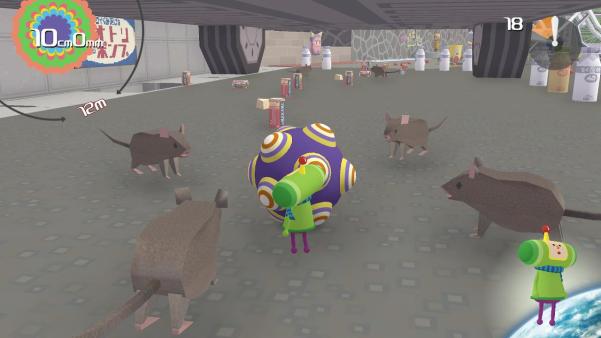
You take on the role (ha!) of the prince. Your father, The King Of All Cosmos has broken everything in the heavens, leaving only the earth (and I guess the sun). Consequently, you are charged with heading down to earth to roll up whatever you can, to make new stars, constellations, and a new moon. You do this by rolling a colourful, lumpy ball around. Things smaller than the katamari will stick to it, while larger things will bash you away or just stop you altogether. The larger your ball of stuff gets, the larger the stuff you can grab gets.

Early levels will see you rolling up small items around a small room. Later on, you’ll be moving from small enough to roll under a car, with plenty of head room; to a gargantuan ball of terror that gathers even the tallest buildings. Most of the time, you’ll be given a target size and a time limit to aim for. Some levels however, will have special conditions. Maybe, you have to catch as many crabs as possible; maybe you have to carefully roll up things that aren’t cows, to get big enough to get the largest possible cow, to please the king (this level can get in the sea); maybe you’re trying to guess when your katamari hits a specific size, without your normal gauge.

Movement is done through tank controls. Both sticks in the same direction to move that way; one forward, one back for fast turning; speedy, alternate waggling of sticks to get a speed boost. Well, that’s true for normal controls. You can also use motion controls, but oh heckins I cannot recommend that at all. It feels clunky, unwieldy and like you’re going to run out of time before you master it.

The music in Katamari Damacy Reroll is typically cheery, fun, and not a little silly. It’s in all sorts of style from jazzy numbers, to mambo, to acapella that even in a 15 minute plus levels it doesn’t get boring or annoying.

It’s a really odd concept, but it really works and is a huge amount of fun. While I completed every level of the game in one afternoon, I’m still going back and trying to get better scores on the levels. Larger stars will replace the old ones, smaller ones are destroyed for stardust, just making the sky more twinkly. My sky will be full of stars and stardust and I’m looking forward to playing a huge amount more. *begins plotting campaign to get more Katamari games on Switch*

Pros:

  • A huge amount of fun, at a budget price
  • Looks fantastic
  • Great soundtrack

Cons:

  • The cow and bear levels can get in the sea
  • It has to end eventually
  • Motion control is the literal worst

Overall Score 9/10
Butt Not Found

When I was about 9-10, my parent’s marriage fell apart. They said they’d “stay together for the child”, but what that really meant was that my maternal parent didn’t want to find somewhere else to live (the house belonged to my nan, who also lived with us). As such, the backroom downstairs was turned into her bedroom. It was almost always closed – like all bedroom doors in the house – and consequently, somewhat of a mystery. About a year later, maternal parent brought home a guy she’d been dating. Shortly thereafter he was living with us, in her room. A further mystery to that area of the house.

Outside of working hours, maternal parent would stay in her room smoking her partner’s wares and he would take over the office she’d converted out of the garage, for her secretarial business (which failed) to play games on her PC.

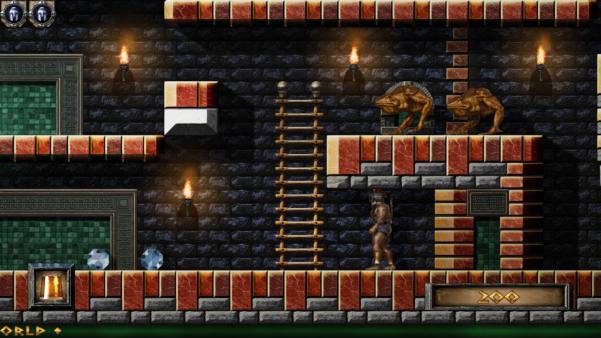
MP’s partner didn’t really speak to me, I was just an annoyance, but if I kept quiet, I could sit at the back of the room and watch him play these games. If he was out selling at the weekend I could even play them sometimes. These are still games that I have a huge fondness for, games I still try to dig out and play every year or so. Lucasfilm Games’s Night Shift, Interplay’s Lord of the Rings, and from the Bitmap Brothers: Xenon 2, Magic Pockets & GODS. They may not be perfect, I may be pretty bad at them, but they lodged in my heart somehow and I’ve never let them go.

Imagine my surprise then when I went through my Steam list the other day to see that GODS had been remastered for modern systems. 11 year old me gave a little cheer and I immediately threw some money down on this updated version of my favourite action puzzle platform games of all time.

I usually only stream about an hour a week, but this week I ended up playing for two, without even realising. And I’ve been sneaking in some additional time here and there ever since. I was back there, toggling levers in the hope of working out the secret combinations to unlock bonus areas filled with glittering prizes, shrinking in horror at some of the floaty jumping, cheering on the thieves to bring me the treasures I needed.

GODS is the story of a hero who faces the fear of the ancient city, to slay the four great guardians, in order to win a single favour from the Gods. The favour they ask is to join these deities as an equal.

This is a loving recreation of the original version, as played by the remaster’s dev on Atari ST. The player character still walks with a certain weight and purpose, and jumps in this odd floaty manner.

Obviously the first thing to talk about with a remaster is the graphics, so (*Mario voice*) here we go!

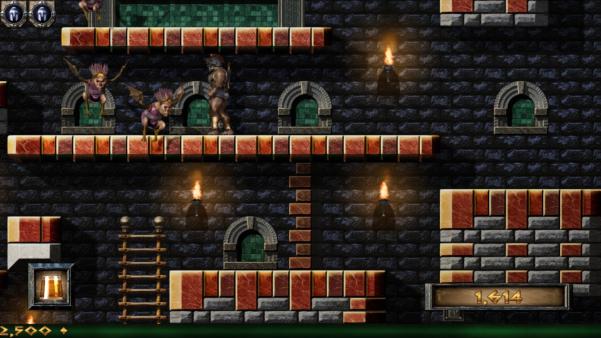
Platform and background textures are nicely updated, while keeping the feel and style of the original artwork. There was something about Bitmap Brothers games that always stood out and made it instantly recognisable as one of their creations, so it’s nice to see that style given a shiny new coat of pixels.

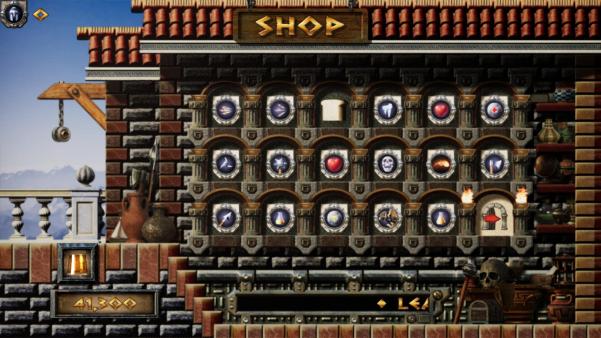
The design of the shop is great, and icons are clear and familiar. It all feels very much like the original as upgraded by nostalgic memory. Then we come to the character models and here I do have a few problems. Some of the monsters you fight look very odd indeed, less demonic than they once were, more darkly adorable. The humanoids just look like scaled down assets rather than unique, short and stocky races. They all have the plasticy shine of 90’s era 3D animations, with none of the more modern soft glow of subsurface scattering.

The player character model has quite incredible muscles (especially those thighs) and their build overall is much more bulky. Where the original felt like they were built of strong, lean muscle. Like they were strong but agile. This new hero looks like they live on three square meals a day of 3000 calories of chicken, pasta and steroids. Like He-Man got self-conscious at the gym and decided he wasn’t quite ripped enough. Most egregious of all, they’ve hidden their butt. When using ladders, you used to be able to clearly see those firm buns wiggle. Now, the hero has immobile shorts that give no hint of the buttocks beneath. It’s a travesty I tells ya! A TRAVESTY *screams until the very Gods themselves quake in fear*.

With those gripes out of the way, it’s time to talk about some of the benefits. In the original version I played on PC, if you ran out of lives, you’d have to start a whole level again using a couple of continues (for some reasons it’s multiple worlds per level, rather than the other way around). If you ran out of continues, you could use passwords to get back to the start of a level and you’d be granted a set amount of cash to arm yourself. This often meant that you’d be at a slight disadvantage compared to having gone through from the beginning.

In the remaster, you don’t have continues, which means that you can just keep going with the weapons you’ve earned. You can even quit the game and come back to the beginning of the world you last played. It’s quality of life like this which makes me really happy, as someone who is very bad at this game.

Should you want to start a level like you’d used a continue/password in the original, you can access each one you’ve unlocked from the main menu. Here again, you’ll have a set amount of money to kit yourself out for the run.

Another nice upgrade is having multiple buttons for control. GODS was originally designed for one button joysticks so you could easily find yourself jumping instead of going through a door if you were off centre with your movement. Now there are separate buttons for jump, attack, inventory, and using levers. Additionally, there’s a turn and fire control which is great for the regular sections of the game where enemies will appear and surround you.

Back in the day GODS ran at about 17 fps. This version will run at a solid 60 in modern or classic graphics mode. This can be switched on the fly by hitting F10 or clicking the right stick on a controller.

Music here is a little disappointing. The original intro music, Into The Wonderful was super memorable, with its digised speech, catchy tune and low-res intro scene. The new title music is a legally distinct knock-off and honestly, I’d rather that they’d just accepted they couldn’t get the licence and go for something completely different. It’s the 500-in-1 video game console your uncle mistook for a PS4, to the misery of your cousins by comparison. Additionally sound effects are a little odd now. Getting hit sounds like you’ve suffered a minor inconvenience and not like you’ve just lost a quarter of your health. Not sure where they got/how they made that asset but it doesn’t sound right at all.

For all my usual moaning, I’ve really enjoyed this version, even if I do flick graphics modes on the regular, to avoid some of the less than impressive looking enemies. I’m looking forward to more time playing and would definitely say it’s worth the price (~£17.00) especially as it takes the hassle out of playing it on modern systems and provides those quality of life upgrades.

GODS Remastered is available on PC and XBOne now and is due for release on Switch and PS4 early 2019.

Pros:

  • Easiest way to play on modern systems
  • Improved control scheme
  • Easier to put down and come back to, when you need

Cons:

  • Odd sound effects in remastered mode
  • Character models are plasticy
  • They nerfed the hero’s butt!!!

Overall Score: 6/10

Fish Botherer

If Wikipedia is to be believed, Sumerian and Akkadian mythology says that ‘abzu was the name for fresh water from underground aquifers which was given a religious fertilising quality… sources of fresh water were thought to draw their water from the abzu. In this respect, in Sumerian and Akkadian mythology it referred to the primeval sea below the void space of the underworld (Kur) and the earth (Ma) above.’

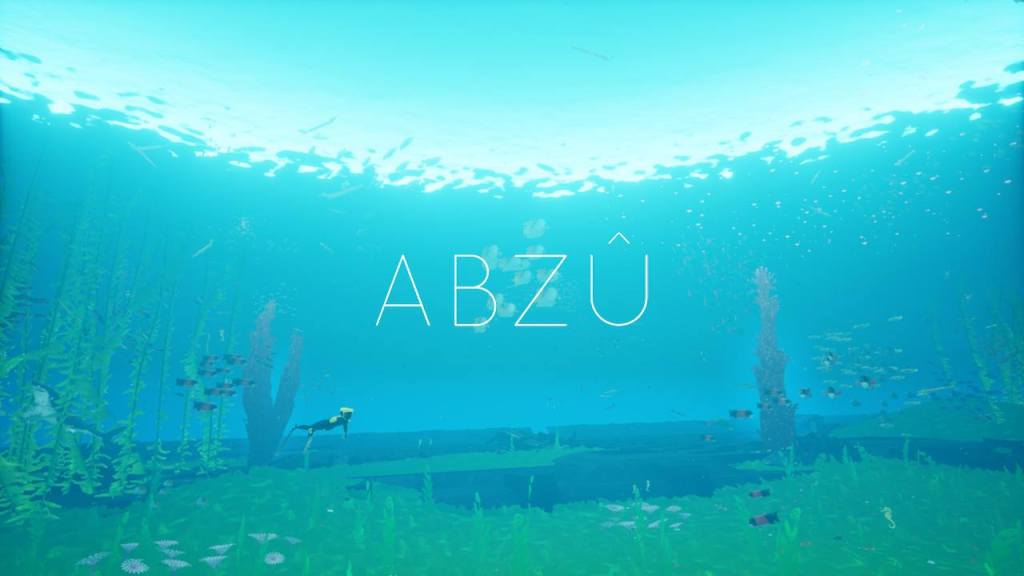
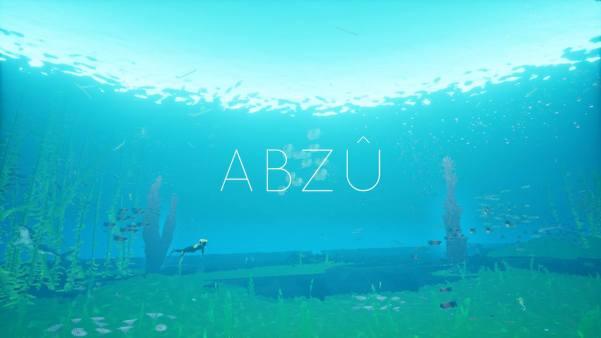
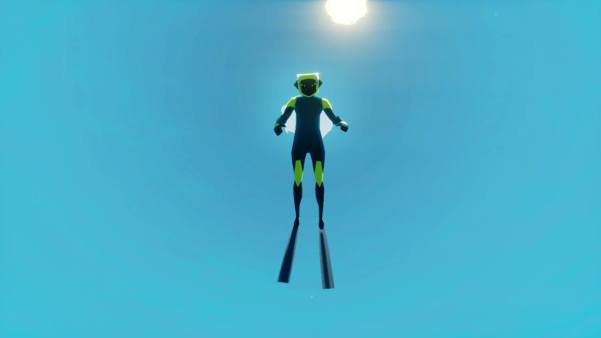
On the other hand Abzû is a diving simulator with some lite puzzling. Released in 2016 by Giant Squid Studios on PS4, XBOne, and Windows PC. It’s now made its way to the Switch. You start your underwater adventure hanging in the ocean, just below the surface of the water. Blinking awake and then surfacing, you can see nothing but calm sea in all directions. Prompts will pop up to teach you to dive, boost, interact, and ride the larger fish and that’s the end of your direction in this. Right, let’s go see what’s happening in this oceanic realm.

This game never explains itself. Some games, like Journey, can get away with this, using glyphs, cutscenes, and the world itself as a storytelling tool. While Abzû does feature the odd mural here and there, I can’t say I managed to glean as much from it as I did reading the Wikipedia entry for abzu.

Exploration is basically, this thing has an orange bit over it that suggests I can interact with it, let’s see… Oh, turtles flew out of this circle of coral, somehow. That’s, good(?). What’s that statue down there? Huh, seems I can meditate there and follow a fish around for a while. Pushing the left stick will switch which species you’re stalking with your mind. How very tranquil. Or creepy, depending on how you feel about following unsuspecting underwater fauna.

Oh, now there’s a shard of light illuminating this area where there’s a something in the sand. *poke poke* Oh, I guess it’s some kind of, drone… thing, that is now following me (this is what I hath wrought with my fish following. How quickly moves the tides of karma in this deep, uncaring ocean. *gurgle screams as camera pans out*). Well, I seem to have three of them now. Yay(?). Ah, they’re cutting through that coral wall for me, thank you metal drone friends. Onwards!

Occasionally, you’ll leave a large open area – losing your primary movement controls – to be ferried down a nicely decorated tunnel, moved by the ocean currents. During these sections you can move around and bump into certain schools of fish will cause them to glow (have I learned nothing from stalking them, leave the fish alone!). There seems to be no benefit to doing this so I remain mildly bewildered by this whole aspect.

As you progress, you will encounter strange underwater buildings, with swirling voids on their roofs. Swimming into these takes you to a weird void ocean, that appears to be hanging over another body of water. Is this the Kur that Wikipedia mentioned? Buggered if I know.

You then swim towards a structure ahead of you and pull some glowing ball out of your chest and pop it inside a slightly bigger glowing, wobbly ball in the structure. This takes you back to the outside of the structure you swam into the top of earlier. The area will start teaming with life, some milky blue water will flow into the bottom of the area (how does that even work?), and a door will open. You still following?

Moving on you’ll find three more of these and a couple of areas where you need to turn a thing to make a chain move, to open a door. It’s barely a puzzle, really just basic exploration stuff.

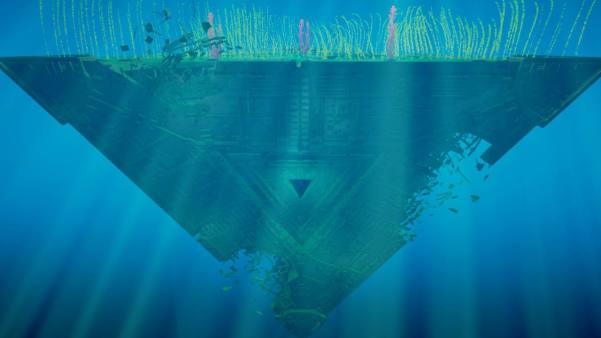
Towards the end of the game, you encounter all these pyramids, point down, that will electrocute you if you get too close. Not to worry, you won’t die, it’s just annoying to try and get past. This is one of the few sections where I actually struggled with the controls. Positioning your very mobile character in a small space, wrangling the camera and making sure you accelerate at just the right angle and for not too long.

I won’t spoil too much, but there’s a whole bit with a resurrected(?) shark and killing off some alien(?) pyramid ships to make oceanic life grow all over their broken hulks and then it’s time to roll credits. After which, you’re free to seek out an online community to ask about what the ballsington fuckly just happened.

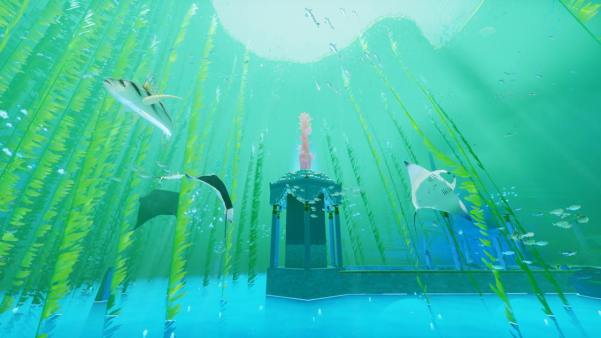
I’ll not deny that Abzû is very pretty. Having mentioned Journey earlier, it’s very much in that art style, just more blue than orange. It’s quite relaxing to swim through the large open areas, turning elegantly and in the water, boosting through underwater archways, leading schools of fish in an aquatic conga line.

The flora and fauna are nicely designed and the texturing is bold and minimal. There’s a whole section with a whale at one point that I think was supposed to be magical, but I just kept thinking about how angular it was in some places. Apart from that, I just found it all really gorgeous, especially some of the larger sea plants and coral formations.

The music is a very tranquil classically composed affair and while I hate to keep referring back to it, It’s very reminiscent of Journey. This includes the swells as you move into the ocean current sections that mirror the sliding down hill sections from that PS3 adventure. What’s that? It was composed by Austin Wintory, composer of the Journey soundtrack. Well, there you have it. I really enjoyed the soundtrack and would definitely recommend giving it a listen if you like classical music, even if you don’t play the game itself.

And just like that. It’s over in about an hour, plus change, perhaps more if you spent more time just swimming around for fun.

Pros:

  • Very pretty
  • Beautiful soundtrack
  • Charming aquatic flora

Cons:

  • Short for the money, especially if the soundtrack isn’t working for you.
  • Obscure story
  • The section where you’re swimming into the pyramid thing with all the pyramid mines can get in the sea. Or out of it I guess, since it’s already in the sea. It can get in the sun then. Yeah, that.

Overall Score: 7/10
Stardew Catty

Life is like, fairly chill.

Here in cat town.
Rabbits, mice, and hares to slay.
It’s a cat blur.
You might solve a mystery.
Or be a kitty.
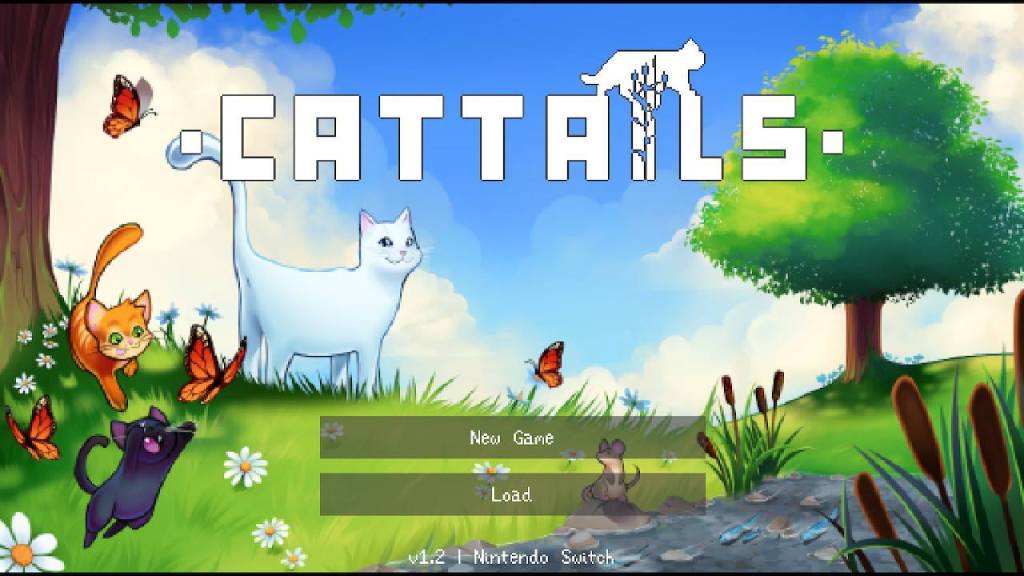
Cattails (Woo-oo), is a cat life simulation RPG, where you take on the role of a cute little kitty, who’s owner’s parent decides they’ve had enough of having a happy child who is learning responsibility for another life and dumps you by the roadside (You know, like a responsible adult would). You find yourself alone and without the kitty knowhow that a more wild cat might have.

The graphics are rather simple, low-res pixels, about the quality of a 16-bit era console title. Not that that’s a bad thing. The character portraits are well done, animals can be identified, the local flora is nice, and the gameplay is such that having high definition graphics really wouldn’t add anything. My only real complaint here is that there are some areas that are super drab, and while I realise that this is supposed to be a very outdoors and earthy game, it could have been perked up in a few parts. The changing seasons will bring more colourful trees and plants, more vibrant grass, but underground areas remain quite visually uninteresting.

The music is pretty basic as well and reminds me of something that you might hear in The Sims. More variety here would have been most welcome.

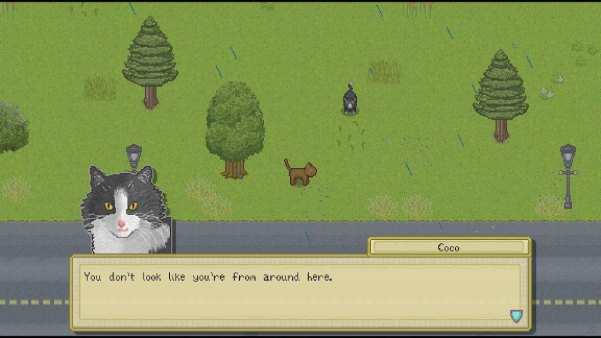
Once the opening vignette is over you’re greeted by Coco, a mysterious black and white cat who teaches you the basic mechanics of the game, including foraging, hunting, and fighting. They then offer to take you to join one of the three local cat colonies. The forest cats live in the vibrant green, western side of the map. The two other cat factions – my sworn enemies – are the mountain colony to the north and the swamp-based Mystics to the east. Glory to the forest colony!

After you join a faction you are provided a den to sleep in. Here you can also save and store items. After a cat nap, you can take a turn around your village and get to know your kitty comrades. Much like Stardew Valley, you can improve friendships by giving gifts to the other townscats. Bribe all the kitty friends!

While on the subject of Stardew Valley, let’s get on to the main story. Not long after you begin your journey and are settled into your den, Coco will turn up to ask for your help with something. They take you to a temple which holds many strange standing stones. As you approach the first, it begins to glow and shortly thereafter it reveals that it wants you to bring it a bunch of dead animals. I have no idea what a stone pillar will do with some mice, squirrels, rabbits, and a hare, but who am I to judge. You live your best life pillar. Your best life, surrounded by carrion.

Once the first pillar is cleared, the others all come to life and your charged with finding several sets of items for them. Some want a bunch of fish, another wants bugs, and so on. Here again I have to draw comparison with Stardew Valley, particularly the town hall missions, where you’re gathering sets of items.

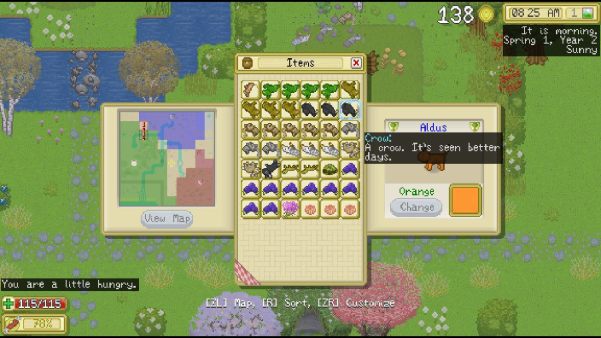
Between gathering all the stuff for the main quest, you can forage for food, medicine, and items. Finding various bushes around the map will yield all sorts of goodies, some of which will make fine gifts for your friends. Foraging is the easiest (and least fatal) way to gain experience at the start of the game. Though you won’t be earning much like this. However, you can sell items you don’t need at the shop, to gain some Mews (the local currency). This in turn can be used to buy extra skins for your cat.

Did you feel that only being able to choose plain fur colours was boring at the beginning? Head to the shop to unlock new skins and turn yourself into a calico, tiger stripped, or other more fancy styles. I can only assume that you tear your own skin off and replace it with something else, which has been gained from the flayed corpse one of your fallen foes. Wait… did I not mention fighting yet. Wow, what a segue!

While your own areas are well defended by your allies, there will be incursions throughout the day. Checking your map will reveal where these are taking place and head over to support your comrades, with your sharpened toe bean razors. Defeated enemies will drop additional mews for your purse (where do you even keep that? or is this like an eat it and then cough it up type thing? What the stuff?! I had like six doves, a couple of squirrels, and some lavender earlier, how does any of that work?! Does my cat have pockets. WHY WON’T ANYONE ANSWER ME! Ahem). This is another good way to gain experience.

‘You keep talking about experience, can you use it for anything?’ Why, thank you for asking fictional voice. You can indeed. Earned experience can be used to power up passive abilities or purchase active abilities. Want to be a better hunter, fighter, swimmer, etc.? Pop some experience in and watch your badassery grow. Tired of getting whipped in fights? Sharpen those claws and wreck some enemy business. Tired of those precious bunnies escaping your reach? Hone your senses and stealth and mess small creatures up with renewed efficiency. With enough practice, you will be the finest specimen of cat that the world has ever known.

Bwahahahahahahaha! Look out colony leaders. Soon I will be ruler over all! All will bow to me! Forests, swamp, and mountains! (Though, maybe not the swamp, it’s all squishy and makes my fur all muddy. But all the good bits, they will be mine). Mine I say.

‘Mine you say? Damn Jane, you are killing these segues.’ Yes, kill, destroy, rule all. ‘No no, dial it back. I was asking about mining’. Fine.

Yep, there’s mining. Head to a pickaxe on the map and enter the mines. Here you can break rocks to try to uncover resources. The deeper you go, the more valuable the debris/metals/gems you uncover. These can be traded to the mole people for mole coins, which will pay for more inventory expansions, skins for your glorious kitty to wear, etc.

As you move further through the game, you can pay to expand your den, this will give you space to start building a family. Romance a friendly cat, get married and have little kittens of your own. If only you could find a camera phone, you could become web-famous for filming the antics of your adorable offspring.

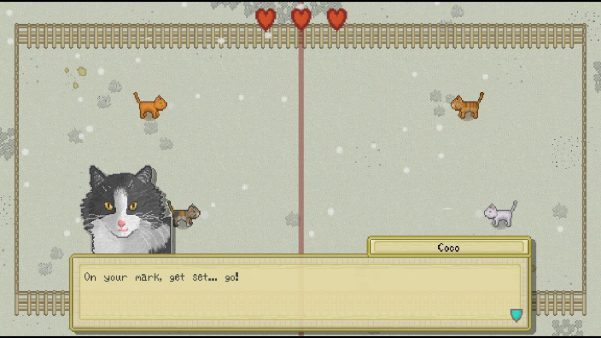
Days go by pretty quickly in game, and white there’s no requirement to sleep it will grant you some experience and top up some health. Each season is 10 days and on the last day there’s a friendly gathering of all the tribes at the central shrine. Here you can play a themed game, up to three times, in order to win a third currency that can only be obtained at these festivals. Games include turtle racing in summer and snowball fights in winter. Each season will have exclusive cat skins available to purchase from Coco at the festival shop.

Overall, the game is quite sweet, with plenty to do and see. A nice little budget title.

Pros:

  • You get to be a cat. Cats are awesome.
  • Like Stardew Valley, but without the crop watering and with more cats.
  • You don’t have to sleep, and won’t be penalised for staying out all night.

Cons:

  • Music could be a bit better or have more tracks.
  • Quite drab in places.
  • Has lost the dynamic lighting seen in the PC version.

Overall Score: 8/10

Let’s Go… Somewhere Else

Because the baying fans always demand more, Nintendo is releasing a remastered version of classic enslavement/dogfighting simulator Pokémon Yellow.

As a depressed, alcoholic, recently out of a mental health facility, closet transgender, undiagnosed autistic, twenty year old, desperate to connect with other nerdy folk, while simultaneously wanting everyone to just go away and leave me the balls alone, I decided to try this game everyone was on about.

Based on having seen maybe 8 episodes of the related anime series and the fact that the few people who’d let me hang out with them were getting into it, I figured I’d give this mass enslavement/dogfighting simulator a go.

Pokémon Yellow had been slightly rejigged from the preceding Red & Blue versions to fit more closely with the TV show. Starting you off without the usual choice of three starters and favouring instead to have you issued with the state-mandated sparky yellow mouse which will follow you around the Kanto region. They’re always there, always watching, always waiting, likely to eat you in your sleep and be found with your blood covering it’s glossy yellow coat (I’m weird about animals ok. I just feel like, they’ll eat me if they get the chance, and honestly, I don’t blame them. There’s a lot of meat on this).

Perhaps you’ve heard of Pokémon Let’s Go Pikachu/Eevee. If not, I guess, this is me telling you now. I feel so accomplished. I made news for you, that one person who didn’t know. I hope you’re not too disappointed.

Once again, you get to take on the mantle of a 10 year old child, abandoned by your parental figure (who may just be some kind of automaton or Stepford parent, charged with raising new, morally questionable children. Always at home, in the kitchen, never sleeping. How else do you explain them not having a bedroom) and forced to make your way in the world by imprisoning the wildlife you encounter and making them to fight to earn you a few more Poké-yen (Pokéyen? Pokkén? Is that right? Is that why the tournament is called that, because it’s prize fighting?), to feed your animal enslavement habit, in the hopes of becoming the owner of the best animal gladiators in your region.

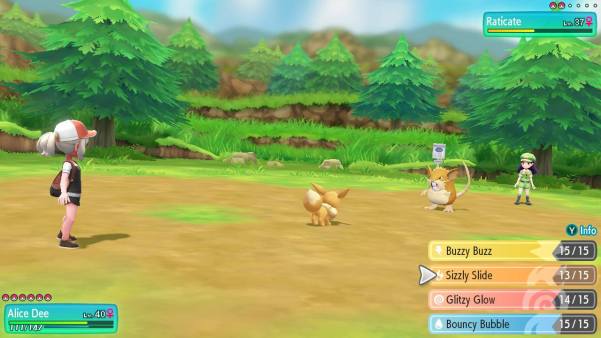
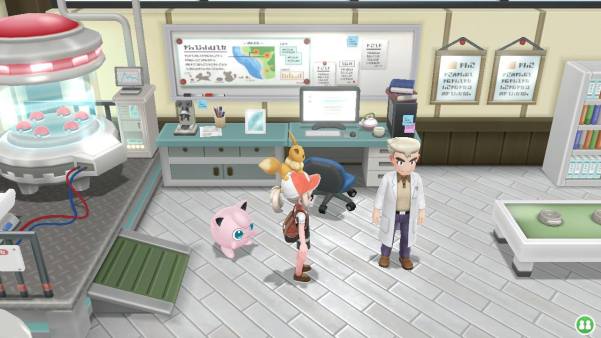
True to its roots, Let’s Go starts you off without the normal choice of starter Pokémon (You made your choice when you paid for it, deal with it). Once you finally get your mitts on the tiny spherical cage they’re usually held in, they’ll pop out and cling onto you. As such, your Pikachu or Eevee is the closest thing to an actual pet in this game. This mon is special. They get stroked, fed snacks for pleasure instead of just need, and put in tiny outfits you pick up along your journey.

While the Pikachu version of the game shows of the dressing up mechanic very well, it’s not so clear with Eevee. This is mainly due to their extra floofy collar (is that a mane? I don’t know animal biology well) which tends to hide most of the shirts you can dress them in. Since it’s only a shirt and hat that they can wear, and I don’t think it’s fair to put a long eared animal in a hat, my Eevee, remains unclothed.

The first major change for this from the original is the way wild Pokémon behave. Gone are the random encounters, replaced with visible mons wandering around the long grass. Once you run into them, you are taken to a capture screen that will be very familiar to anyone who’s played Pokémon Go since its release in 2016. Pick your cage of choice, then throw it at your target as they do their best to evade you. A shrinking ring gives you a change to get standard, nice, great, or excellent throws. None of which really seems to make any difference to whether you’ll actually catch your quarry (even if it’s multiple excellent throws in a row. Sure, you can swap balls or bait them with berries to try and make capture more easily, but there’s no guaranteeing anything.

This is made more frustrating by the forced use of motion control in TV mode (the only way I really like using my Switch). Throwing a Pokéball straight is fairly straightforward (pun intended only after proof-reading), but doing throws to either side is just bad. It took me some time to work out what action the game actually wanted from me, because my natural action led to balls flying in the opposite direction. Basically you need to angle the front face of the joycon towards direction you’re aiming for, as you make the throwing action. My natural inclination was to do the opposite, as that’s how I’d throw naturally. I admit, I’m bad at throwing, but still.

In handheld, you can move with the control stick and do fine tuning by tilting the console itself. This works much better for precision targeting, but it’s annoyingly absent from TV mode. I’ve heard reports the creator said they forced this because they were worried that people wouldn’t use it otherwise. *holds up hand* I would like to be excused from the crap motion controls, in favour of the slightly less crap motion controls please. *the wind blows, tumbleweed passes* Ok then. Thank you for your consideration.

Much has been made about integration with Pokémon Go – the free-to-play mobile game, very much in the same vein. This led me to spending 2 weeks aggressively playing Go, in the hope of getting a head start on a game I wasn’t nearly as excited as I know most people picking it up will be. ‘Did it help?’ In a word, my imaginary friend, no. Firstly, you need at least 6 of 8 gym badges completed before you can even access the function to import your mobile mon. Sure, you can bring them in thereafter, you may be able to fill in the gaps in your version or even get yourself a Meltan (only available by transferring between Go and Let’s Go, and opening *dramatic music* The Mystery Box *audience collective ‘ooh’*. Ultimately, though, it cannot be used to get any real early game advantage, as I’d hoped it might.

What will fill in some gaps early on though, are trades with other players. Pop open the trading menu and select a three icon room code and send it to your perspective supplier of desirable, exotic animals. In local mode, this is very simple. No real risk. For wider area trading, you just have to hope no one else is using that random code and double check their username before you send off something shiny to the wrong person and destroying a friendship.

Speaking of shiny, there’s an “easy” way to get them (shiny Pokémon are just off colour versions that are prized due to their rarity. Even if most of the alt colours are pretty naff (Shiny Ponyta is a beautiful goddess though and I will politely ask Beedrill if they wouldn’t mind punching you in the eyeball if you argue)). Just catch the same Pokémon over and over and you’ll start a chain. The longer the chain, the higher the chance of a shiny spawning – they get easier to catch too. Additionally, the stats of the Pokémon you catch will get closer and closer to perfection. So if you want all the stats you can easily access to be as high as possible, you’ll be looking at catching 200+ of the same creature. However, if just one escapes, or you accidentally catch the wrong thing in a moment of half-asleep confusion, you break the chain and will lose all the benefits you’d worked up.

Don’t worry, if you don’t need those Pokémon that aren’t perfect, you can go full on eugenics and “transfer” them to Professor Oak who will send them to a farm you can never go to, to live a happy life. Honest. Not convinced? No, me neither. Pretty sure he’s grinding them up into candy that you can then feed to your other Pokémon, to improve their stats. The weak destroyed for the good of the strong. Horrific, isn’t it, but apparently this is fine in the Pokémon universe.

There’s a few changes here and there to the plot, but basically it’s the same, you’re the new trainer, your neighbour is a good natured rival (could have sworn they were a total jerk in the original) who’s starting out at the same time, you travel round, mostly looking for tea and some way to wake a Snorlax and then beat the Elite Four to get crowned the very best, like no one ever was, except the last however many people.

Once you’ve proven the strength of the animals you’ve been forcing to fight, you can move onto the post-game. I’m told that the serious Pokéfans get the most out of this bit and are hoping for a lot from it. Well here’s some things you can try for. You can try to become the master of a certain Pokémon type (or all of them, if you’ve got the time), just train up your mon and find the current master. If you defeat them in battle, you can claim the title for yourself. Take 6 of these titles and you can face off with Red (basically Ash from the TV series) for a further title. There’s stuff to find all over the world, the shiny hunting, perfect stat hunting, Meltan farming (and if you’re really patient, evolving), and series favourite trainer battling against other human players.

The graphics look really good. It’s a nice, richly coloured, cartoon style, that sort of reminds me of the MySims games. I was particularly charmed by the fact that the Pokémon in the menus are shown in the pixel art style of the first gen games. The music is well done, modern remakes of the original pieces that was a very pleasant reminisce.

This game is not for me, but I can see what other people like about it. As always, I’m super happy that there are people who like things I don’t, because people worked super hard to make this and it would be a shame if that wasn’t appreciated by folx.

Pros:

  • Beautiful
  • The main Eevee/Pikachu (depending on your version) are super adorable to interact with
  • It’s more of that thing people like

Cons:

  • Motion controls are annoying
  • It’s got Jessie, James and a Meowth in it, but this Meowth doesn’t speak human
  • It’s like dog fighting, but without the blood and long term consequences

Overall Score: 8/10