Silent Krill – Dredge

Image shows a small fishing boat on still ocean. The sun is low in the sky and directly in the centre of the image. To the left, white clouds and darker, grey clouds are to the right. In the centre of the image the word "Dredge" is shown in a sans serif font.

If you’re anything like me – always wondering about the ultimate hug – it can be easy to get hung up on tentacled creatures (yes, I do mean cephalopod arms, you’re very smart for knowing the difference. Have a mackerel cookie and go sit in the quiet area). However, there is much variety in the unusual beings which live beneath the rippling surface of the vast oceans.

In Dredge, you play the part of a fisherman who awakes on the shore of The Minnows with no memory of your past, and no sign of the vessel which brought you to that place.

Fear not (at least, not yet), for the mayor arrives to offer you a new vessel at a very reasonable rate. For every fish you bring to the town fish monger, you’ll get your fair pay, less a small deduction against the cost of the boat’s purchase.

This isn’t a Tom Nook situation, the mayor isn’t interested in keeping you in debt in perpetuity, in fact, in as little as three days, you’ll be the sole owner of your very own fixer upper. Even before your debt is paid off, you’ll gain access to the shipwright who will sell you upgraded engines, fishing rods, trawling nets, and lights. Not only that, but once it is all yours, you’ll have the opportunity to expand the capacity of your craft in each of these categories, as well as the overall size of your cargo hold.
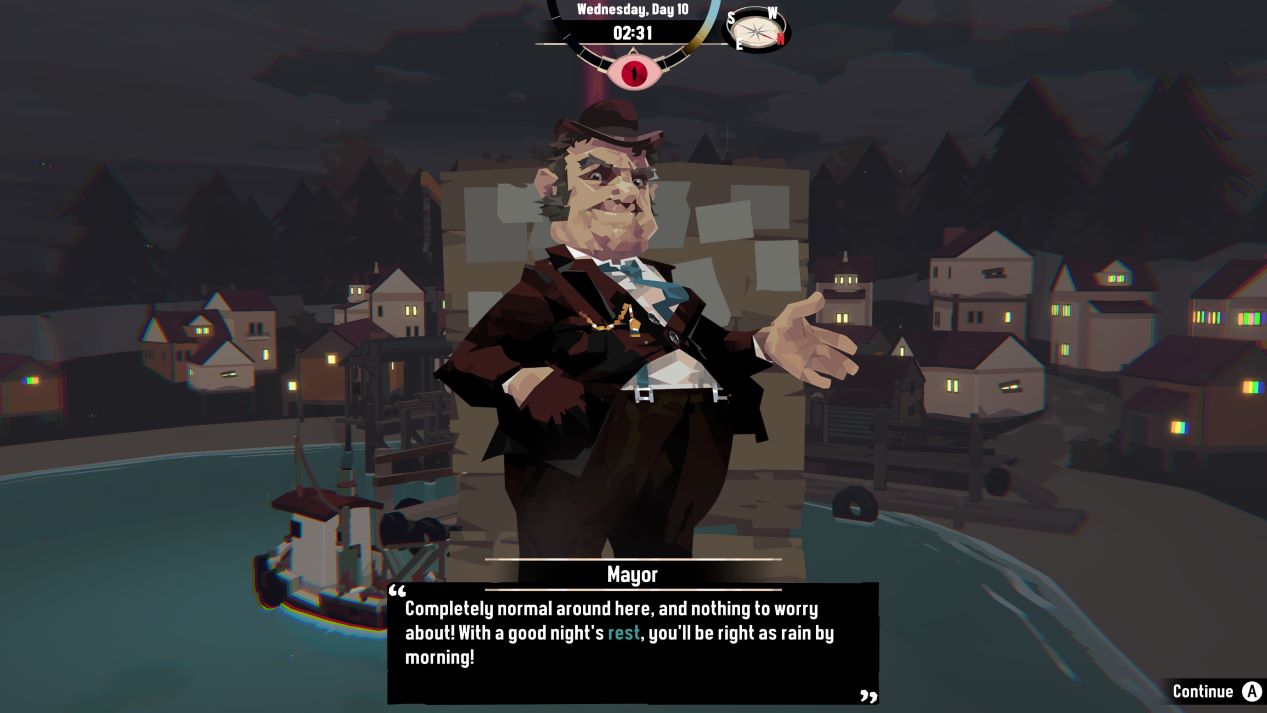
Background is a fishing village, many of the houses have lights on. There is a fishing boat sitting at the dock to the left of the image.
Superimposed over the top, is a middle-aged white man wearing a black top hat, suit jacket and trousers. He has a white shirt and a blue tie.
A text box is at the bottom of the image and reads:
Mayor " Completely normal around here, and nothing to worry about! With a good night's rest (this word is highlighted in teal), you'll be right as rain by morning!"

The hold is represented by an awkwardly shaped grid which you will need to carefully arrange to fit not only the essential workings of your ship, but your catch, any sunken treasures you dredge up (hah, said the thing!), upgrade materials, as well as any other cargo you may see fit to ferry around.

The method catching of your picean prey is pretty typical of fishing minigame fare: tap a button as a dial spins around and time your presses to the highlighted areas. Do well enough and you make your catch. Hooray.

I hate fishing minigames. I have hated them in so many different game and am often grateful when the rewards of such are not mandatory for completion of the narrative. I’ll look for mods to remove them entirely, I’ll beg someone to do it for me, and I’ll just give up and write the whole thing off as personally impossible if that’s the only option..
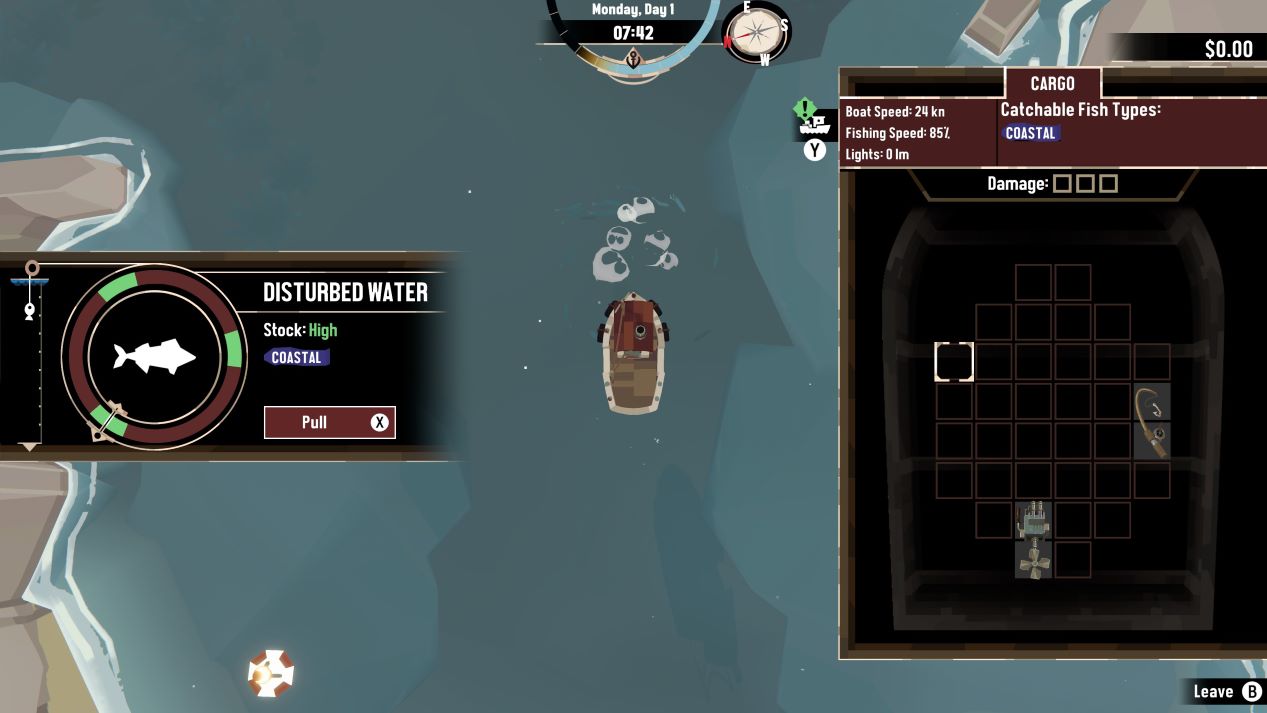
In the middle of the screen is a top- down view of a fishing boat near some disturbed water. To the left is a silhouette image of a fish which is surrounded by a thick ring. At three points around the ring are green, highlighted areas showing where the player needs to press the X button to pull up the fish. To the left of this is a simplified image of a fish on a line, showing how close to the surface it is.
To the right of the screen is a grid image of the boat itself. At the top of this display are 3 boxes for damage markers and within the grid are a fishing rod and the ship's engine.

Maybe it’s the ADHD, maybe it’s my motor function issues, maybe my brain is being interfered with by an alien ray designed to make me struggle with them as a warning from piscine beings from across the cosmos to leave their distant, digital kin in peace.

With that in mind, you may wonder why I would bother even picking up a game where the whole concept is 8-12 hours of fishing minigames tied together with a cosmic horror mystery, ill-fated lovers, and an occasional squelching package delivery service plot.

If you answered “cosmic horror mystery”. You get a (probably not cursed) gold star I found in a shipwreck, one stormy night, just as the fog rolled in and the reaching, shimmering, crimson lights attempted to take me in their haunted embrace from out the dark. While the fish in my hold seemed suddenly to be carrying more than a strong odour and damp regret at the decisions which brought them to this assured end.

Also, it was pointed out to me that there are accessibility settings to make the fishing more manageable. From the options menu on the title screen (or at any time during play on the pause screen), you can go into the accessibility settings and turn on a “relaxed fishing mode”. If you don’t press anything, the fish will be very slowly reeled in. If you take a stab at the quick time event anyway and press at the correct time, you’ll put a big dent in the distance between your prey and your reel. Meanwhile failed attempts will stop you dead for a few seconds. And that… could get dangerous.
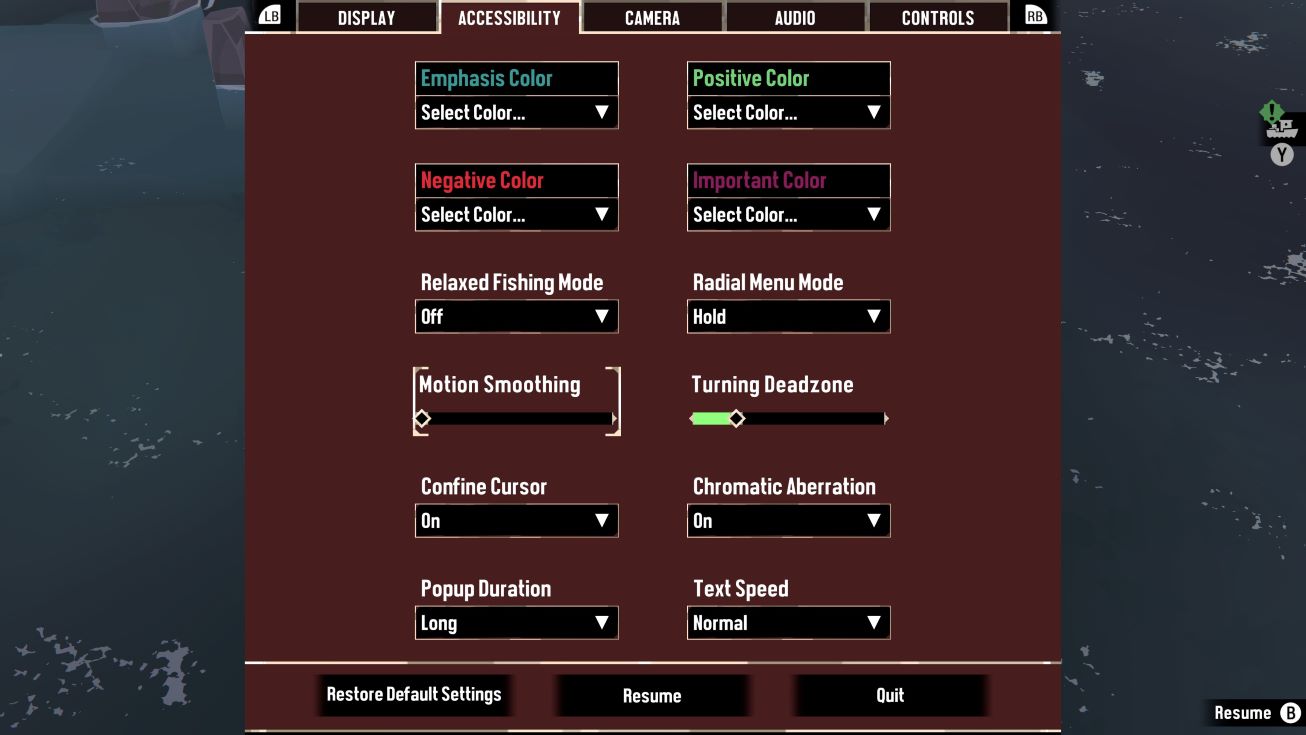
Image shows a dark red menu screen. There are options for Emphasis Colour, Positive Colour, Negative colour, Important Colour, Relaxed Fishing Mode, Radial Menu Mode, Motion Smoothing, Turning Deadzone, Confine Cursor, Chromatic Aberration, Popup Duration, and Text Speed.

You see, time in this game runs on Super Hot rules. Move the boat, clock starts running. Do some fishing, tick tock. Install a new engine, that’s four hours you’ll not see again.

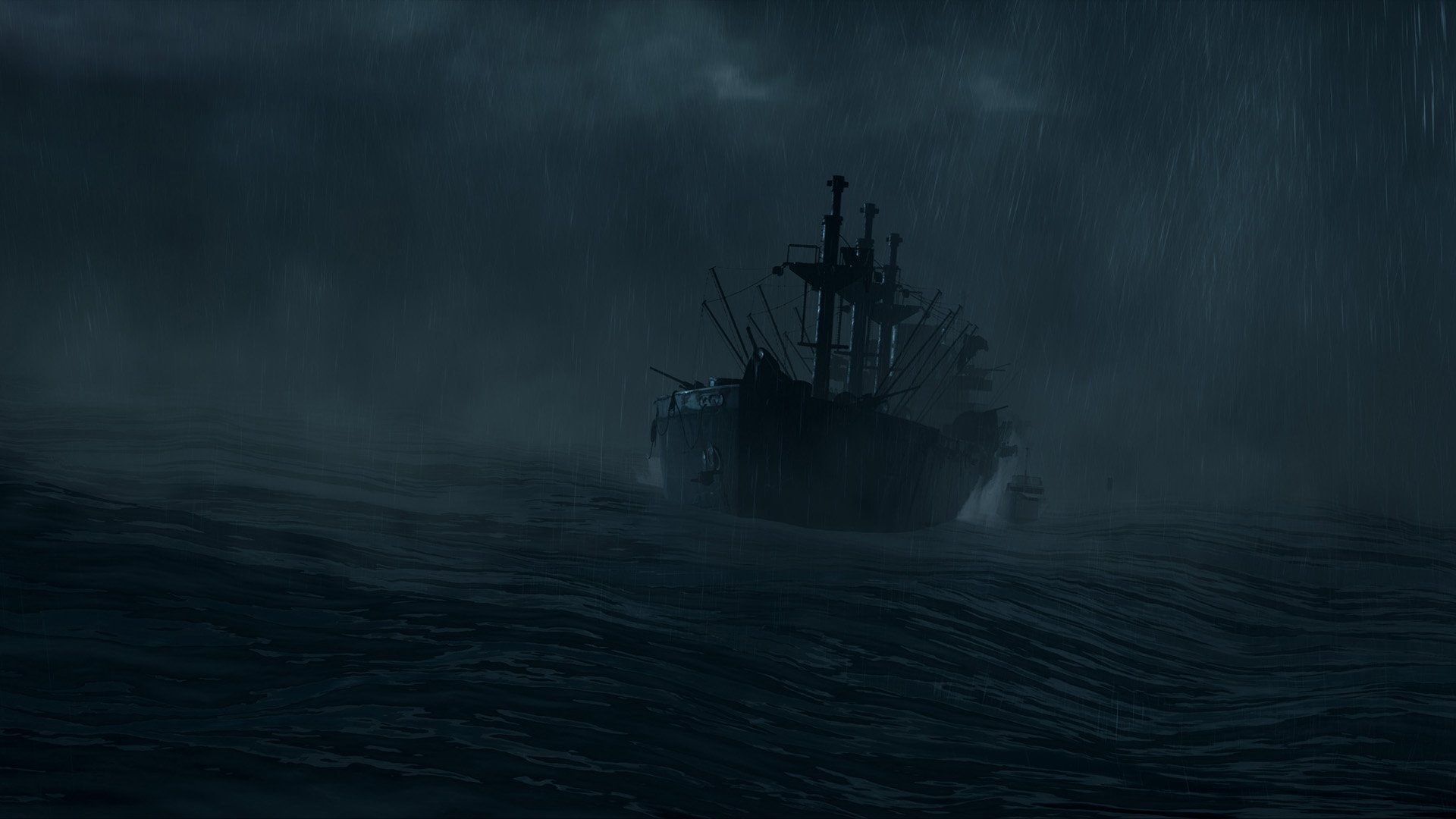
Day dawns at 6am and the ocean seems relatively safe for maybe the next 13 hours. As the strain of your solo sea scavenging begins to take its toll, the thick fog rolls in and cloaks the small, jagged rocks which invite you to fall and die, like the sun’s light.

With the lamps of the early game, you’ll need to move very slowly around most harbours as treacherous rocks will only be rendered at all as the weak light touches them. In fact it doesn’t matter how good your night vision is, or how well you know the area. Some rock only come out in the dark of night and will only be visible once your faint lights touch them.

Without a lot of upgrading, your hull won’t take more than a couple of hits, and if a crash is hard enough, you could be taking multiple hits at once.

Damage to your hull is marked as an unusable spot in your already limited grid. If that despicable red X is over your only rod, you won’t even get any prompts during the catching minigame, you’ll just have to wait a painfully long time to reel anything in.
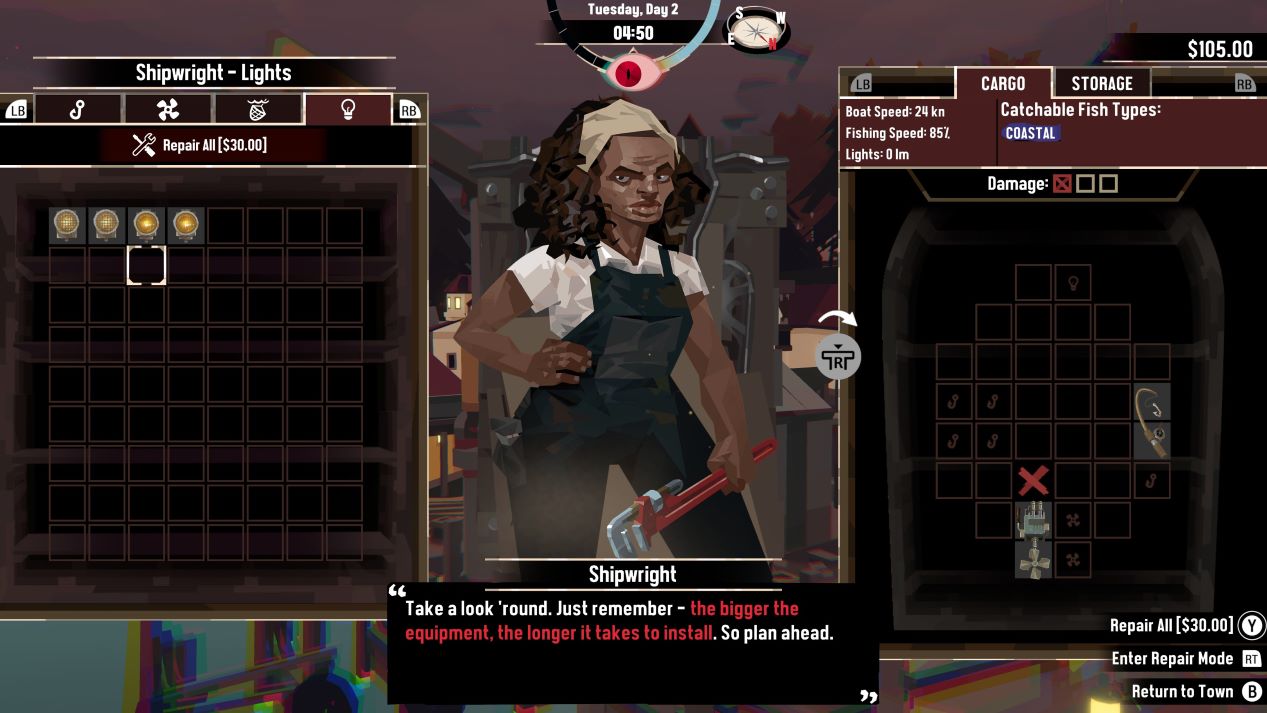
Image shows the shipwright menu. To the left is a mostly empty grid. In the top left are four lights for sale. The top of this menu shows tabs which can be moved to using LB & RB buttons. The other tabs are marked with a fishing rod, a propeller, and a fishing net.
In the centre of the image is the shipwright. She is a black woman, maybe 20-30 years old, wearing black dungarees and a white, short sleeve shirt, and holding an adjustable wrench. Her shoulder length, black hair is held back by a white scarf.
On the right is a similar menu to the left side, showing tabs for Cargo, and Storage. Beneath this are the damage markers, the first of which is filled in. Below is the oval shaped grid which shows a fishing rod, engine and a red x to show where the damage is within the ship.
At the bottom of the screen is a text box which reads:
Shipwright 
"Take a look 'round. Just remember - the bigger the equipment, the longer it takes to install (this part is highlighted in red). So plan ahead."

If it’s on one of your engines, you could be stuck limping along at low speed on one engine, and just maybe, further out to sea that you might be able to safely make it to port before sunset.

Perhaps worst of all, if you had a precious treasure or even a fish in the spot where the breach occurred, that item is gone for good.

This fragility inspires careful rudder work and a weather eye on the all to swiftly passing hours. Even so, a very reasonable fear of what moves in the dark will not avail you when the fishmonger presses you to seek more elusive prey for his special orders. There are some deep sea dwellers, which only can only be sought under the pale light of the moon.

You’re warned early on that the night is perilous, but still, the big bucks which will grant you greater freedom upon the waves, are only given to those who brave such dark waters.

An extra hour here or there isn’t so bad. Soon after midnight though, whether through exhaustion, painful solitude, or unspeakable forces beyond the comprehension of fleshy mortals, you may start to see things. Are there moving lights over there? Above or… perhaps below the water? Where are you? You were sure you were so much closer to port, but did you get turned around in the dark? Your eye (just the one, which sits beneath the clock at the top of the screen) darts wildly back and forth in panic, unsure of what is reel and what is or imagined.

I won’t spoil it, but things get weird out there and I do not recommend it if you value your vessel or your life.

Along your journey, you’ll catch many different types of fish, each will be catalogued in your encyclopaedia. Incomplete entries will tell you in which regions to search, what manner of equipment is required, and even the time of day they can be found. If you’re a completionist, there’s a satisfying amount of sea-life to seek. Including rare and exotic specimens and even the twisted aberrations.

Image shows same fishing UI as mentioned above for catching fish. However, this time the silhouette on the left is not a fish, but a sparkling ring. Instead of a single ring around the item, there are two concentric rings which have small black chunks taken out at uneven intervals. A small white arrow at the top of the outer ring shows the current position of the cursor.
To the right of the screen shows the ship's cargo hold. It contains many fish as well as two engines now and a two different types of fishing rod. In the centre of the hold is a fish which is highlighted in dark pink. I has yellow scales and 5 black eyes.

Speaking of which. Every now and then you’ll be fishing a well stocked spot, pulling up minnow after minnow. It’s not until one comes up with a few too many eyes; pulsating, bulbous protuberances; or teeth where they’ve no right to be, that you start to gain an understanding of the sickness beneath these waves.

Each entry in your encyclopaedia has a corresponding aberration or three. While these will fetch a greater price from the fishmonger, they may also have uses in other ways (which you’ll have to find out for yourself).
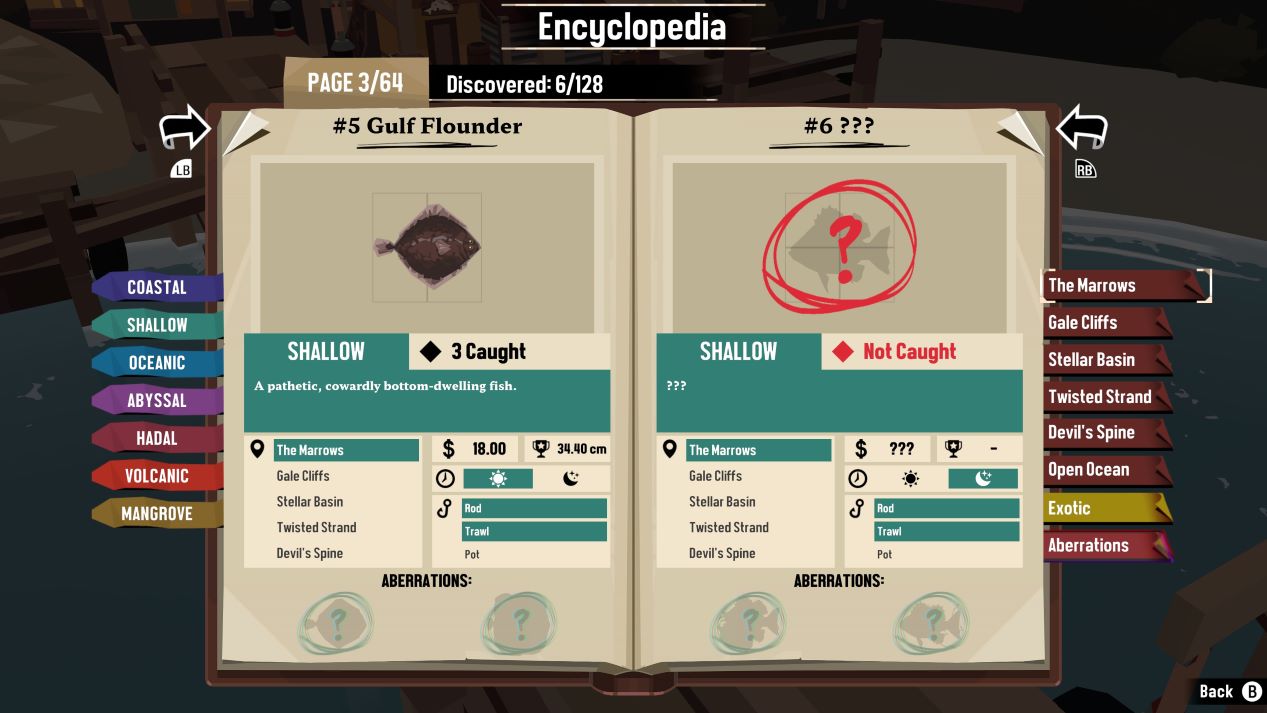
An open book shows a large flat fish on the left page, which is marked as "'#5 Gulf Founder"
Below the image is the type of water it can be found in (shallow), the number caught, a description "a pathetic, cowardly bottom-dwelling fish."
Below this is a section highlighting the area and time of day it can be found, the type of rod/net/pot needed to catch it, the average sell price, and the largest recorded catch. Below this is an area marked "aberrations:" and two greyed out areas, each with a ?
The right hand page shows a mostly empty entry as this fish is not caught. It still shows when, where, and how this fish may be caught.

Along your journey you’ll find various books to read. From your onboard bookshelf you can select an unread edition which your character slowly works through as you go about the usual business of travelling and fishing. Each volume unlocks a bonus for things like fish stock depletion, better deals in shops, and increased movement speed.

Most books are given as rewards for completing missions for folk you meet along the way, so it’s worth checking your quest log (here labelled as “pursuits”) to see if that belt buckle you just found is someone’s long lost memento before you try to sell it off to the trader for a few bucks.

It’s all well and good that your character gets some reading time in, but if you, the player, want some stories of your own, you’re not restricted to the peculiar denizens of the islands and/or fellow folk who float along who you pass along the way. Throughout the world a number of messages in bottles can be found bobbing in the brine. Each combining into a potentially missable mystery of their own. In fact, in my playthrough I had seen one of the game’s two endings before finding the final piece of this tale.

Image shows the sun rising above the treeline of a small island ahead of the fishing boat. The island has many fir trees and a small harbour village. The sky is warm and orange, while the sea in the foreground is dark and blue.

The art in Dredge is very reminiscent of games like Dishonoured or Disco Elysium characters are painted with thick brush strokes, and often in a cold and bleak colour palette, with somewhat exaggerated features. The world at large is often similarly stormy, and the weather seems to worsen as you progress through the narrative. That said, the sun rises are quite beautiful, and clearer days do much to lift the mood upon the wide ocean.

When the world grows darker, and in such areas which lie permanently swaddled in gloom, you may catch sight of the beauty beneath the tides. Gently waving sea weeds, eerily glowing corals, and even the ominous, ruby glow of volcanic fissures which scar the ocean floor like frozen bolts lightning. This is a strangely beautiful world.

Dredge is a fascinating tale which is well told and deeply engaging, even for those of us who usually detest the mechanics of the average fishing minigame. While it may seem like a shorter experience at around 8-12 hours, the core narrative never outstayed its welcome. Once both possible endings have been experienced, I think you’ll agree that the game is exactly as long as it needs to be.

If you’re aiming for 100% completion you’ll have plenty to keep you busy for probably in the region of 30+ hours as you fill every encyclopaedia entry; complete every quest; research every rod, net, crab pot, and engine; as well as finding every hidden item scattered around the many and various islands.

The sea is calling collect. Will you accept the charges?

Dredge is available now on PC, Nintendo Switch, PS5|4, Xbox One, Xbox Series X|S

Pros:

  • Fascinating story
  • Accessible core mechanic
  • Beautiful artwork
  • Fun upgrade system

Cons:

  • Pause menu is a little cluttered

Final Score: 9/10

Postcode Lottery – Monopoly Bid

Monopoly sucks. It’s not a controversial opinion. It takes too long and despite its origins, it glorifies property hoarding. Why it sells as well as it does, even to this day, I have zero clue.

In answer to the length issue, Hasbro offers you Monopoly Bid. A 2-5 player card game that can be played in as little as 5 minutes (I’ve seen it claimed this takes 15-20 minutes, but I knocked out my first three games in that time, and that includes reading the manual).

Set up is as simple as dividing the blue backed property cards and red backed money cards, shuffling both decks and dealing five of the money cards to each player. Money comes in denominations of 1-5, but amongst these cards are four types of action cards: Wild cards complete sets of properties, Draw 2 cards allow you to draw more cards from the money deck, Steal! allows you to steal a property from an opponent’s incomplete set, and Nope! cards are used to cancel any action cards (including other Nope! cards).

On your turn, you will host an auction (youngest hosts first). Everyone draws a card from the money deck, the host flips over the top property and then plays as many action cards as they wish (with opponents using Nope!s if they wish to prolong the agony), and finally everyone starts to bid for the property. Players secretly select the amount they’re willing to pay and reveal on the count of three. If there’s a tie, the tied players may keep bidding. The winning bidder puts their money in a discard pile and places their new property in front of them, everyone else keeps their cash, and play moves to the next round. If no one bids, the card goes to the bottom of the property deck.

Each property set is clearly identified by colour (though I don’t know how good this would be for colourblind players) and has a number in the bottom-left corner. Until you have all the cards in a set (filled in with Wild cards or not) players are allowed to use Steal! cards to have them away from you.

Once someone gets three full sets, they are the greatest hoarder of property and win at capitalism. This is a terrible lesson to teach children.

Now, you might be thinking that there’s more than luck to this game, clearly there’s a degree of memory in the bidding, knowing what other players have shown in previous bids. Maybe, but it’s imperfect knowledge as everyone is picking up a new card before each auction. As such, it’s really all guesswork and luck of the draw on cards.

In one game I started the game with five cards worth one money each. My opponent apparently had a hand full of draw two cards and before the first auction even started, had managed to pick up half of the money deck. I didn’t win a single auction that game and couldn’t stop any cards being played as she had managed to get a fistfull of Nope!s as well. As such, I would warn everyone that this is not a game, it’s a meaningless, colourful distraction that is a complete waste of cards and ink.

I’ve posted my copy to a family member who regularly has young grandkids over, that way I’m not immediately putting it in the recycling bin. At least Uno feels somewhat substantial, get that if you must.

Pros:

  • The colour choices on the cards are vibrant
  • It’s not the Monopoly board game
  • I don’t believe it’s murdered anyone

Cons:

  • Entirely luck-based
  • Less fun than the Monopoly board game
  • Waste of resources

Final Score: 0/10

The Tallest Tales – The Adventure Zone – Bureau of Balance

So, there’s me, Mittens the rogue, and Laurak the wizard, right. And we’re in this creepy cemetery, fighting off a swarm of rats, while having a dance-off, but it’s okay, because you know me, I’ve got this unique and distracting odor, plus I’m good with an axe. Before you know it, things have escalated beyond all sense and Mitten’s ex shows up with this arcane riddle she’s got to answer before we can get on with destroying this bone throne.

*swig*

Right, it’s your round pal. When you get back, I’ll tell you about the time we ran into this sarcastic specter while trying to win a talent show.

If you’ve ever wanted to knock out a low-seriousness fantasy roleplaying campaign in under two hours, you could do a lot worse than the rules-light role playing game in a box: The Adventure Zone – Bureau Of Balance.

Loosely based on one of a bajillionty podcasts by the McElroy Brothers. It’s designed for 2-5 people and takes 60-90 minutes to dungeon crawl through. There’s no maps, no hefty tomes full of rules, only one type of die, and very little maths. Setup is pretty simple, players take a character sheet based on class (warrior, rogue, wizard, bard, or priest) and answer a few questions about that character (there’s prompts on the back of the sheet to either steal from or just get ideas about who your character is). There’s also space to name their adventurer and even draw a mugshot for posterity.

That’s it! No rolling stats, no picking up gear, no deciding on which pack is best for your adventure. All the numbers come printed on your sheet and they never change. Warriors are good against monsters. Wizards are good against magical challenges. The point of this game is not to worry about numbers so much as to tell a fun story together.

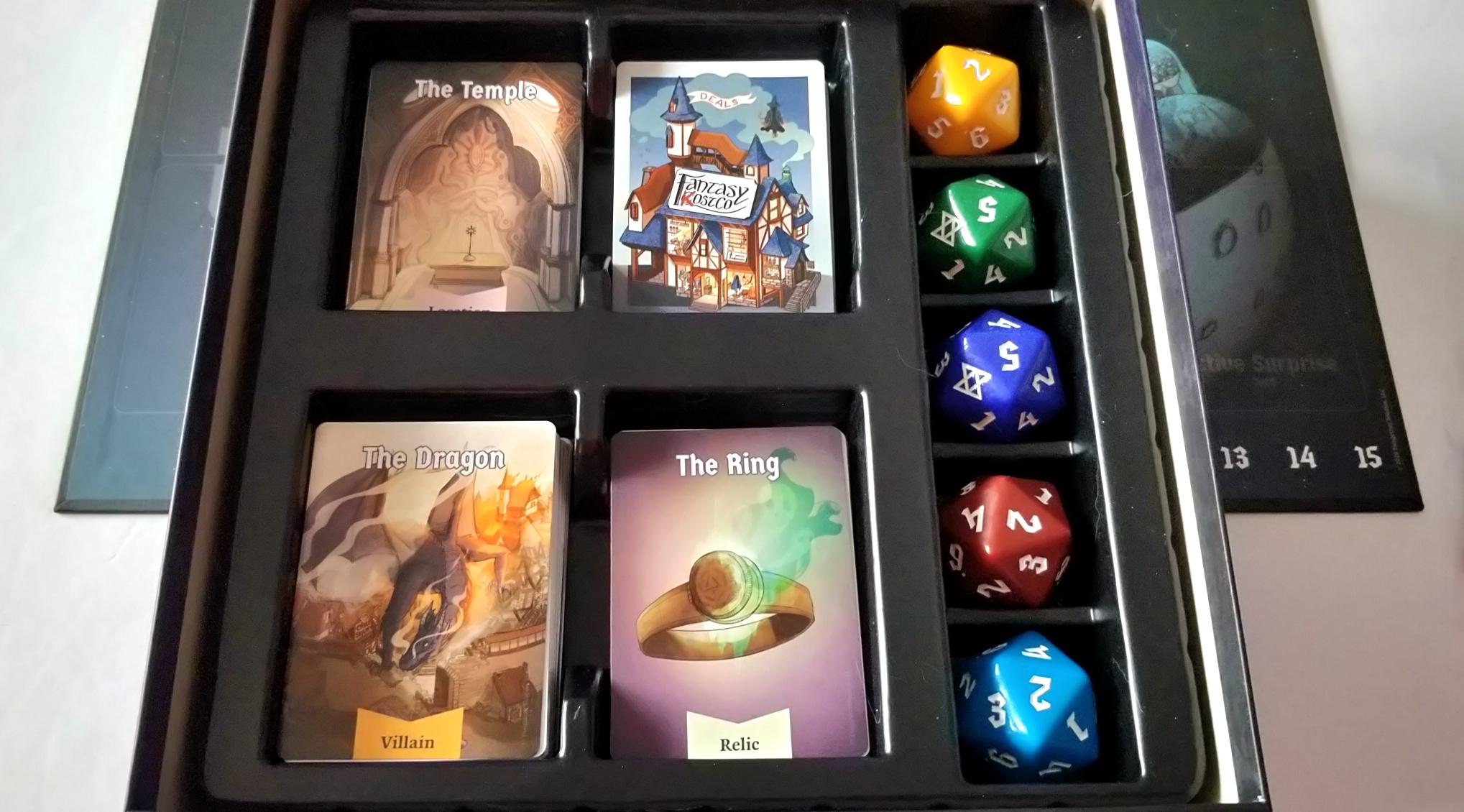
Now, to the adventure itself. Forgoing the common use of a Game/Dungeon Master player typical of most role playing games (thought there is a team leader who is in charge of gently nudging play forward), BoB sees this role taken by small Challenge Decks. One to represent a villain and their minions, the next a relic of power, and finally a location for it all to take place. The game includes a number of each so you could be after the Lich who wants the Ring and hangs out in the Tomb, or the Cult after an Idol on a Train. All of the decks are playable with each other meaning you can get an awful lot of replayability out of this box. Besides, playing with different groups, who knows how they’ll interpret the story in their own way.

Each deck includes 10 cards, each with a scenario and a few numbers. There’s a big number at the top of the card, this represents the score the players need to beat that round. To the left and right, there may be an arrow, which includes a modifier number for the card in that direction. For example, Reliving Your Biggest Mistake, includes +1 to the left, this could make the Swarm of Crawling Hands (usually only a 7) up to a difficulty of 8 (as I said, it’s very simple stuff).

Below the numbers are the card’s name, and below that there may be symbols, denoting the type of encounter this is (monster, spooky, magic, etc). Next is an all purpose box for prompts, and special rules. Some will include effects that remain as long as the card is on the board, others will grant bonuses if you can explain some story aspect of the card (what does something look/smell/taste/sound like?) during your encounter with it. At the very bottom, there’s a skull with a number, showing how much damage it will do if you fail your encounter, and another showing the value of treasure you get for defeating it.

Which brings us to Fantasy CKostCo (it’s legally distinct for the board game) cards. If you’ve earned three loot, you can grab yourself an item card from the deck. It could be Railsplitter, an axe that gives you an ongoing bonus against monsters and a bonus when you help a friend fight a monster; or some very adorable Slippies of Haste, which give you a bonus against monsters and traps. If you’ve got the deluxe edition of the game, you’ll get an adorable slot-together model of the Fantasy KostCo to hold your cards, but it doesn’t seem to stay together very well (at least ours doesn’t) and you’ll regularly end up with cards flying everywhere (save yourself $20 and get the standard edition).

You’re not allowed to hold more than two item cards, but there’s a really nice mechanic, whereby if you earn enough to get a third item, you can immediately give one to someone else on your team, meaning that even if one player hasn’t managed to get any loot themselves, they won’t be underprepared as you move on through your adventures.

If you’re playing more than two players, the last thing you’ll need to do is add a surprise card to each Challenge Deck, to be uncovered once you’ve got past the first four cards. These surprises are helpful friends who will aid you in your quest. They even get their own little space on the board to hang out in, until the next surprise comes along to take over.
So, the board is set, the quest is planned(ish) and the party introduce themselves (and show off their stick figure art of a wizard gnome), time for adventure. On a turn, players chose one of the three challenges to take on, work out how much strength they have (based on the numbers on their sheet, plus any bonuses from items or surprises), tell the story of how they’re going about this quest, ask for assistance from another player (if they don’t think they can beat the challenge alone), and finally roll their dice.

I forgot to mention the dice in this game. They’re big enough to concuss someone if you are the type to throw things when you fail a roll (please don’t, and maybe get some help for your anger issues). While they look like standard twenty-sided dice, they actually only feature the numbers 1-6 (three times each), as well as a big X for an epic failure, and a Bureau of Balance symbol for a critical success.

Anyway… roll the die, add it to your total strength (including any modifiers for items or help from your party) and if it’s higher than the challenge rating, you win and you get that card.

The story ends once two of the challenge decks are exhausted.

If you’ve got people who are really able to go with the flow and can whip up some silly detail about their challenge, you can get some really fun group storytelling. Even if you’ve got one fairly quiet player, you can still get a fun story together, thanks to the cards themselves and the way the game wants you to interact with it. I’ve had some fairly difficult games with this box (and more than a few adventures that got really horny), but never one that didn’t get at least a few good belly laughs.

The Adventure Zone – Bureau of Balance probably isn’t for hardcore Pathfinder or D&D players, but if you’re looking to experience a rules-light, no-DM, co-operative story you can play in an evening with no prep, you could do a lot worse than this. Perhaps a good introduction for getting friends into the world of role playing, without scaring them away by making them read a 300 page player manual first.

Pros:

  • Easy to pick up
  • Nice artwork
  • Lots of fun

Cons:

  • Can experience difficulty spikes
  • Not very deep
  • Deluxe edition feels unnecessary

Final Score: 6/10

Seeing Red – Flamme Rouge

To look at Flamme Rouge, you’d think it was a child’s puzzle with some little toy bicycles on it. It’s a few Hot Wheels, a Care Bear and a tin of home dried mint leaves (don’t ask) away from looking like something I’d have loved as a kid. That said, the front of the box shows enough awards to make it worth a deeper look.

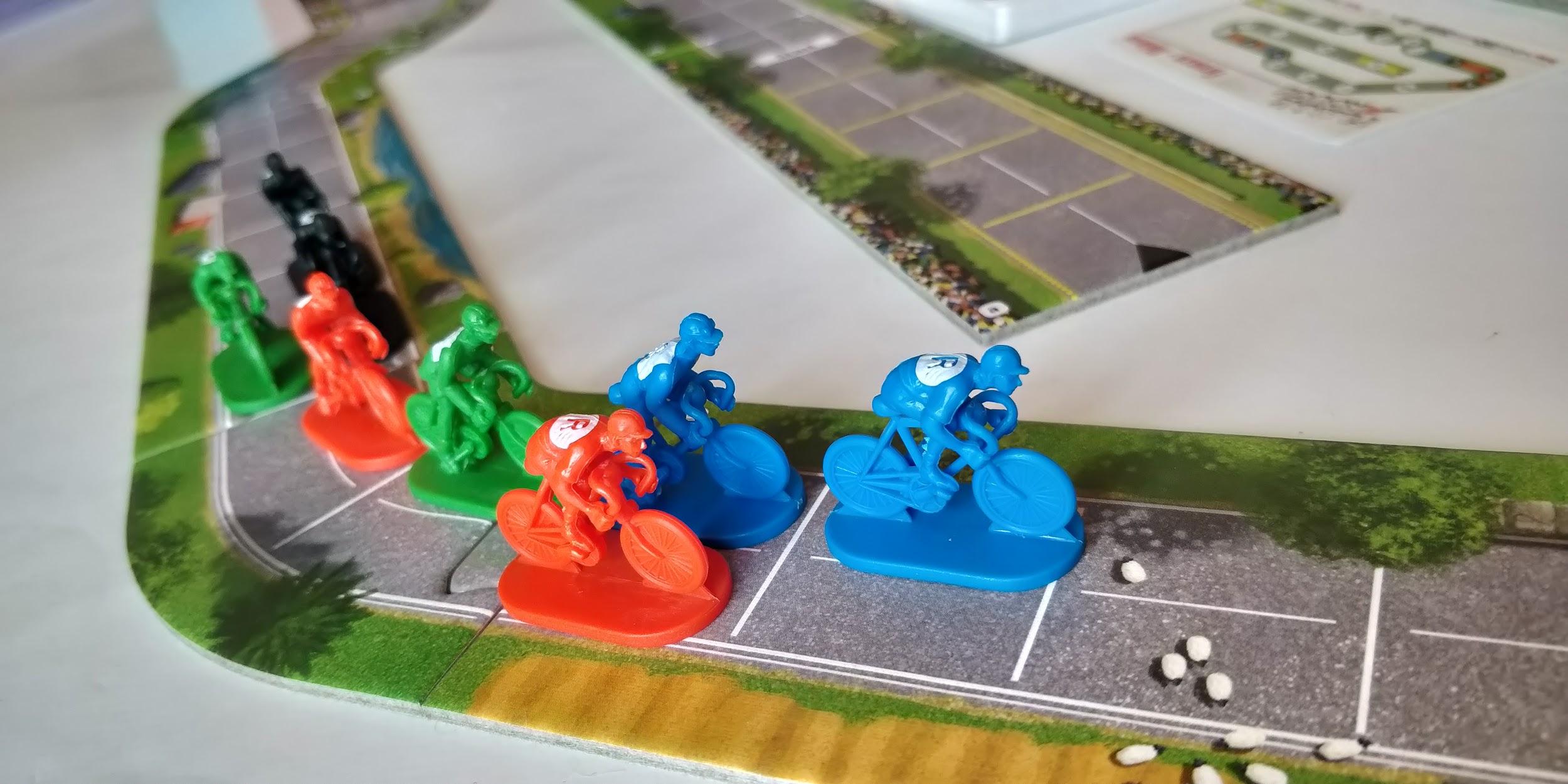
Flamme Rouge is a race game for 2-4 players (you can add 2 more with the expansion). The game board is double sided and modular, meaning that you can get a lot of different layouts from these parts. The pieces of the board (and the player boards) are made of super thick and weighty cardboard and popping these out was one of the most satisfying punchcard experiences I’ve had in a while.

Setup is pretty simple, the game comes with 5 route cards which show you how to lay out the pieces and which way up. Players then take turns to put their bikes in the starting area. The inside lane of each square counting as being in the lead.

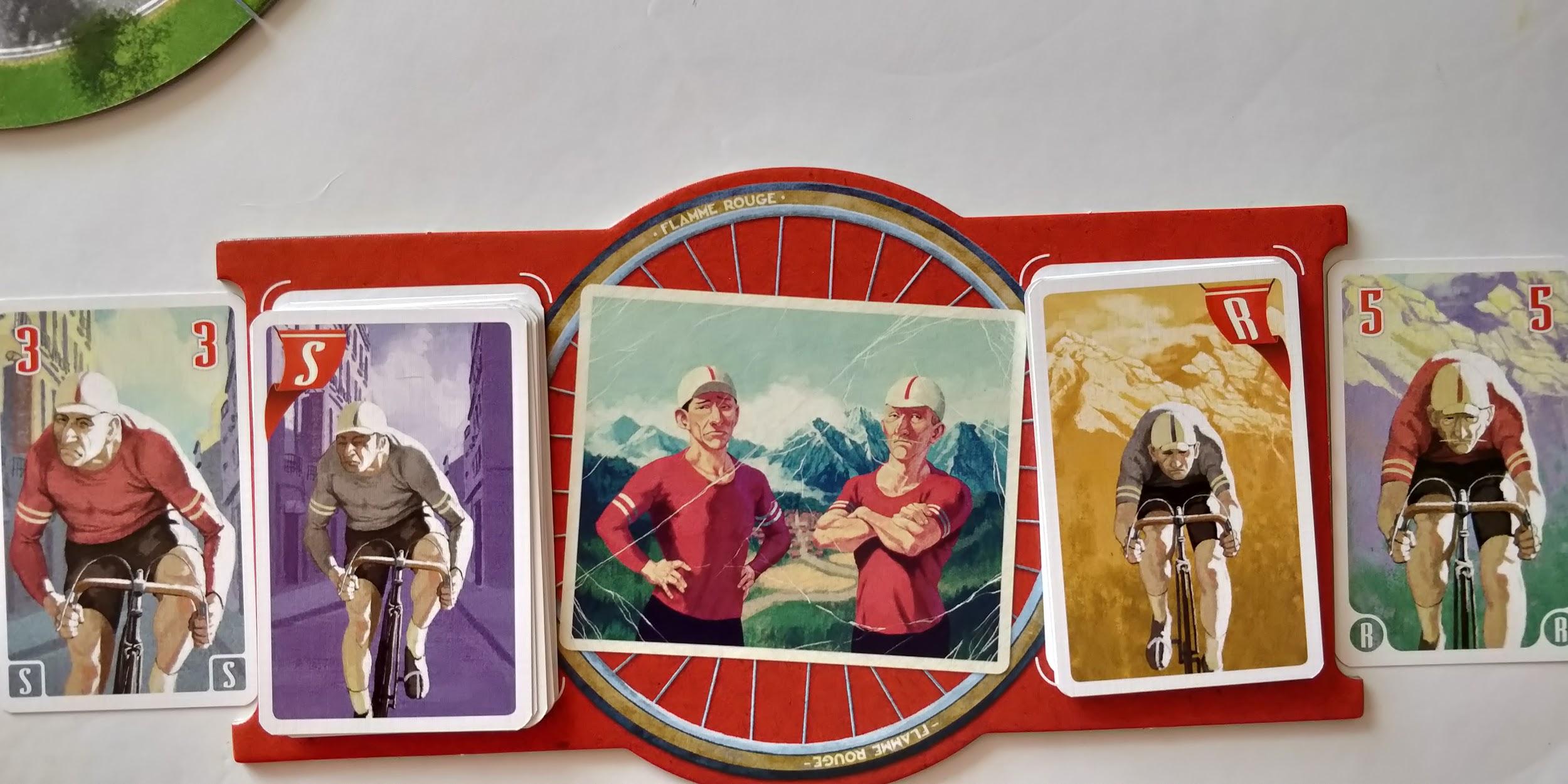
Each player gets two cyclists – a sprinteur (slow, with occasional bursts of speed) and a rouleur (who keeps a more steady pace) – as well as two decks of cards – one for each of their grumpy bike boys (seriously, all the cards make them look really miserable).

Players will draw 4 cards from one of their two decks, pick one to play, and then lay it face down next to their player board. The other cards get put face-up on the bottom of their deck. Then they move on to the other deck and repeat the action. It’s this incomplete knowledge of what the other cyclist’s cards are going to be that can really ramp up the tension, and make or break your strategy.

Once everyone has picked their cards, players go in sequence from the race leader, turning over their cards and move the number of spaces shown. The played cards are removed from the game, never to be seen again (I think they get taken out and shot, or something).

Next comes the slipstream section. Starting from the last racer, players check the number of empty spaces between them and the cyclist in front. If it’s only one space the racer(s) move up and fill the gap. This then forms a block and the process starts again. If there’s only one space between that block and the rider in front, the whole block move up to fill the gap. And so on until everyone is either bunched up in a pack, or too far apart to benefit. Any riders who find themselves with an empty space in front of them after this process takes an exhaustion card (only 2 movement) and add it to their deck.

Because of this, it’s not advisable to get too close to the front of the pack as you risk exhaustion, but if you don’t, it’s very hard to try and pull ahead. As such, you can find yourself sticking in the pack for most of the race, only daring to sprint at the last minute. That said, if you’re saving all your high value cards for the end of the game, you could end up with one rider drawing a hand of just these cards, long before you’re ready. Meaning they’re forced to go flying by, flicking the v’s at opponents as they speed past. Sure, they’re way in front now, but they’ll be picking up exhaustion and looking pretty silly if the others finally catch or overtake.

As you move through your deck, it’s easy to get a grasp of roughly what’s in there, so you can plan ahead to some degree. Once the face up cards you’ve been recycling hit the top of your deck, it’s time to shuffle and move on. Suddenly those exhaustion cards you picked up are in the mix and you’re at risk of having a handful of low value cards when the pack pulls away.

In addition to these basic rules, some of the track layouts include hills. While entering or going up an incline, you can’t move more than 5 squares. So if you’re 6 blocks from the bottom of a hill you can’t move onto it with a card showing 7, you’ll have to finish your turn early, before you start the climb. If you played that 7 on the way up, you’d only get to move 5 spaces.

Furthermore, as you fight your screaming muscles to push on up, you get no slipstream benefits and as before, if there’s a gap ahead of you at the end of the round, you’re getting exhausted.

Conversely, if you start your turn on a downward slope, all cards are treated as a minimum of 5. Meaning you may be able to spend away your exhaustion cards for far more than they’re worth.

Because the decks are so small, you’ll find yourself moving through them very quickly, especially late game (if you’ve managed to avoid too much exhaustion). This limits your options in really fun and interesting ways. There’s a reason one of the awards on the box is from Mensa.

While a game of Flamme Rouge isn’t exactly long (30-45 mins at most) it’s a lot of fun and there’s every chance your table will be up for setting up a new track and going the extra kilometer.

Pros:

  • A well paced race game.
  • Deep enough that even seasoned gamers will enjoy.
  • Modular board means there’s plenty of replayability.

Cons:

  • The game comes without anywhere to store cards, so they just rattle around the box.
  • Could do with some more course cards as 5 single sided cards seems a bit of a waste.

Final Score: 8/10

Embr Is In Early Access Now

null

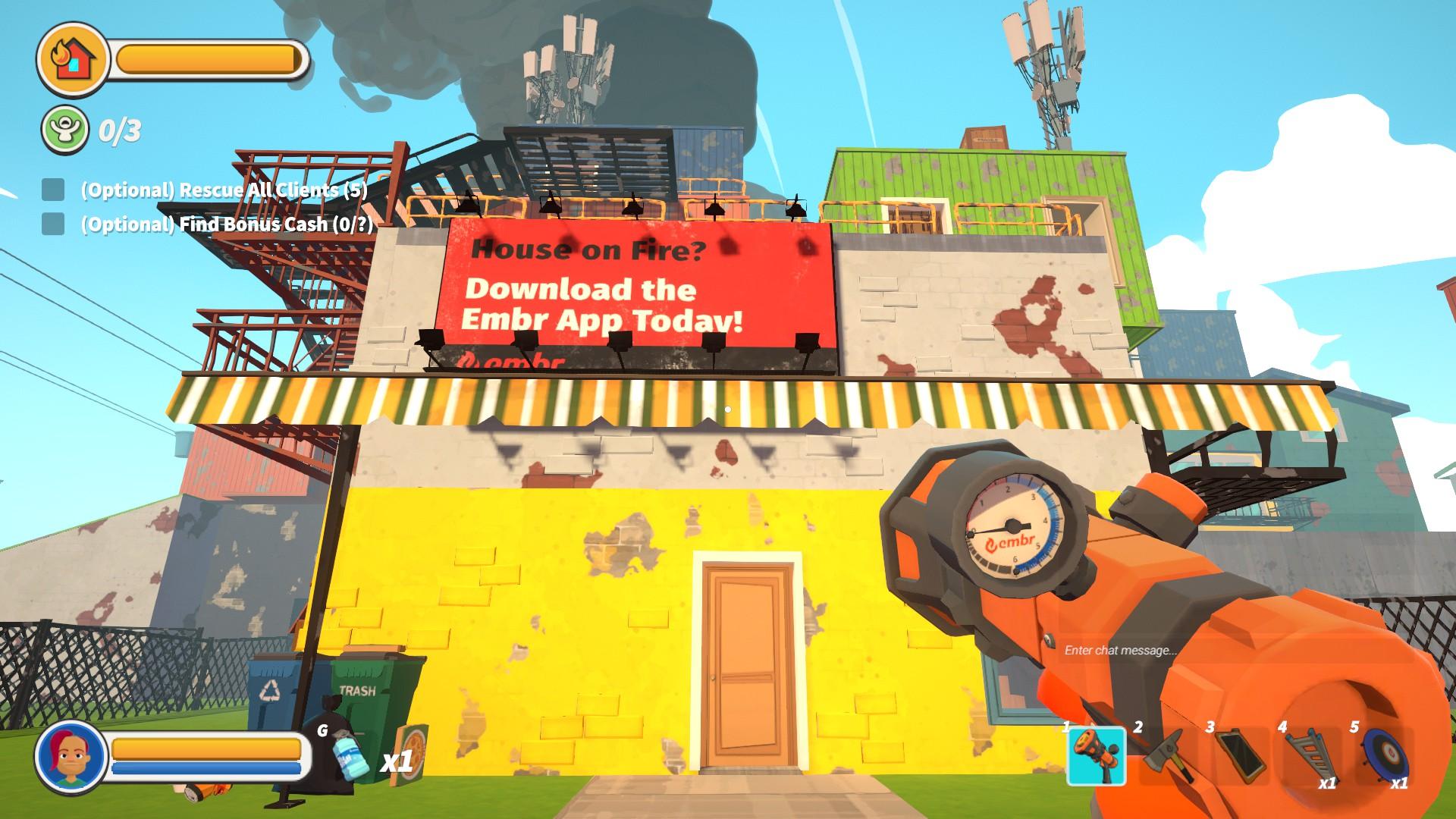
10:16AM my phone buzzes. It’s the Embr app. As a Respondr, I make my money by taking jobs through the app. People think we’re like a private fire service, but so few of them read the terms and conditions properly. Luckily I sleep in my customised truck, so I’m ready to roll in an instant.

10:19AM I arrive at the client’s domicile and chop my way through the front door. Yep, that’s a fire alright. On the far side of the room a middle aged man is running in circles screaming. I use my hose to clear a path through the fire towards them. “Oh, thank gods you’re here, please you have to save us, there’s me, my husband, our 2 children and my mother-in-law in the house.” he sobs, clinging to my plaid shirt. This shouldn’t be too difficult. I’m only contracted to rescue 4 of them and the house isn’t that big, or on fire.

“Sir, I need you to calm down and tell me if you have any valuables in the property. Any stacks of cash or high value items.” I ask, but he just goes back to screaming about his family and the fire.

In an upstairs bathroom I find the husband. He’s sitting on the toilet, looking a little sheepish. He’s surprisingly calm considering he’s sitting not 3 feet from the inferno that was once his shower unit. “Well, I hope you wiped already.” I think to myself as I hoist him over my shoulder and head for the nearest window, which I smash with my axe. Taking a moment to estimate the distance to the designated safe zone, I yeet him out the window.

Turns out I miscalculated and he landed a good 1 foot short. My bad. I take out my ladder and carefully descend, before collecting up the husband again and carrying him the last foot to safety.

Returning to the house I find a teenage girl in an upstairs hallway. The passage is a raging inferno, but she’s too focused on her phone. Hopefully she’s tech savvy enough to give me a full 5 flame review when this is over. I start to hose down the walls and floor but I failed to notice and electrical socket. As such, I’ve just swapped fire for a more shocking problem since the floor is now a different kind of death trap. Thinking fast, I look along the cable from the socket and flick the switch off.

The teen hasn’t even noticed so I rush her to the window and leave her there while I drop down a trampoline. Once it’s deployed I grab her again and hurl us both out. It’s a little bouncy, but I get us both to the safe zone without any broken bones this time.

In through the front door again, I see that, despite the fact I made a safe path through the fire on my way in, the client didn’t bother leaving the house himself. In the meantime, the main support beams for the floor above have fallen meaning I have to chop my way through to get him out.

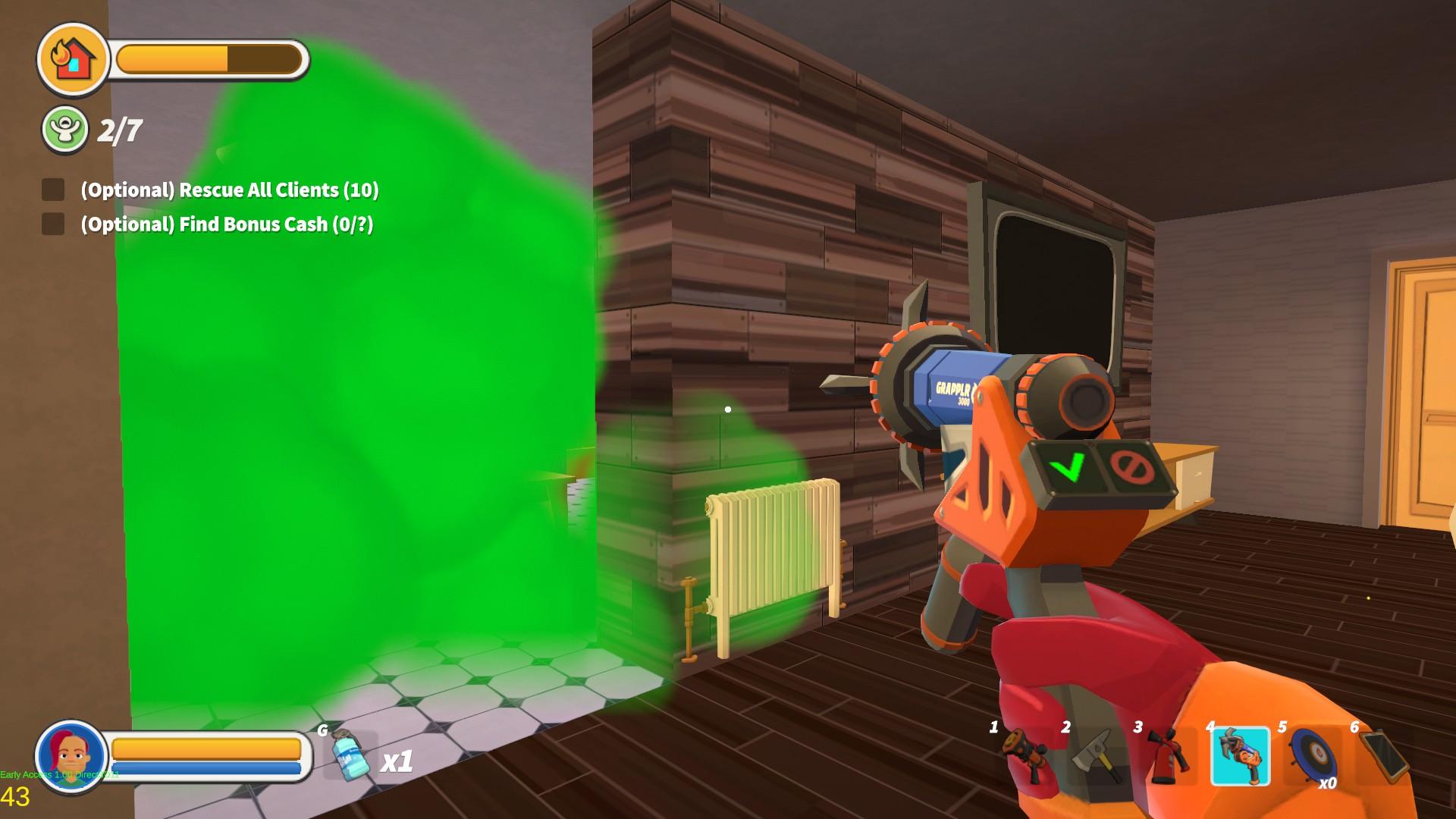
Next up is the basement. Getting through the fire on the stairs isn’t an issue as the stairs have collapsed. I throw down a water grenade to clear most of the flames before deploying my ladder and descending safely. Floating ominously in a doorway is a cloud of green gas. Luckily there’s a nearby standing fan which someone left on and I use it to push the gas away from my entrance.

Jackpot! There in the corner is the family safe. There’s another kid sitting on top of it, but they can be moved. Unfortunately, it’s an electrical locking mechanism. Tossing the kid aside, I spray some water between the safe’s exposed cable and a wall socket. Then I just have to turn on the power and voila, the safe pops open. Come to momma you beautiful green stacks. There must be $100k here. I grab the cash, leaving the whining teen behind for now. There’s definitely going to be a bonus for my for rescuing all this dough. I carefully take my precious cargo out to the safe zone and place it tenderly within, on one of the comfier looking mattresses. Don’t worry friend, I’ll be back to count you later.

I allow myself a moment to think about the new grappling hook I’ll be buying with my cut of that before strolling back in. The fire is much bigger now and the basement is completely engulfed. Guess, junior isn’t getting rescued today. I retrieve my ladder and take it around to the back of the house to gain access to the balcony.

Score, there’s the mother-in-law. She seems completely unaware of the situation so I squirt her with my hose to knock her down before she accuses me of trespassing and carry her to safety.

“That’s me done sir, please be sure to leave a favourable review on the app.” I say cheerily to the client.

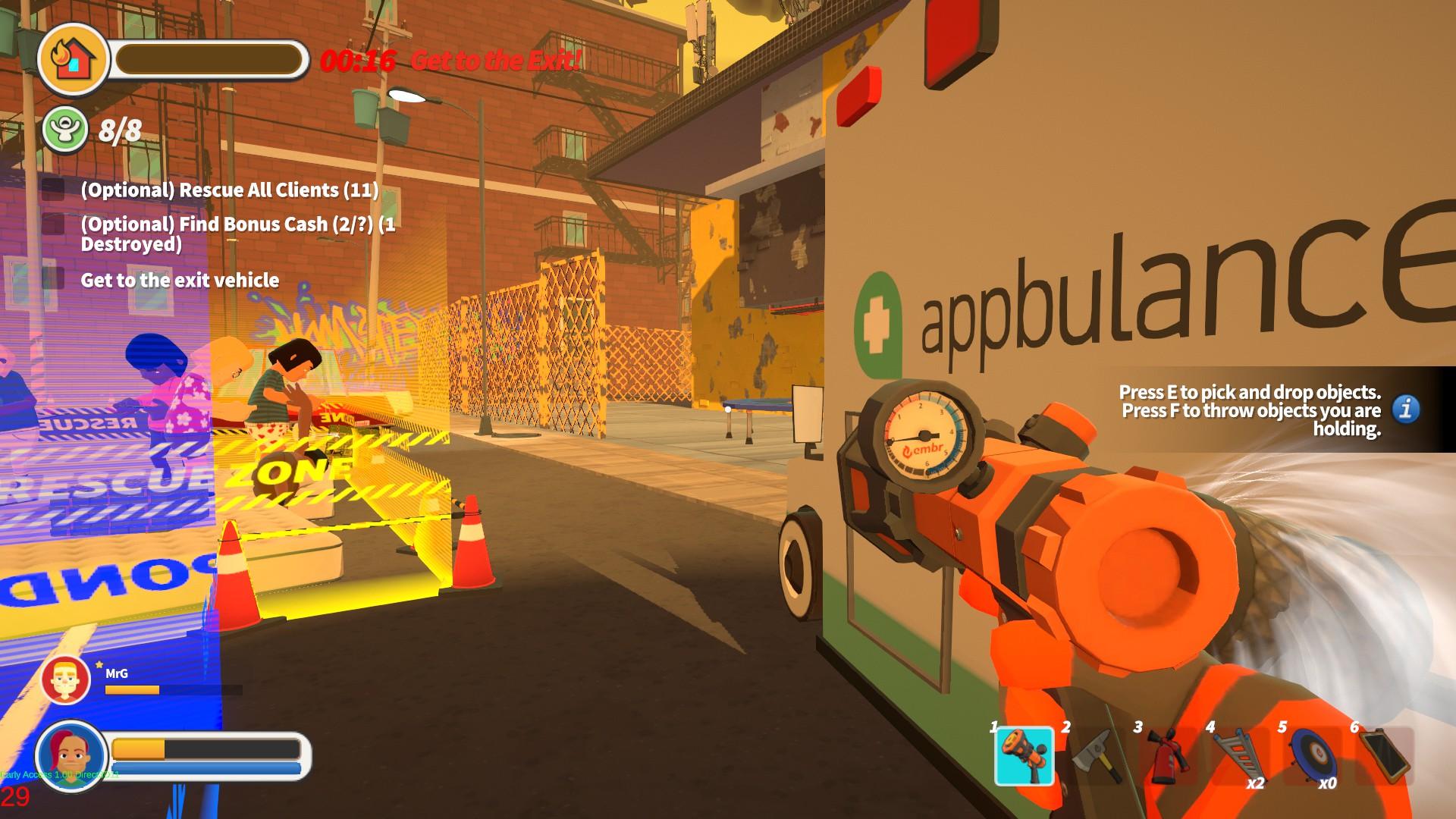
“But my house is still on fire!” he screams at me over the sound of the approaching Appbulance.

“I’m just here to fulfil the contract, which I’ve done. Have a good day, and stay safe sir.”

I’m barely back in my truck when the app buzzes again. A restaurant on the other side of town. Guess I’d better Crab n’ Go check it out.

Embr is out now on early access and available through Steam. It’s highly playable in it’s current state and hugely improved over the version I played last year at CoxCon. I’d highly recommend anyone play it, it’s loads of fun, especially in multiplayer. Just don’t think too hard about the premise of a private fire and rescue service.

Come Along With Me – Wattam

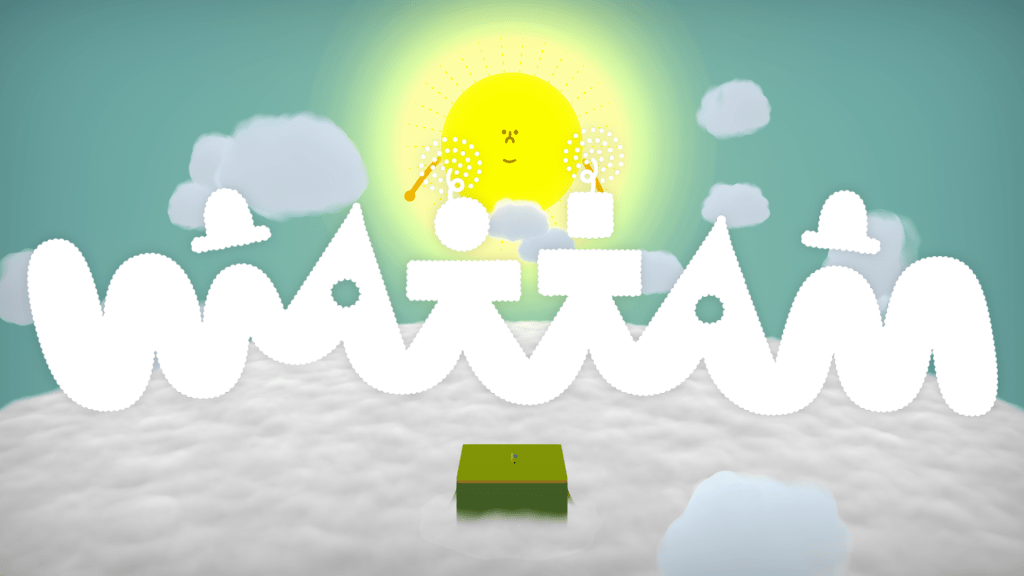
If you’ve been reading my stuff for a while, you’ll know I really like the Katamari Games. As such I was super excited to hear that Keita Takahashi would be releasing Wattam in time for the new year (happy new year btw). From the trailers I knew very little, apart from that it would have a similar graphical style to the Takahashi’s other games, and that it involved holding hands.

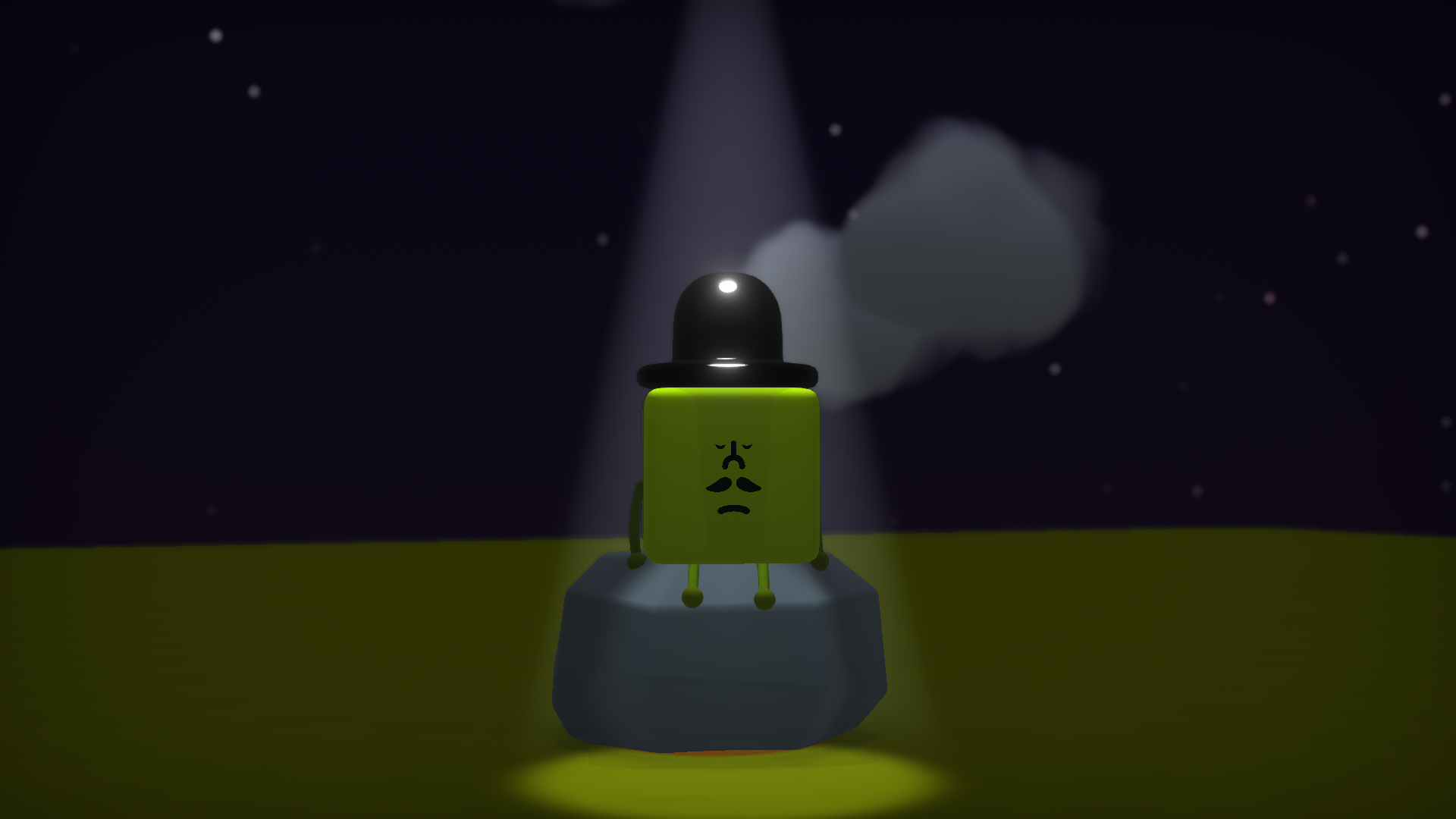
Wattam plonks you into a dark world with only a sad looking green cube friend who wears a black hat and has confusing facial features (everyone’s nose looks kinda like a cat’s mouth so the mouth below that makes for some mental gymnastics while playing). The cube – introduced as Mayor, has lost their memory and must explore the world around them, meeting a rapidly expanding cast of brightly coloured and simply designed companions. Friends such as orange flower, acorn, squid, boat, telephone & toilet.

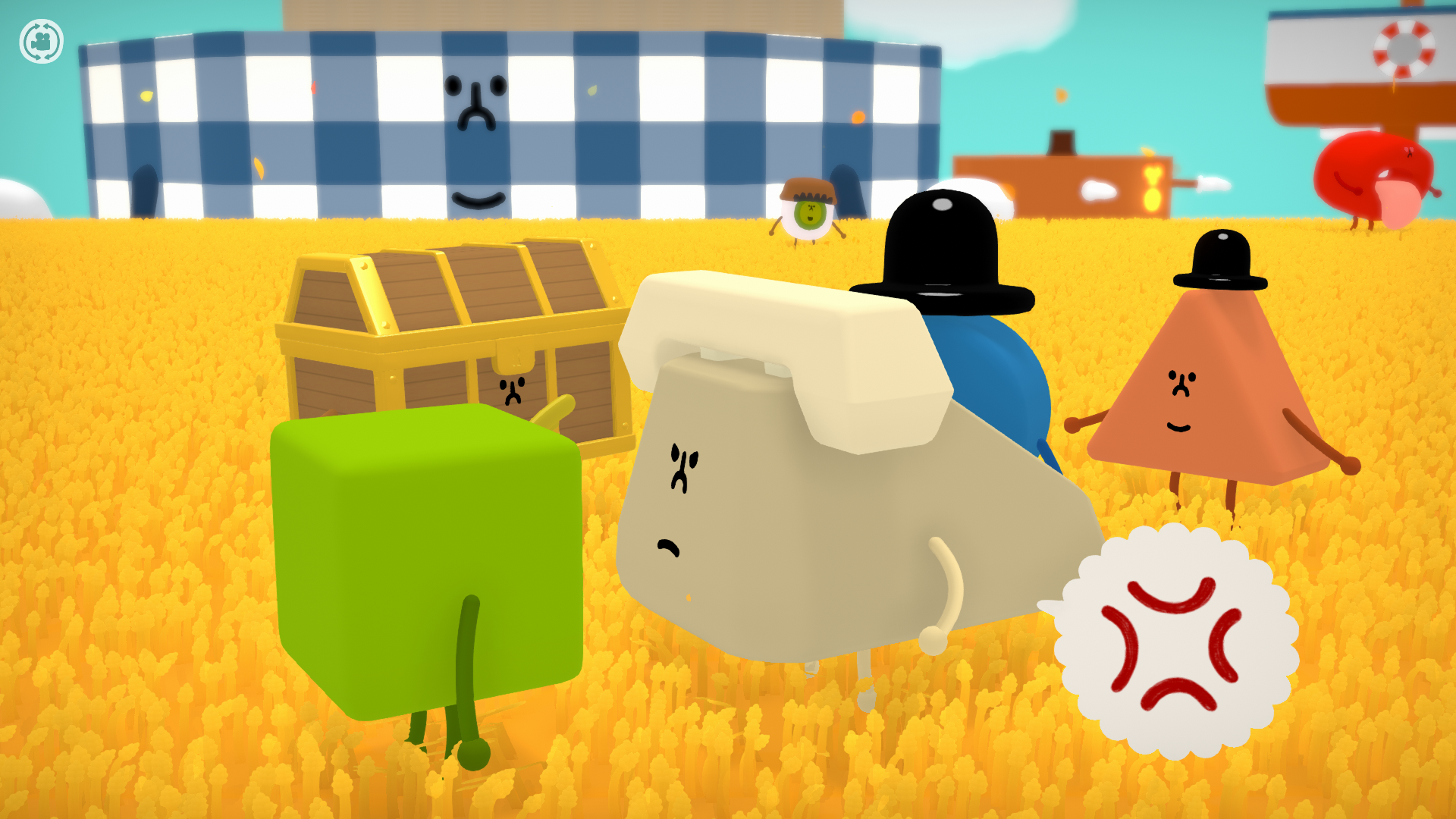
Taking your first steps in the world of Wattam, you’re given a basic tutorial, introducing the abilities of holding hands with others, moving the red arrow (which points to whichever character you want to control), climb on people, and (as Mayor) doff your hat to create a small explosive gift box and blast anyone nearby into the air, laughing joyously.

While blowing up your friends is generally frowned upon in real life, everyone seems really happy about it in Wattam.

There’s a real joy to experimenting with this world. You’ll be taught early on that trees can eat people and turn them into fruit (we got you vore crowd, it’s all harmless fun here). Mouth, on the other hand, can eat fruit and turn it into coiled piles of poop (buzzing flies and all). At this point a tree could eat them again and turn them back to their original form, even if toilet got to them they could end up gold plated (the toilet is ever hungry for poops).

Wattam 03_01_2020 09_27_21.png

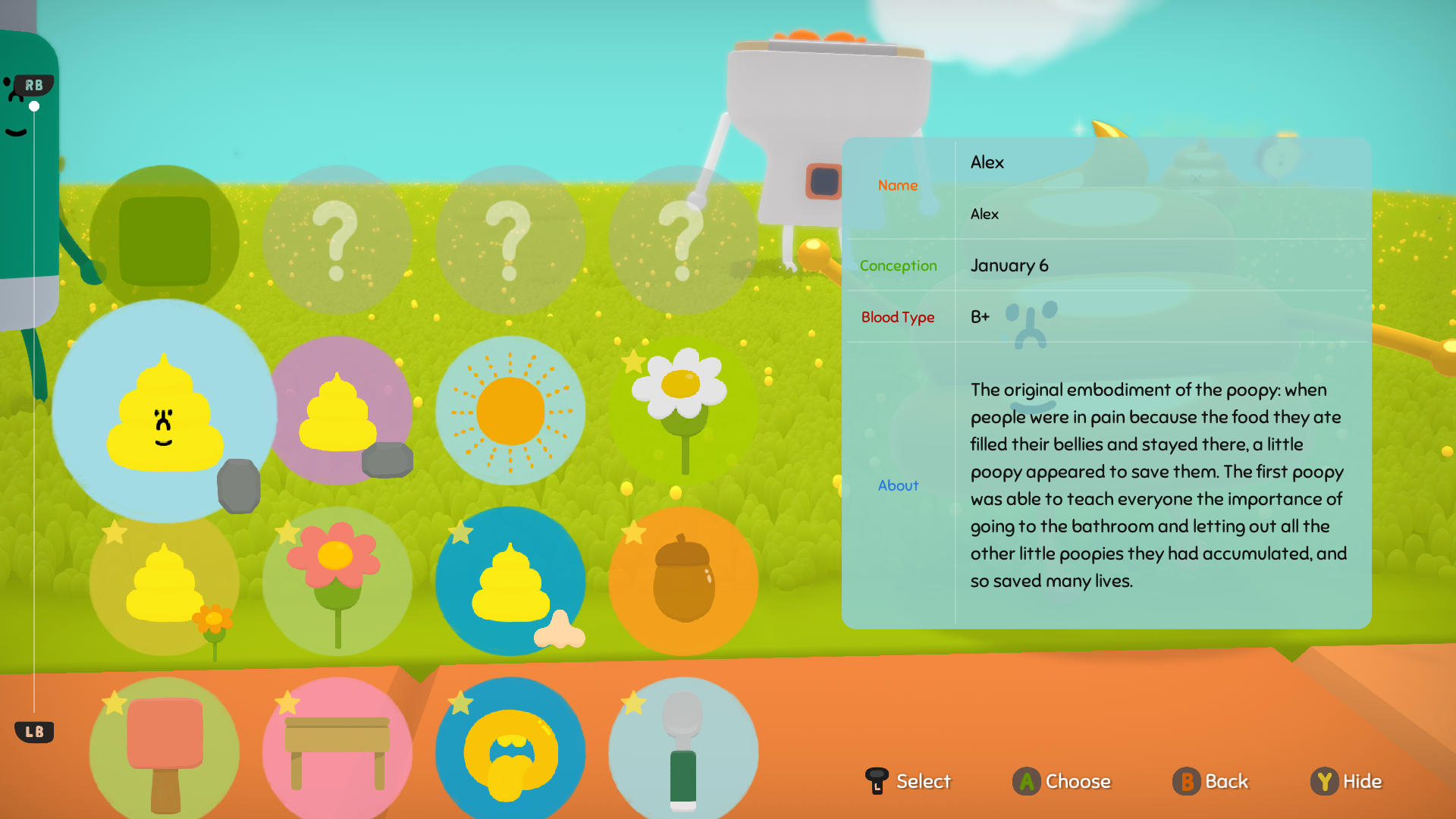
While this is all silly fun, I did struggle a bit in the late game, when I needed to find particular friends for a puzzle but could only find a box of sweet potato fries where I’d hoped to find an octopus and having completely forgotten about changing people’s forms as it had been a few days between plays. This is where Wattam’s explanation-light approach can become an issue, because it’s never explicitly stated that the collection menu can tell you both what form a friend is in right now, and what their normal state is. That said, it was only for one puzzle that I was struggling and only at the very end of winter.

Speaking of the collection screen, there’s a lot of silliness to find here too. Much like Donut County’s Trashopedia, each of the characters have an intro screen showing brief descriptions of them. This changes as they change form, so it’s worth checking back here a few times, to get the full experience.

Scale takes a role in this world, much like Katamari Damacy. When you’re zoomed in, you’ll be controlling characters around Mayor’s size. However, as you zoom out, you’ll take over some of the arriving friends such as the boat, a larger toilet, or bowling alley. These more grand characters can ferry others across the sea of clouds that makes up the wider world, taking them to visit main islands, each based on the seasons.

The music of Wattam is the kind of gentle and jolly tunes Keita Takahashi’s games are well know for. There’s plenty of acapella to “la-la laaa” along to and there’s almost always the sound of laughter and play from the other visitors to each island.

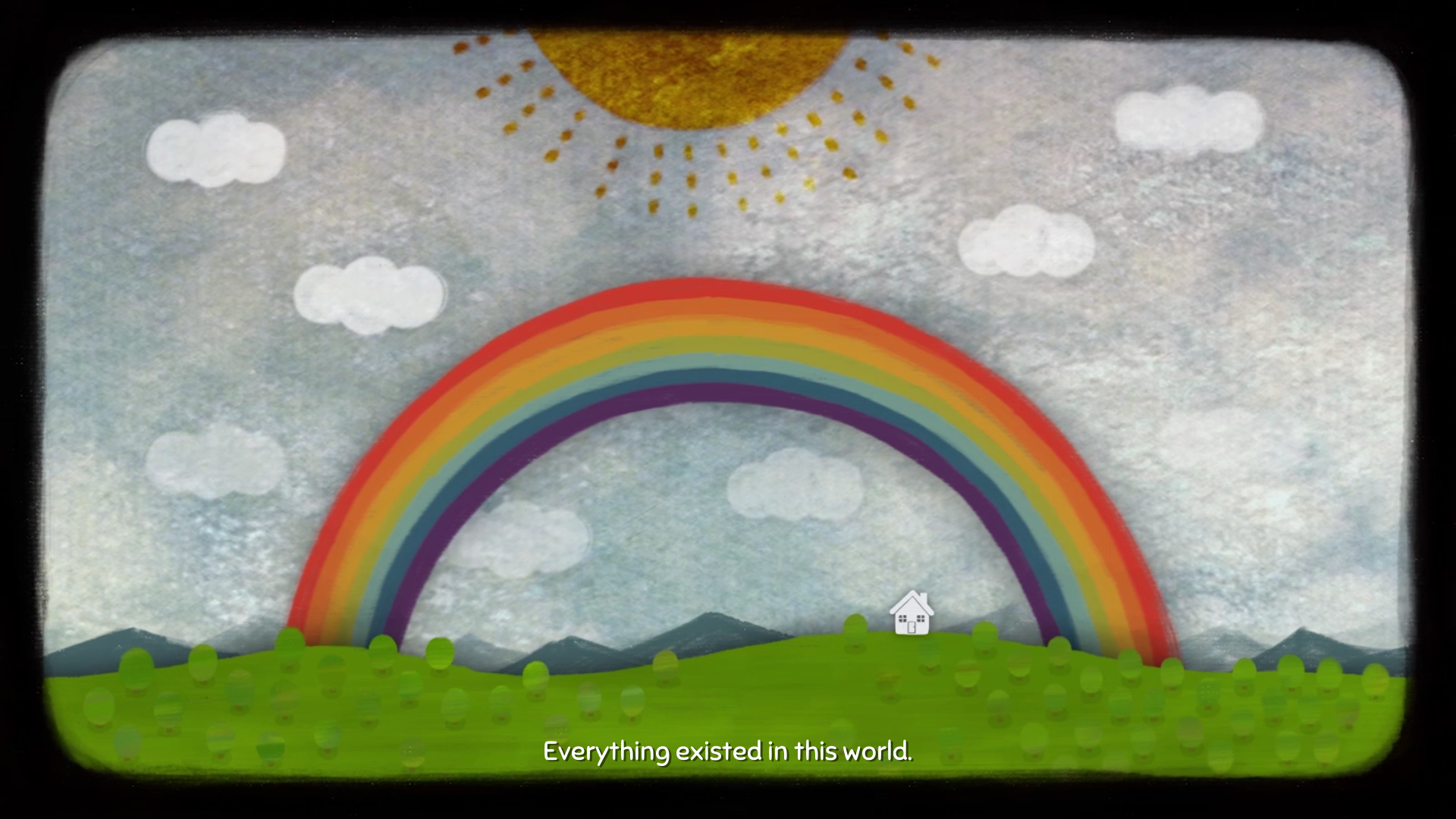
As you progress through the game, you learn more of the overarching plot through a series of simple vignettes. Why was the rainbow destroyed? Who is the mysterious, horned figure? What happened to the world?

At its core, Wattam is a simple game of exploration, experimentation, and puzzle solving. There’s a simple joy to helping one of your companions, being rewarded with the arrival of a new friend who in turn ferries in a number of smaller friends for you to interact as, or help through a difficulty. Be that helping seeds to grow into trees, getting a telephone receiver back from the sun, or stacking a group of friends up until you’re the same height as a bowling pin (for some reason).

Despite some of the more scatalogical aspects of the game, I found it packed with charm and simple delights and was regularly giggling away at the sheer joy of the world as I took the hand of a new friend and explored the vibrant and expanding world. It might not be everyone’s cup of tea, but if you like weird, puzzly, colourful fun, and the sound of joyous laughter, you could do a lot worse than Wattam.

Pros:

  • Really Charming
  • Colourful
  • Original

Cons:

  • Nearly glitched the game to death when steering an explosion for a prolonged period
  • Some slow down in places
  • Camera controls are a bit clunky

Final Score: 8/10

How’s Anna? – Deadly Premonition Origins

The following is not so much a review as a picking apart because it’s a game that left me with a lot of questions. It includes spoilers though I’ve tried to keep details to a minimum.

Also, content warning at the very end for a flashing image.

I think I was about 11 when it happened. It was late one night, I was alone in my room, struggling to sleep, so I carefully turned on my TV and put the volume down to the lowest I could still manage to hear it at. There were only 4 channels in the UK at the time so not a huge selection. I distinctly remember turning to one channel and seeing a man in blue pajamas, lying in bed, with two police officers standing around him, looking concerned.

The blue-clad man stood up and went to the bathroom, wasted a lot of toothpaste and then slammed his head into the bathroom mirror, which cracked. There was some blood on the glass, and looking back at the giggling man with a head injury, was a reflection not his own. Instead it was a scruffy looking and sinister older man.

Something about this scene really unsettled me and I decided that was quite enough television. However, I’d be sleeping with the lights on that night… if I slept at all.

That was the final scene of the final episode of Twin Peaks season 2, and it really stayed with me. When I was older, I bought a (fairly) complete VHS box set of the show and watched it over and over, especially any episodes in the red room, or where things were most strange. Twin Peaks did creeping, weird, discomfort, set in a seemingly simple and mundane setting in a way I was deeply drawn to.

Over the last nine years, I’ve kept hearing the name Deadly Premonition over and over. It’s always come up as “very you, Jane”.

Some time ago, I purchased it on Steam, but then completely forgot about it (Probably because I saw something shiny and got distracted). When I found it again I spent most of two days trying to get the damn thing to work, without success and so it was forgotten, and I was fairly sure then that I’d never get to play it.

However, a recent Nintendo Direct showed that not only was it getting a sequel, but that it was being re-released on Switch as Deadly Premonition Origins. So finally, I’ve got the chance to play. It’s safe to say, that the Switch version can definitely be completed without the game breaking crashes of the old PC version.

Now DP has been released on consoles, then re-released as a directors cut and now this. As such, I think it’s reasonable to assume that however it is now, is how it is “supposed” to be. Especially as this release has taken some of those things back out from the Directors Cut (apparently the director had a change of heart on some of the changes). At this point, everything can be considered intentional (and yes, I would say the same about Skyrim and it’s curious glitches. If that wasn’t their artistic vision, they’d have fixed it by now).

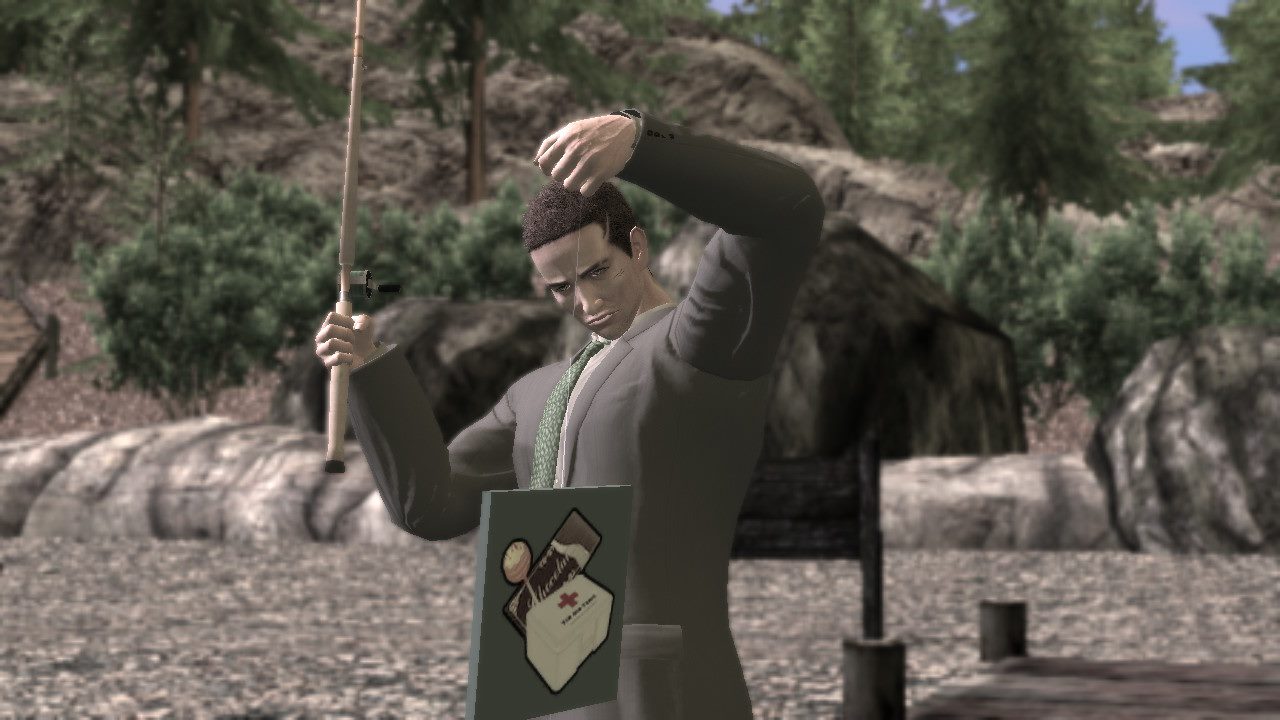
Francis York Morgan (call him York, everybody does) is an FBI detective with a number of dangerous habits. He smokes cigarettes like he’s chewing a lollipop, while on the phone, while using his laptop, while driving at high speed, at night, in heavy rain. Also he eats smoked salmon he finds in lockers in abandoned lumber mills. He is – to put it simply – a reckless dickhead.

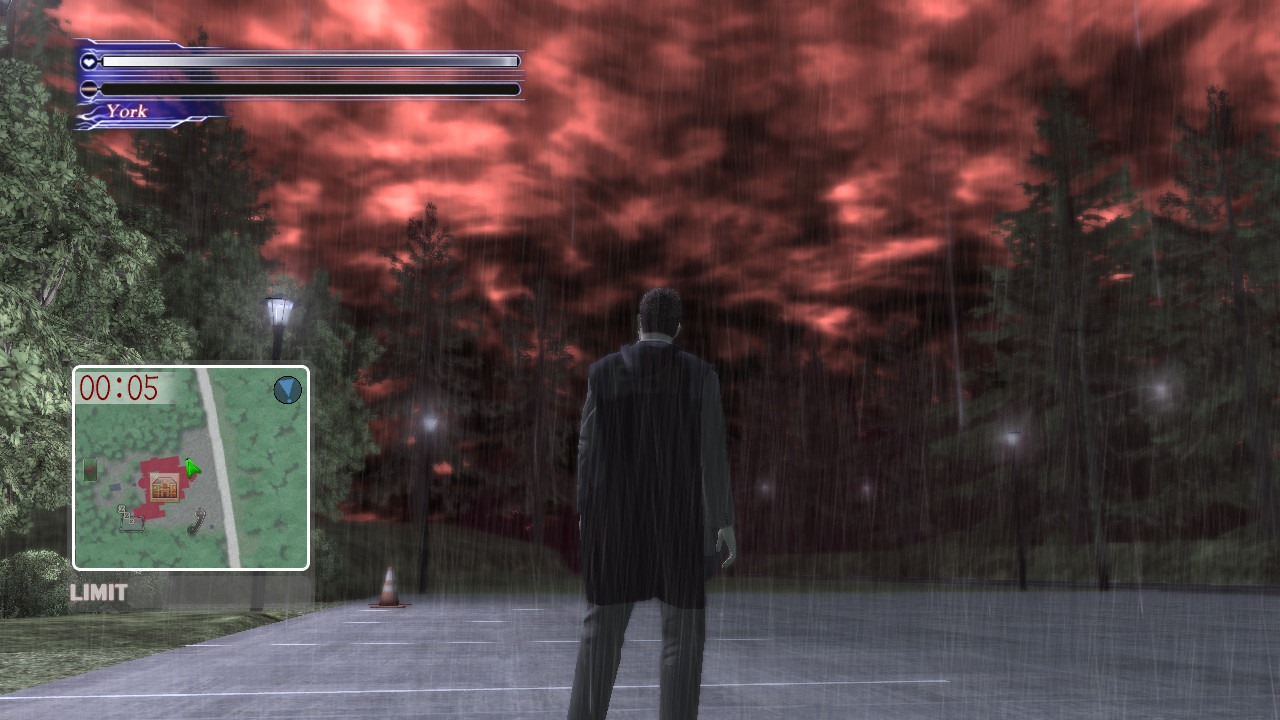
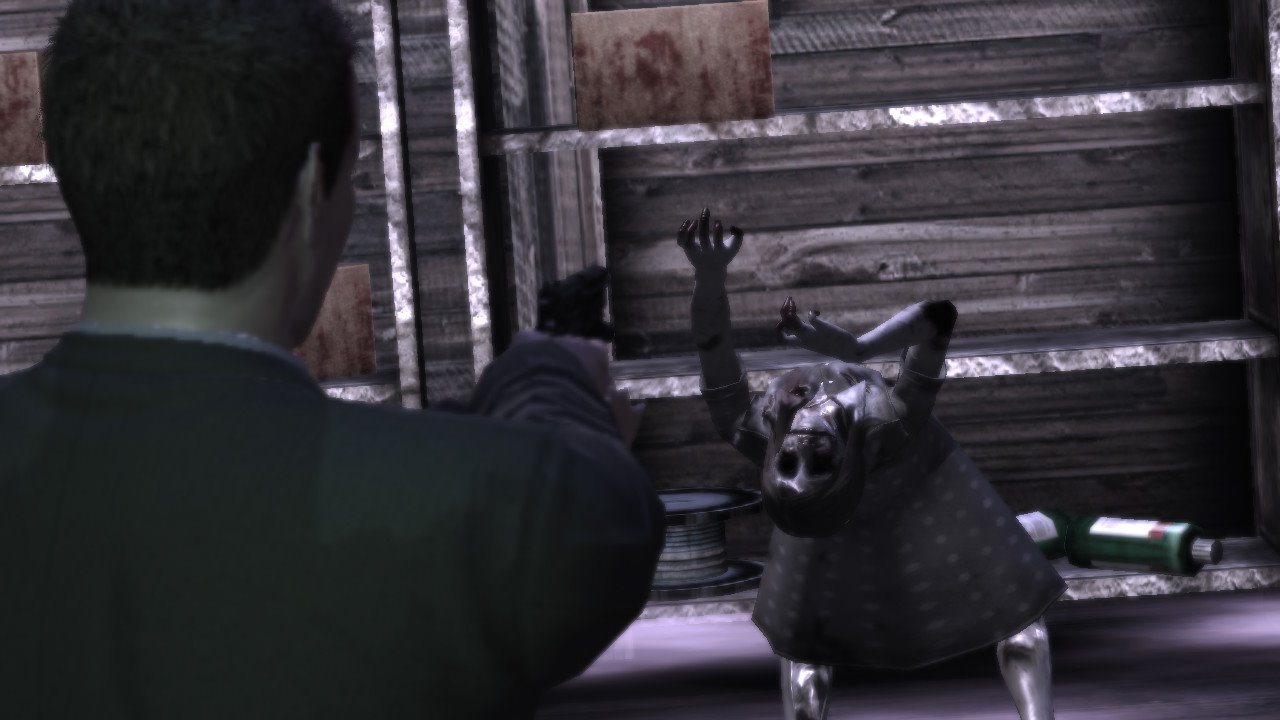
Understandably, the game begins with York flipping his car, and finding himself in the woods, somehow alive (although, who knows, this game could all be a Silent Hill, moment of death hallucination), while his car starts to slowly burn. Suddenly, theres all these people, looking dead, broken. They bend over backwards lumbering and flickering towards him like ghosts from a Japanese horror film. Moving in a way that I find deeply and wonderfully unsettling.

In some ways, it’s fitting that the game opens with York flipping the car, because the driving in this game is some of the most frustrating I’ve ever encountered. Steering is so sensitive that the first few times I was charged with driving a vehicle myself, I was weaving side to side and into trees like I was also smoking, making a call and using my laptop. Again, I have to believe that this was deliberate, as they definitely could have dialed it down by now if they wanted. This then is York being an appalling driver and a danger to himself and others (run sheriff, run deputy, run while you still can! Don’t dare to get in this car with York, he’s a fucking liablity).

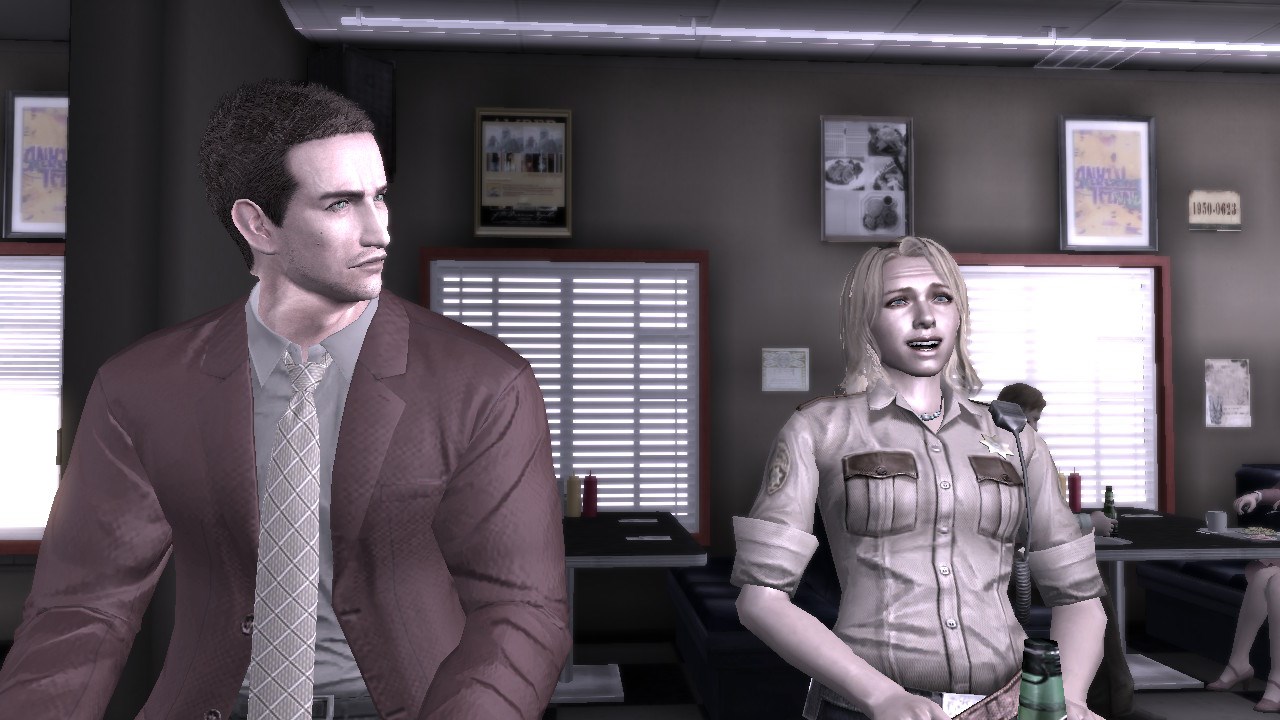
To look at, you’d be forgiven for thinking Deadly Premonition was late PS2/Dreamcast era game, but it came out the same year as Fallout: New Vegas and Mass Effect 2 so there’s really no reason it had to look like this. The character models are ok, but goodness, the first time you see York smile, you’ll be sleeping with the lights on.

DP has some quite interesting little management aspects. If you don’t change and wash your clothes, they’ll become increasingly creased and dirty. If you don’t shave, you’ll start to grow a beard. York also needs to eat, sleep, keep his pulse within a reasonable window. It’s like the game is trying to be part life sim, part police procedural, part people management, and drunk driving simulator.

Everything about the sound in this game is too dramatic. All sorts of mundane actions or events – even entering the pause menu- causes dramatic, discordant, instrumental hits, that somehow still disquieted me hours into the game.

Then there’s the music, and this is where a good few minutes of hysterical laughter first started. Very near the beginning of the game, there’s a scene where York has breakfast with the hotel owner. They sit at opposite ends of a long banquet table, in the otherwise empty hotel restraunt. Each time York asks a new question a loud, jaunty piece of music starts. It’s out of place with the scene, and almost completely drowns out the dialogue. I’m convinced this is deliberate, because after nearly a decade I can’t believe that they wouldn’t have corrected the default audio balance if it wasn’t intentional.

Consequently I ask myself: why is this the case? Why did SWERY want to drown out the conversation? My only conclusion so far is that York places so little value in it that he’s half in his mind just thinking of a jaunty tune. This would sit with the fact he’s a massive douchecanoe (the Director’s Cut, did change the sound balance in this scene and it was nowhere near as hilarious. Besides, they didn’t re-release the DC, they released this).

It’s not just the music that’s bizarre, there’s a scene at one point where the tension is high, you’re running all over town on foot, desperate to get to your goal, but the game insists on stopping every hundred yards to chat about something unrelated or just cutting to another scene entirely. Once again, the ridiculousness of this moment had me laughing my arse off.

There’s also the question of York’s state of mind (or possibly state within the

multiverse). York frequently puts fingers to the side of his head and speaks to someone named Zach. He’s not wearing an earpiece, so the question of who he’s actually talking to remains a mystery. One of the menus describes Zach as York’s other personality, so the answer could be as simple as that. But… then there’s the way that York will ask a Zach a question and you, the player, will have to answer, using on-screen prompts. Have I been designated Zach for the purpose of the game? (more on this later.)

I’m reminded of how Dale Cooper in Twin Peaks would talk to his dictaphone, to the possibly non-existent (until Twin Peaks The Return, 26 years after the last episode was shown) Diane.

It’s not just Zach though, there’s also the matter of the otherworldly sections, where strange, red weeds block doors; where odd red mist blocks paths or objects; and where strange beings emerge from black marks on the walls and floor to assault you.

Early on, there’s a scene were York goes to the hospital to recover a coroner’s report. The path down is simple, a brief, simple word puzzle and then following a marker downstairs and into the morgue. Having annoyed the local sheriff, the deputy, and the coroner by being an arrogant jackass, York states he’s going for a smoke.

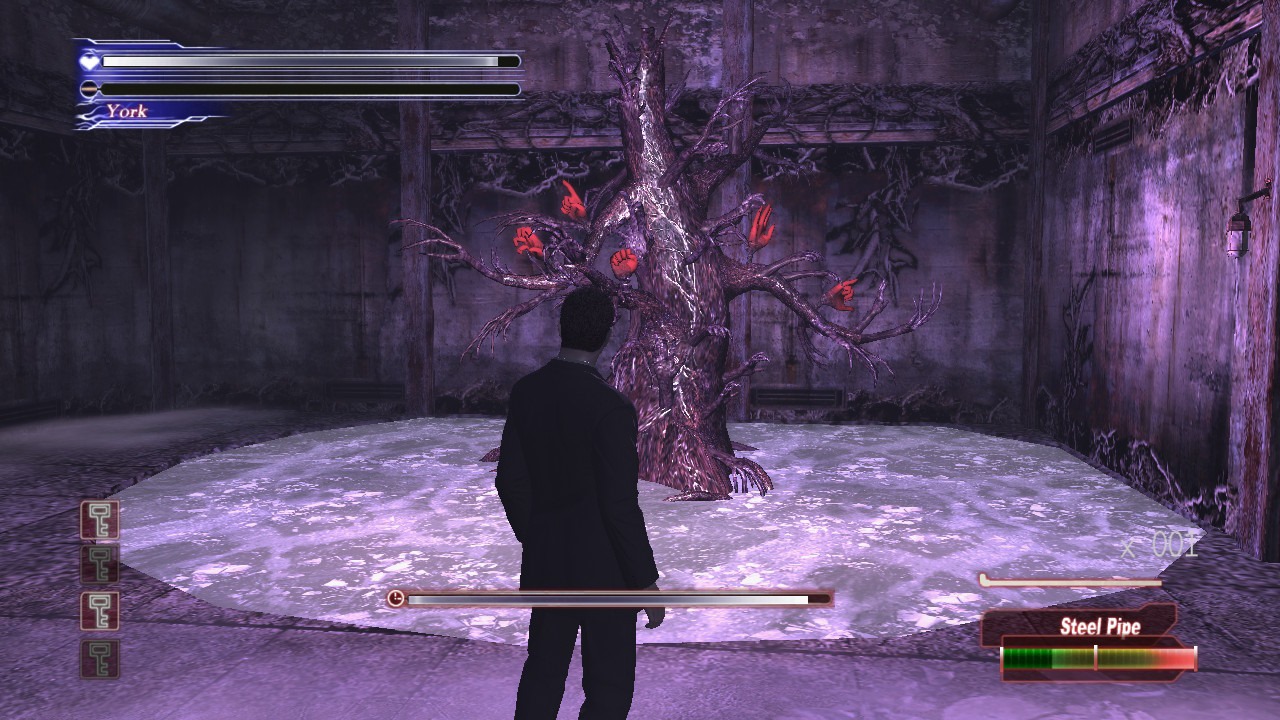
However, the moment he steps into the corridor, the world is changed again. It’s sinister, as the woods had been. There’s that red weed again. There’s those black marks. There’s the strangely moving assailants, juddering and twisting to attack him (frankly I think this is deserved). Having worked his way back upstairs – by finding key cards and getting past enemies – and into the hospital lobby, all is suddenly normal again. This lobby which was full of red weeds and shambling monsters which I was spraying with bullets is back to normal.

This is a mechanic that repeats throughout the game and leads me to question, is York seeing things, or slipping between realities, like someone trapped in Silent Hill? Truth be told, there’s a lot about the enemy movement and the way they emerge from the dark patches on the walls that makes me think of Silent Hills 2 and 4 (and I’m so here for that, because those are two of my favourite horror games).

A scene at the art gallery sees a York and three police officers trying to find a way in as the front door is locked. It’s late at night and raining heavily and the clouds are doing that purple thing they do when he enters the other worldly sections. The officers wander around the front of the building but only York will head around the sides. Here there are endlessly respawning enemies which will attack you. However, they never come near the police and don’t go to the front of the building. So are they real, hallucinations, or do they exist in a place outside Greenvale, outside the reality usually perceived here?

For an FBI agent, York doesn’t mess around when it comes to weaponry. You start the game your standard issue 9mm pistol and a knife. Soon enough he’ll locate the standard issue survival horror steel pipe which will grant you a little more room.

While the pistol thankfully comes with unlimited ammo, the melee weapons break after a few uses (meaning that you don’t want to get into a fight with more than one enemy unless your weapon has decent health, otherwise you’ll likely get attacked in the few seconds it takes York to swap to a fresh weapon.

As you move through the game, you’ll start to find more useful weapons like the assalt rifle and shotgun. While I was initially cautious about using my big guns in favour of my trusty pistol, I found that as long as I wasn’t just spraying bullets everywhere like a penis owner meat spin pissising in a public toilet, I was getting sufficient drops from downed enemies to keep myself in shooty things.

The game allows you to auto target an enemy by pressing a shoulder button. This is reasonably effective and if you nudge the stick slightly upwards, you’re usually good for a headshot.

There is one enemy however which cannot be fought in the usual manner. That being the dreaded Raincoat Killer. Clad in a long red raincoat, their features as indiscernible as a nazgul save for a pair of glowing eyes. When they appear, it’s usually a sign you’re going to have to engage with some QTE nonsense.

Maybe it’s just me as someone who plays on a lot of different systems and has coordination issues, but I find the amount of time you get to hit the buttons isn’t really long enough to read, process, and react. One section in particular had me enter a room, get attacked, fail the QTE, restart, and pass the first event, only to miss a second prompt and have to start again, this happened almost every time of the 5 or so parts to this section. Every attempt getting me a little further, but becoming less dramatic tension and more needless frustration. This may be a Switch issue, as I find it much easier to remember the positions of colours and shapes that just the letters alone.

If you’re trans and reading this, you’ve probably had someone warn you about an aspect of this game. I too was warned before I started (and several times thereafter by concerned friends) that there is a gender non-conforming character in this and they’re not well handled (I’m not sure if we’d call them trans as we don’t get much chance to speak to them or find out what their deal is. Only that, like the murder victims, they’re wearing that long red dress and heels).

I knew it was coming and still I felt very squicked out when the person who could bake beautifully, acts bashfully, and is seen skipping around in a childlike fashion early on in the game, is found to have a large collection of makeup and a wig at their apartment.

While I was impressed that this reveal wasn’t played for laughs and the voice actor didn’t just go for a ridiculous falsetto for the character, it does still fall into that trope of “unhinged, violent trans person” that we’ve come to know and hate.

It’s around this part of the game that you get a chance to play as someone other than York (because he’s tied to a chair with a blindfold on). Upon entering a building, as this other character, you’re faced with those red vines and the twisted assailants. Which means, they’re real(?) This completely confused me as everything so far seemed to suggest it was just a York thing.

Right near the end, there is some additional information about Zach, but you’re very much left to decide for yourself what this actually means. Whether they’re a repressed part of the characters’s personality, a splinter caused during childhood trauma or a parallel being who came to save them. I’m leaning towards the possibility of some parallel being since the primary antagonist mentions Zach being in the White Room

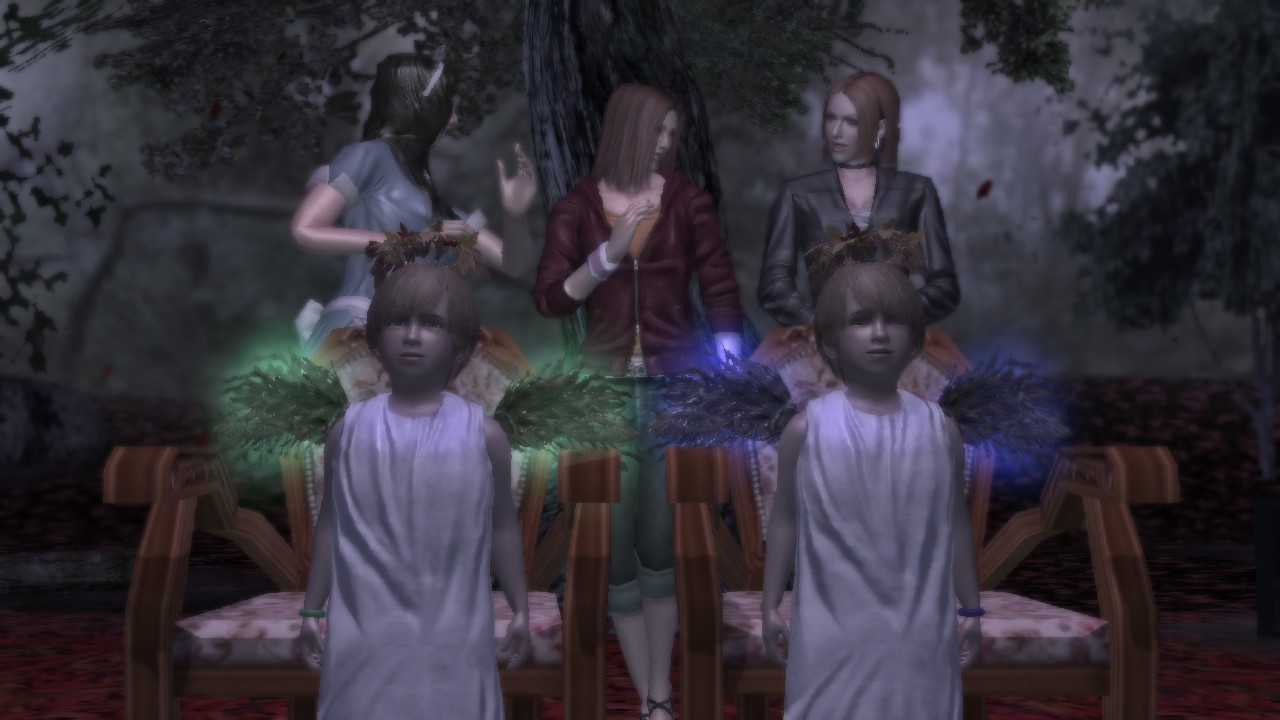
Deadly Premonition feels so much like it wants to be an homage to Twin Peaks. An FBI agent is called to investigate the curious death of a young, local woman; it’s set in Washington state; the diner could not be more like the RR (right down to the aggy husband of the owner); the bar on the edge of town is reminiscent of the Roadhouse; Sigorny is like a lively version of the Log Lady; York is very into his coffee; he gets accurate information from unusual, seemingly random sources; the waterfall up by Harry’s mansion look very much look very much like those seen in the opening shots of Twin Peaks’ opening credits; Anna’s mother falls apart in a very odd way following her daughter’s death (is Anna Graham a reference to Annie being played by Heather Graham?); there’s versions of the Black and White Lodges in the form of the Red and White Rooms, where spirits of the dead can commune with the living and the occupants of this space can take the forms of those still living. It’s like a love letter to the show and I’m so here for that.

There are parts of this game I loved and others I found utterly frustrating or awful. I’ve played objectively bad games before (check out my review for Overgrowth for example) and put them down without actually finishing due to awful controls or wonky plots. I didn’t do that here, and not because I was hooked on an addictive gameplay loop, but because I was genuinely engaged with the story, the side quests, and the world(s?) in which the game takes place. I’m left with a desire to pick over the story and ponder over its world after I’ve finished playing and I want to play the sequel to explore more of this world.

That said, there are parts of the game that I would ordinarily award it a flat zero score, and I can’t ignore that.

Pros:

  • A really interesting and deep story
  • Scenes so bizarre you’ll be forced to laugh
  • Fascinating world full of curious characters

Cons:

  • Some Skyrim level glitches (floating fires, people flying along next to the car they’re driving, clipping through the odd door/floor)
  • Just horrible driving mechanics, especially in any of the police vehicles
  • Poor handling of a trans character (though not nearly as bad a some)

DPO Score.gif

Deadly Premonition Origins’ score exists within the other world.

Better Than A Head In A Bucket – Oculus Quest

Surely it is the goal of every friend group to sit around watching one of your number strap a box to their head and then flail around at nothing while the rest video it for light ribbing at a later time? Surely we all dream of being punched in the knees by someone slow motion fighting an invisible enemy? Surely, we all sat too close to the TV as kids, to try and capture the full cinema effect (and were perhaps told by a relative that our eyes would go square if we did so (well the screen’s strapped to my head now granny, what you gonna do, huh))?

Well worry not, your prayers are answered, and just like many other prayers, there’s going to need to be a large cash outlay to some middleperson before they’re willing to let said prayers on through.

Slightly strained metaphor there, but what the heck.

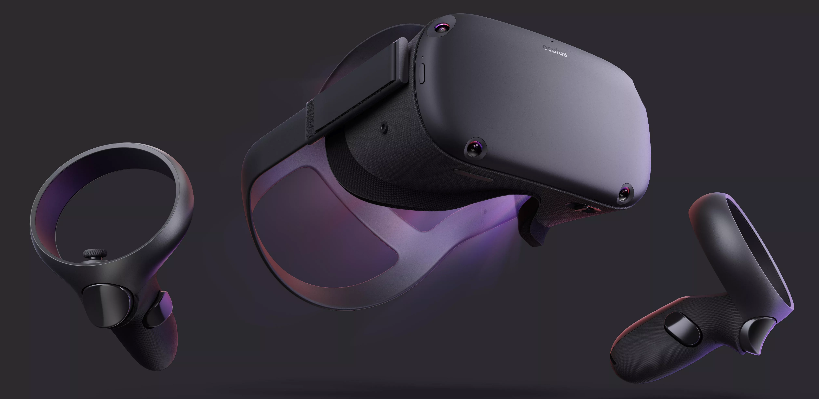
The third-ish generation of virtual reality gaming is here (I say third, we’ve got like the Virtuality headsets of the 90s (I’m not counting the Virtual Boy, no one should), then the more recent Oculus Rift/HTC Vive/PSVR era, and now this. Hurrumble) and it’s definitely moving in the right direction. First off the headset isn’t nearly as heavy as some, and the fact you don’t need any wires really helps lighten that load. It’s a lovely shape and the tiny IR cameras are fitted snugly into the body of the unit. On top of that, the Quest doesn’t require any additional sensors around the room to function, making it super convenient to use.

Inside the headset you’ll find the padding around the eyes is comfortable and the screens fill a good amount of your vision. My only gripe here is that there is a lot of space around the nose that lets in light, but keep your eyes up and you can still stay very immersed. The box it comes in also includes a spacer so you can comfortably wear glasses with it, woo!

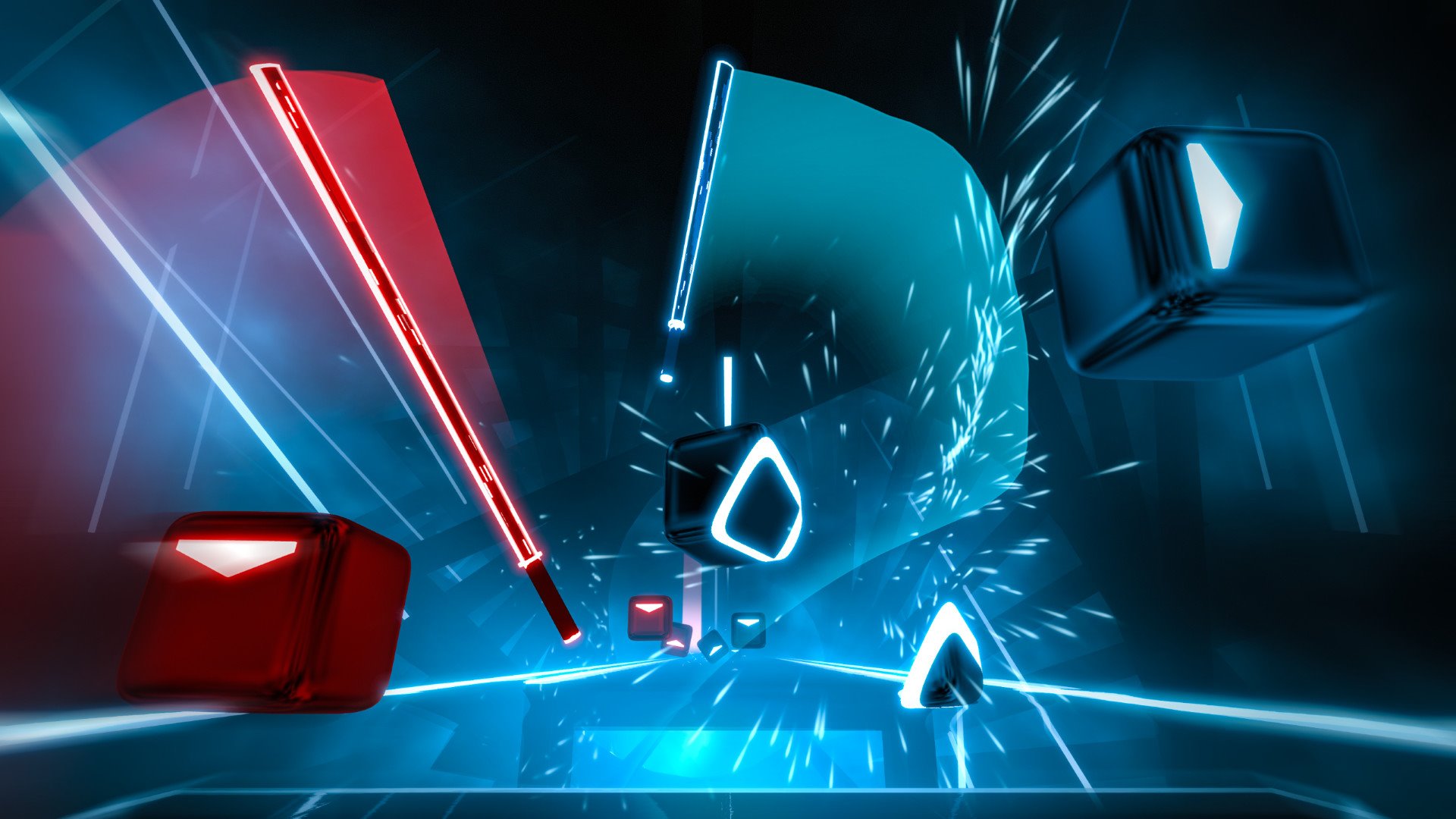
There is a headphone jack on the side if you want to go that way, but I found the speakers really good and clear for directional sound. Plus, not having to wear separate headphones means that more of your head is free and therefore cooler (especially important if you’re really leaping around playing the likes of Beat Saber).

The Quest boasts a per eye resolution of 1440 x 1600 (which is better than the monitor on my PC if I’m honest) and looks really crisp in the games I’ve tried.

The unit stays in place thanks to three velcro straps which can be individually lengthened or shortened. I initially found that looking up and down could cause the headset to slip slightly, but I managed to resolve this by lengthening the overhead strap and tightening the sides up. I’ve also seen online that some folx have tried strapping a battery pack to the back to balance the weight (handy if you want to play long sessions without plugging to the mains).

I’ve found the head tracking to be spot on, though you can sometimes find that the controllers aren’t in quite the right place if they’re held down by your side or slightly behind you for an extended period. However, this can be easily fixed by moving them slightly forward, within sight of the cameras for a moment.

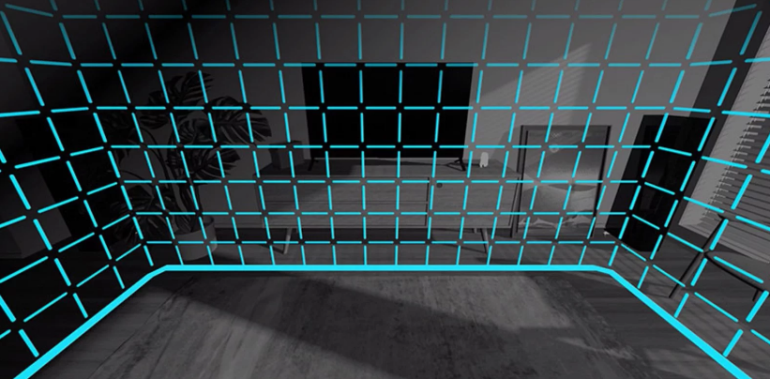
The Quest features the ability to use full room-scale VR, without the aid of base stations or additional cameras, which is awesome as heck, if you have that kind of space. Just enter room-scale setup, pop a controller on the floor to set the height, and then draw a line around the useable space in the room (or rooms it turns out. I tried seeing if I could draw the play area into the kitchen and hallway, which it did just fine, but was odd to feel like I was looking through walls in my flat when I saw it).

Once you’ve drawn your space out, it will be remembered between sessions with great accuracy, as long as you haven’t moved large objects around the room. However, if you open a curtain or move something large, or turn on a very bright light, you might find the unit struggling to recognise its surroundings.

If you don’t fancy wandering around in a virtual world, you can just sit down and use the sitting setting. This creates a virtual tube around you and doesn’t get too fussy if you just reach slightly outside this to manipulate virtual worlds. My only minor annoyance with this is that if you switch to sitting mode, you will have to redraw the room again if you switch back to room-scale

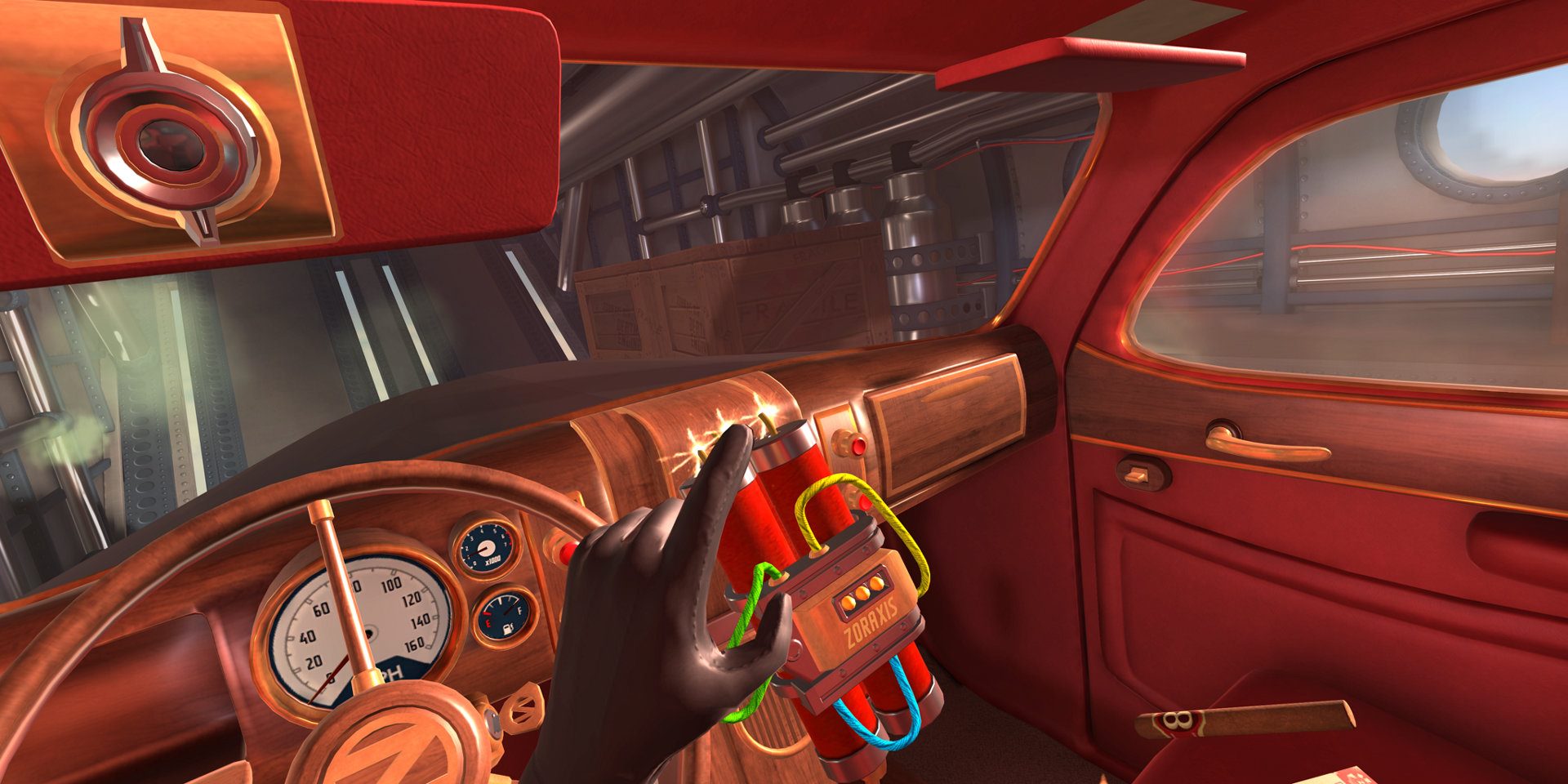
The controllers are lightweight, but feel nice, have easy to find buttons, a good analogue stick, and an impressive rumble for something so light. Additionally, the batteries on the controllers last a really long time (I’ve played all through Superhot VR, Virtual Virtual Reality, most of I Expect You To Die, plus days of Beatsaber and Tilt Brush, and so has my fiancée and they’re still on about 50% power). Furthermore, if they do run out and you want to play in a hurry, they will run off of a single AA battery each, which is great.

As for the battery life on the headset, you’ll find this depends on how loud your volume is set and how fancy the graphics on your game are, but on average, I’m getting about 3 hours of intensive use out of it before it needs a charge. Though you can just plug it in and play from the mains if you want (I thought I wanted, but I realised 3 days in I’d already become a cable snob (who even am I anymore?!)).

The system comes with in 64gb and 128gb versions, retailing at £399 & £499 respectively. I’ve got a bunch of games installed on a 64gb system and there’s still around half the space left. It helps that most are only about 3gb so once you get the current 10 best games installed, you’ll still have plenty of room for all your Tilt Brush art. For what the system is, and what it will be mostly used for, I think 64gb would be plenty for most people.

The big question really has to be, is it worth it? Honestly, I’m not 100% sure. I love using it, I love the fact we have one at home, I love that I can take it to a friends house and show them VR without having to lug a PC around as well, I love the immersion, I love that Beatsaber made exercise more fun, I loved watching VR videos from space, I love the big screen cinema experience in my living room.

But… It’s very expensive for what it is. For the same price you could get a PS4 Pro or most of an Xbox One X or the deposit on a gaming laptop, so if it’s this, or something else deal, maybe get something else. However, if you have the money to spare and no other commitments, go for it, it’s brilliant.

Pros:

  • Lightweight
  • Cable free
  • No additional components required

Cons:

  • Expensive for what it is
  • Battery life could be longer
  • Having to redraw the boundaries for room scale if you switch between room-scale and sitting modes.

Final Score: 8/10

Blue Eyed Dragon Breath – Yu-Gi-Oh! Legacy of the Duelist: Link Evolution

Yu-Gi-Oh! Spikey hair, cards, Blue-Eyes White Dragon, The Heart of the Cards, ridiculous plots involving pharaohs? Really?! Like Stargate? Not like Stargate? Ok then.

It’s Yu-Gi-Oh everyone.

I’ll be honest, I’ve not played much Yu-Gi-Oh. My fiancée used to play the collectible card game years ago, and we’ve played a few games in the past, but I don’t really get it and I’m not super keen. It may be that the closest I got to a CCG was collecting Magic: The Gathering cards, but never playing because I didn’t have any friends as a kid.

As I got older I did eventually get to play with various partners, but I started to think it might be cursed. This was due to the fact that all it took was a couple of games of MTG and a week or so later and our relationships were over. As such, I’d become a little weary of it. That was all unfounded and now I play MTG, Pokémon, and occasionally Yu-Gi-Oh with my fiancée whenever we have a free weekend.

Now, we mostly play with fairly old cards, and we’re well aware that there are a lot of new rules in the modern game. The thing is, neither of us is willing to get sucked back into buying hundreds of cards until we can’t afford to eat.

Yu-Gi-Oh! Legacy of the Duelist: Link Evolution is here to for people like us, who want to try more of the game, but aren’t willing to throw an entire paycheck at Konami for the privilege. You want more cards? Just play the campaign game and gain points and cards, along with unlocking booster packs which you can purchase with in-game currency, from the shop.

No microtransactions, no DLC, just play more to get more. Simple.

The main part of the game is the campaign mode. Here you can play through each of the TV series, reliving great moments from the show. The stories are told through a series of vignettes like an anime powerpoint presentation. You’ll watch (or after the first few, skip) through the plot before being thrown into a duel as you would have seen it on screen.

Here comes my major gripe with the game. the decks being played are all about those moments in the show. They’re not super balanced, there isn’t a huge amount of synergy, and you don’t even get a chance to see what’s in your character’s deck until you draw the cards. I feel like if you’re supposed to be playing the characters, they’d know what you’re playing with. Perhaps I should just trust in the Heart of the Cards *rolls eyes*.

Too often I found that victory or crushing defeat was simply a matter of luck. If my first hand was good, I could be finished if a few minutes. If not I could either waste my time trying to block and hope I’d draw something to help with a come back (that would never come). More often than not, I’d look at my first hand, maybe my next 1-2 cards and surrender if it was already precarious, because the game beat the idea that recovery was even the vaguest speculation of a possibility. The only exception was playing the reverse match (play as an antagonist against one of the good characters in a duel you’ve already won from the other side) as Wendle, with an insect deck. This was the first time I saw a deck that even vaguely turned a game around.

As you play through, the game does a really good job of explaining each new mechanic in a fairly simple manner. This has definitely given me a much better understanding of how to play the decks we have at home along with the newer rules for things like pendulum or XYZ summons. The way you’re taught is very much just “here’s the instructions, do the thing”. It’s up to you to take a moment and read each of the cards in your own time. Thankfully, the tutorial doesn’t stop that. If you want to learn Yu-Gi-Oh, you could do a lot worse than play through the campaign tutorials in this.

Once you win a duel, you’ll be awarded a couple of signature cards for your opponent, some points (which you can use as currency in the in-game shop), the reverse match I mentioned earlier, and a blueprint for recreating the deck you played with.

After you’ve had enough of the campaign (and heck me there’s a lot to play through) you can try other modes. Play online in various modes (including local wireless, online, sealed play, draft play, and ranked matches), and build your own decks with the cards you’ve unlocked or purchased in-game.

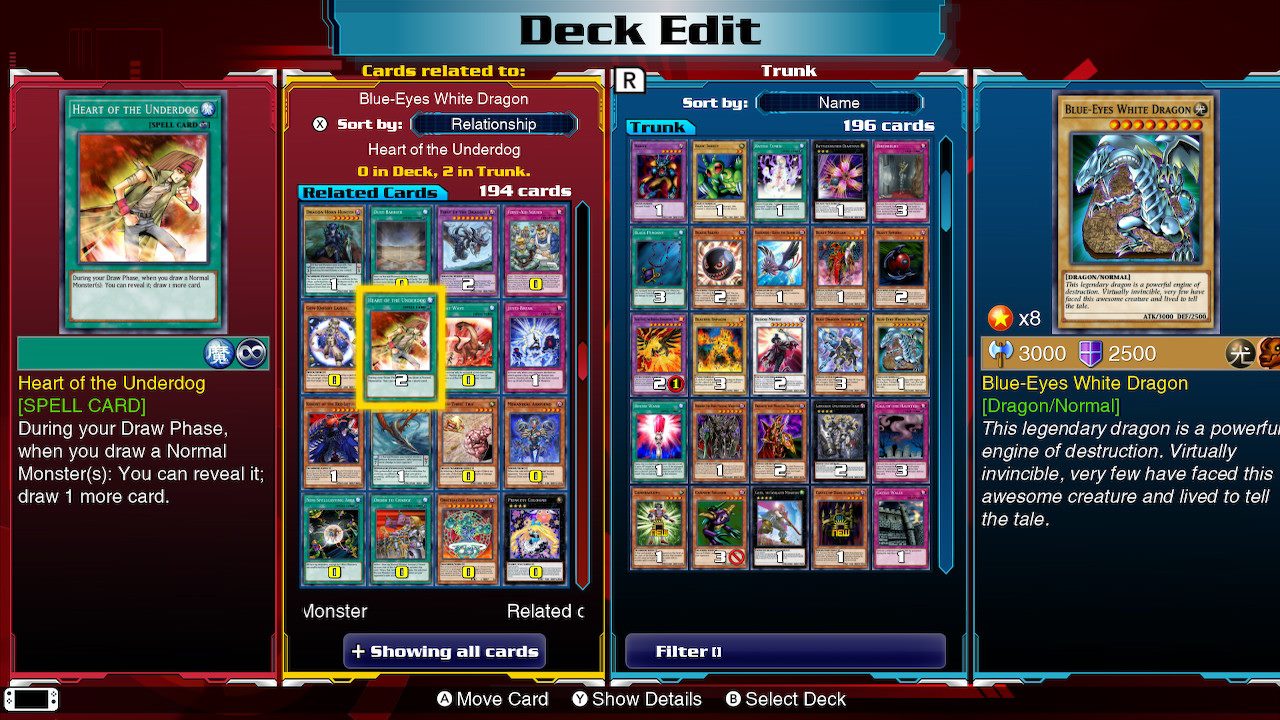
This is where I feel the game really shines. Suddenly, you have the chance to put together some really good decks and try them out. The deck builder even has an option to select a card you like and then have the game suggest cards that will work well with it. This feature works really well and you can put together some really devastating decks on the advise of these suggestions.

The online mode seems well populated and and runs just fine. Which is really all you need to know.

Overall, Yu-Gi-Oh! Legacy of the Duelist: Link Evolution is as good a digital version of a collectable card game as I’ve seen for any of them. The graphics are nice during duels (though the animations of high level creatures being summoned looks a little bit early 00s era CG if I’m honest), the sound design is good enough, the selection of cards to use is great, the deck builder is really user friendly, the tutorials are very good, and the controls are simple. If you want an affordable way to play, or a way to play online because you can’t get anyone more local into Yu-Gi-Oh, this is the perfect way to do it.

Pros:

  • Lots of cards to win/unlock with no additional cash outlay once you’ve bought the game.
  • Good tutorials.
  • Excellent deck builder.

Cons:

  • Summoning high level creatures will play some ropey looking 00s era CG animations.
  • The vignettes make each series of the show look dull as heck.
  • Pre-built decks are poorly designed.

Final Score: 6.5/10

Spooky Action At A Distance – Man Of Medan

I used to watch a lot of horror films, not sure what happened, perhaps I just caught a lot of really bad ones in a row. Regardless, I’ve not had time for horror much of late. Gore doesn’t really do it for me. I’m not averse to it, I just don’t think that it makes a movie better. I like a creeping sense of dread. The idea that this horrifying thing is becoming more than 90 minutes in the dark with popcorn. Something that gets into your mind and gives you a moment’s pause in the dark, when you’re alone.

Some time early this year I finally got a chance to play Until Dawn with my fiancée. We shared time on the controller and made any decisions, that didn’t require split second timing, between us. It was a nice couple of evenings sharing moments of panic through quick time events, moments of surprise, and the all important moments of quiet in between, to build the tension. This was good horror.

Around the same time, The Dark Pictures Anthology: Man Of Medan was announced from the same studio as Until Dawn. The plan was to take all the photorealistic character styling, decision making, quick time events, and exploration of the original game and create an anthology series of slightly shorter stories that can be played solo or with others in a number of different ways.

First up, there’s standard solo play. See all the things, from your currently controlled character’s perspective, explore, decide, try to keep everyone alive while you unravel the mystery of the decaying military vessel where most of the game takes place.

Next there’s couch co-op. Choose your number of players, and which characters each person will play as. As you move through the story you’ll get messages between scenes telling you who should be on the controller for the next section. Where as in Until Dawn, we made pretty much all decisions relating to the protagonists together, here we played our own characters, to our own tastes. Something very much encouraged by having the characters divided among us.

Lastly, there’s online co-op, and here’s where things change in a really interesting way.

There are sections of the game which happen simultaneously. As such, one player can be talking to another character in one area, while another person is exploring another section of the ship. Consequently you can have a moment very near the beginning of the game where two groups of characters are having entirely different stories told.

Those below the waves are finding interesting artifacts and trying to understand how a plane came down. Meanwhile above, a group of pirates are harassing those on the boat, eventually leading to an explosion, which the others see from underwater. This, in turn leading to WTF moments from the divers, which the characters can decide to discuss, or not. It’s up to the players to decide if they’ll share that information with each other or keep all explanation within the game itself. There’s a few other moments where this is used really well, but I won’t spoil you on it. Suffice to say that playing solo or in movie night (couch co-op) mode, the game takes around 5 hours to complete. Whereas online co-op is closer to 3 because of the overlapping sections.

The basic plot of the game sees two brothers, Alex (kind of a jock) and Bradley (an adorable, shy, nerdy type) preparing to take Julia (whom Alex is dating and seems like the type to ask to speak to your manager), and her brother Conrad (goofy alcoholic rich boy who seems like a total liability) out for some diving around a crashed plane they have located. This is a previously unexplored wreck and there’s excitement about what they’ll find, and in what condition. The last member of our merry band is Fliss, the boat captain (absolute badass, if a little shady) who’ll be taking them out on the ocean.

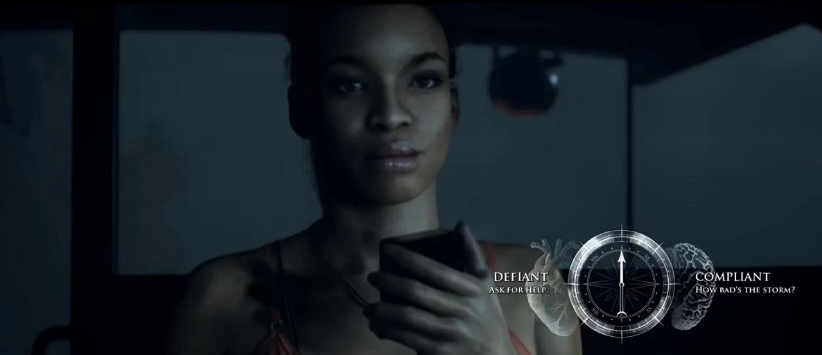
Things start off pretty gently through a flashback featuring a couple of naval soldiers on shore leave. The game uses this time to gently introduce the controls and game mechanics in a no-stakes environment. Flash forward then, to the present and we see our main cast loading their boat up for the proposed dive. Before long though, it’s all diving to the crashed plane, hearing rumors of lost gold, the aforementioned pirates showing up and dragging everyone off to and older and decaying, but still familiar ship. All aboard is very quiet and our protagonists are in over their heads. And that… is all I’m saying. You’ll have to play it for yourself if you want plot. Suffice to say, I enjoyed it a lot, on multiple playthroughs.

Just like Until Dawn, characters can die and this will very much change how the remaining characters interact and what options they have going forward. This gives the game a lot of replayability. Do you want a horror film with a lone survivor of the group? Do you want to try and save everyone? Maybe “accidently” fail a few quick time events to off that one character you don’t like? The options are all there.

The sound design and music is spot on. With great effects and cues that are well used, to enrich the experience. Graphically, the game is on par with Until Dawn. Which is to say, beautifully rendered and animated character with really uncanny teeth (why do all of these games do that?). The lighting is great and the locations are wonderfully grimey in just the right way. That said, I did experience some minor slow down in a few areas and a couple of momentary glitches, though this may be patched by the time of release.

One thing I was really happy to see was the number of accessibility options. I have a number of sensory processing issues which can make a game like this frustratingly difficult at best and unplayable at worst. First up, you have the ability to remove time limits from QTE button prompts. As long as you hit the correct button, you won’t fail. Additionally, there’s the option to replace button mashing sections with just holding the button down. Next up, there’s options to change how subtitles appear. Do you want the subtitles on a background rather than just overlayed straight onto the action? Do you want to change the colours for a more manageable contrast? Those options are here for you. Lastly, there’s the sidebar, which will put text from the various documents you find lying around into a more legible format, in a pop-up sidebar. These are all great considerations that I hope to see making their way to other games of this type in future.

The Dark Pictures Anthology has the potential to be to the interactive horror genre, what Telltale Games were to, well, all the many many genres things they worked on (though hopefully, it won’t end up collapsing like an incorrectly assembled deck chair as TTG did).

Pros:

  • Stunning graphics and sound design
  • Lots of replayability
  • Great story to unravel

Cons:

  • Some minor slow down in a couple of places
  • Pirates are mean
  • I’m struggling to come up with my usual 3 of these.

Final Score: 9/10